 moonshot

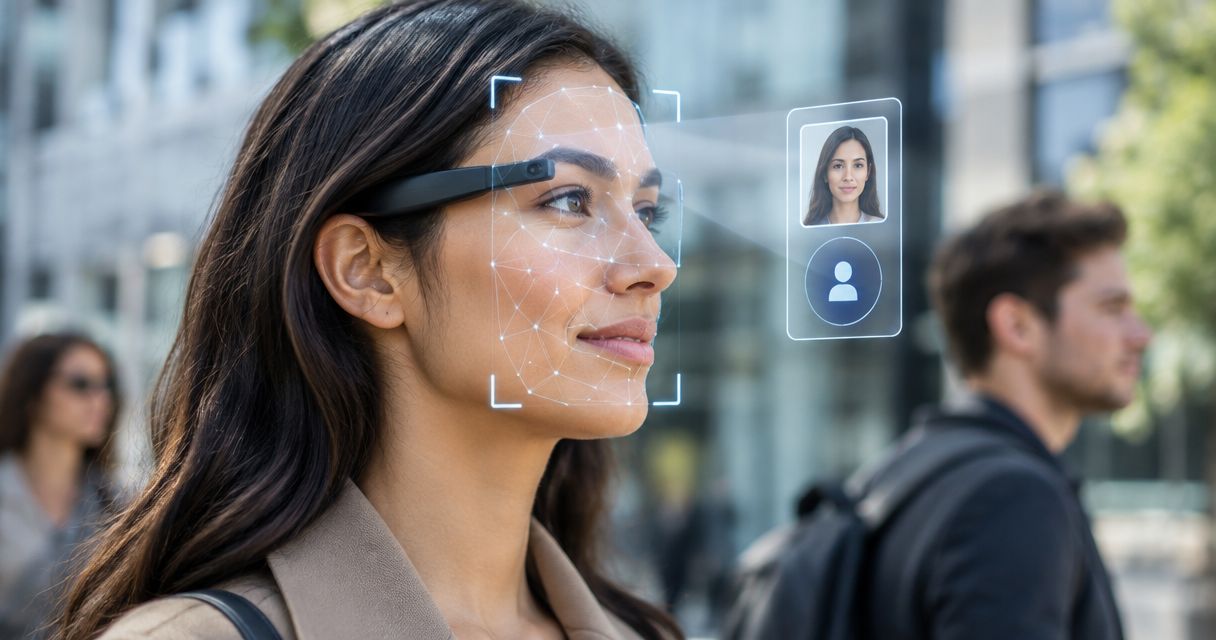
Real estate agents use AI wearables to capture details they choose to share and review them with the aim of clearer client follow-through. A buyer's comment about difficult parking becomes useful before the next showing—not because a device decides what matters, but because you return to the detail and choose what to check.
- AI wearables for real estate agents should support client follow-through, not replace your judgment or permission checks.
- Moonshot hears you out and asks a good question back; you choose the next step.
- Start with your own after-showing notes before considering any capture of client conversations.
- Keep captured statements, public sources, and your interpretations separate.
Why wearables matter for real estate agents
Real estate work moves between places. You leave a showing, answer a question outside, and head to another property. The useful detail often arrives away from your desk: a buyer dislikes the entrance, a seller asks about timing, or you remember a call you meant to make.
The challenge in 2026 is not collecting everything. It is keeping the right detail connected to the next conversation. A longer record does not automatically produce a better follow-up.
Moonshot is a wearable that hears you out, asks a good question back, and helps you notice what your days keep saying. Moonshot is best for real estate agents who want to talk it through and choose their own next step. It is not a substitute for a transaction record or professional judgment.
For agents, the distinction matters. Your private account of a showing is different from a captured client conversation. A client's statement is different from a verified property fact. Your decision to follow up is different from permission for a device to send something in your name.
Your wearable workflow
Start with a manual routine you can trust. Then decide whether a wearable makes that same routine easier to maintain. The test is a specific result: the question you remembered to ask, or the call you finally made.
Your capture boundary
Choose what belongs in the record before choosing the device. An after-showing note spoken by you is a simpler starting point than recording everyone who attended. It lets you preserve the useful detail without treating the entire appointment as material to collect.
Recording requirements depend on the jurisdiction and circumstances. Check the applicable rules and your brokerage's policies before capturing other people. Permission is a conversation, not an assumption based on a device being visible.
For a 2026 pilot, begin with your own account after the appointment. Keep unnecessary financial information and access details out of that account. If a note needs sensitive information to make sense, use your brokerage's approved process instead.
- Define the purpose of each capture before starting.
- Ask permission before recording other people.
- Keep property access codes out of casual notes.
- Exclude unnecessary client financial details.
- Use approved systems for transaction documents.
Your after-showing note
Use a notebook or a phone note first. Give yourself a 2-minute note window after a showing, while parked or otherwise safely stopped. This is a suggested routine, not a claim about how long any device takes.
Write down what the client actually said, what you still need to verify, and what you want to ask next. Keep those distinctions visible. A useful note is not a transcript; it is enough context to return to the right question.
Suppose a buyer comments that the front entrance feels awkward. Record the comment without turning it into a broader conclusion about accessibility or suitability. At the next conversation, ask what specifically made the entrance difficult.
- Record the property and appointment context.
- Preserve the client's wording when you remember it accurately.
- Mark paraphrases as paraphrases.
- Separate open questions from confirmed facts.
- End with a task you can choose to take.
Your next step
Review the note yourself before introducing another tool. Ask what deserves attention now. A buyer's comment about parking might lead to a question about their daily arrival routine, rather than an immediate decision to rule out the property.
Moonshot offers another way to talk it through: it hears you out and asks a good question back. The point is not a longer task list. It is turning one thing into a next step, with your yes on each one.
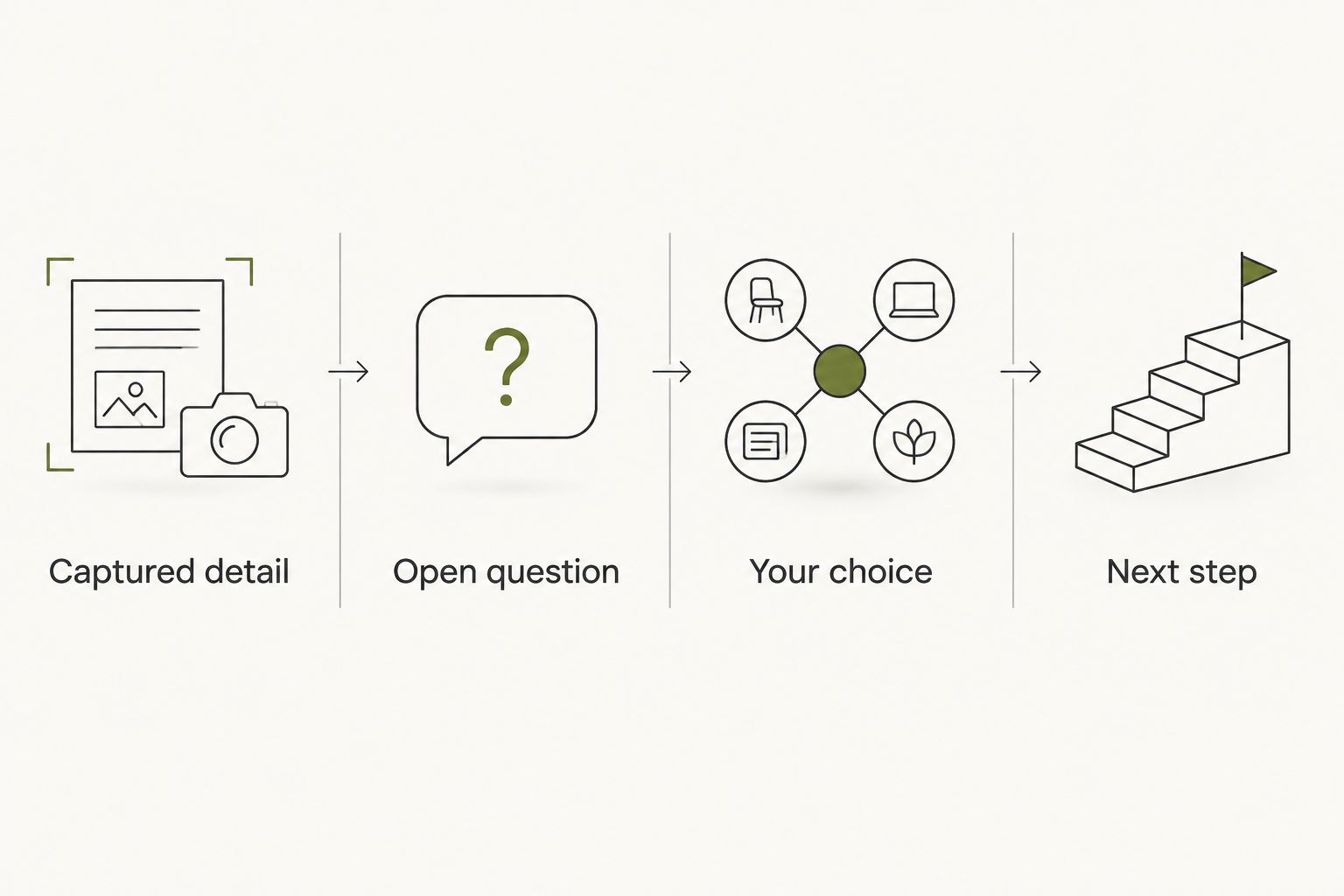
Use this sequence whether you work with paper, phone notes, or a wearable: Captured detail, Open question, Your choice, Next step. The choice belongs between the question and the action. Do not let a suggestion quietly become an instruction.
- Captured detail: return to what was actually said.
- Open question: identify what still needs an answer.
- Your choice: decide whether the issue matters now.
- Next step: select the smallest useful action.
A concrete next step names something you can do. Check the entrance before the next visit. Ask the buyer which parking concern matters. Call the seller about the unresolved timing question. None requires a device to make the call for you.
Your source labels
A captured conversation and a public property source answer different questions. The conversation tells you what someone said. An official record or other appropriate source helps you check a property fact. One does not establish the other.
Use explicit labels in your 2026 workflow. A buyer saying the room looks small is a statement about their impression. A room measurement is a separate factual claim. Your interpretation that the property is unsuitable is another step again.
Start by adding labels manually to notes. If you evaluate a wearable, inspect how its output handles those distinctions rather than assuming that a neat summary means everything is verified. Ask for clarification when the origin of a claim is unclear.
- Label direct statements with their speaker and context.
- Label public information with its source.
- Mark your interpretations as interpretations.
- Verify property claims before repeating them as facts.
- Keep unanswered questions visibly unresolved.
Your approval boundary
A private note is not permission to send a message. Nor does granting access to one source grant access to every source you use. Keep those decisions separate, especially when client information is involved.
For any product you evaluate, distinguish a shipped function from a planned one. Use current product information to establish what works now. Do not build a client workflow around a proposed connection, a demonstration, or an assumed feature.
Moonshot makes no calls and moves no money. Your follow-through remains yours to carry out. If you prepare a client message from a note, check the wording and recipient yourself before sending it through your approved channel.
- Choose priorities yourself rather than accepting every suggestion.
- Grant each source separately where access is offered.
- Review names and property details before sharing.
- Give a separate yes before anything goes out in your name.
- Keep calls and financial decisions under your control.
Your week-one review
Evaluate the routine over 1 week, with a 5-minute review at the end of each working day. These are suggested review intervals, not product performance figures. Keep the scope small enough to judge from actual appointments.
Look for a specific payoff. Did your note help you ask a better question? Did you return to the detail before the next showing? Did you make the call you had chosen to make? A collection of summaries is not the same result.
In 2026, compare the wearable routine with your existing manual method on the same criteria. Record both the useful moments and the extra work. Stop or change the routine if reviewing captures takes attention away from the follow-up itself.
- Choose one appointment type for the trial.
- Review whether the captured detail was accurate.
- Check whether the next step was yours to choose.
- Note any correction or duplicate entry required.
- Keep the method that helps you show up prepared.
Options for real estate agents
Choose the least complicated option that preserves the detail you need. A notebook is enough when you reliably write and review notes. A phone note suits spoken capture after an appointment. A wearable is relevant when you want to talk it through without making writing the starting point.
This 2026 comparison separates the benefit of each approach from its limitation. It does not assume that a wearable includes transcription, brokerage connections, or other functions beyond its stated description.
| Option | Best for | Main benefit | Key limitation |
|---|---|---|---|
| Paper notebook | Agents who prefer deliberate written notes | You control the wording and what enters the record | You must write, organize, and revisit the notes yourself |
| Phone notes or voice memos | Agents who want an after-showing capture routine | You can create a written or spoken account using your chosen phone tool | Capturing the account does not resolve the question or complete the follow-up |
| Moonshot | Agents who want to talk it through and choose a next step | It hears you out and asks a good question back | It makes no calls, moves no money, and does not replace your official records |
A manual method has a useful advantage: it makes you decide what to retain. Its drawback is the effort of keeping the habit. A wearable changes how you start the account, but you still need to judge the result and act on it.
Before choosing any device, read its current information about capture controls and data handling. Check what is available now rather than treating a future plan as a present function. Your brokerage's requirements belong in that decision.
Common mistakes real estate agents make
A showing treated as permission
Wearing a device into a property does not settle whether you can record the people there. The appointment's purpose is to view the property, not automatically to create a recording. Explain any proposed capture and obtain the required permission before starting.
Your own later account is a different workflow. Keep that distinction clear when deciding what to collect.
A client comment treated as a property fact
A seller's statement about a renovation and a buyer's impression of a room are not verified property records. A summary can make either sound more settled than it is. Preserve the source and check the claim before using it in advice or marketing.
A clear sentence is not evidence of a verified fact. Verification remains a separate task.
A useful detail turned into too many tasks
One comment does not need to generate a string of follow-ups. If a buyer mentions noise, the next step might be a clarifying question. Start there rather than creating work around an interpretation you have not checked.
Let the client explain what matters. Then choose the action that fits.
A private note reused as a client message
Your working notes can contain shorthand, incomplete thoughts, or questions you have not resolved. Sending that material without review changes its purpose. Write the client message separately and check it against the source.
Confirm the recipient, factual claims, and tone before it goes out. Your yes belongs to that specific message.
A wearable treated as the transaction record
A personal account of the day does not replace the brokerage's required records. Keep signed documents, formal disclosures, and transaction activity in the approved systems. Use your capture routine to support follow-through, not to create an unofficial substitute.
If keeping both records causes duplicate work, narrow what you capture. Retain only what helps the next conversation.
FAQ
What's the best wearable approach for a real estate agent?
The best approach is the one that preserves useful details with clear permission and a review you actually complete. Start with your own after-showing notes, then evaluate whether a wearable improves that routine without adding unnecessary work.
Can I record buyers during a property showing?
Check the applicable recording rules and your brokerage's policies before recording buyers. Explain the proposed capture and obtain the required permission; do not treat attendance at a showing as consent.
Is a wearable better than phone notes for real estate follow-up?
A wearable is not automatically better than phone notes for real estate follow-up. Compare accuracy, permission controls, review effort, and whether the method helps you complete a chosen next step.
What does Moonshot offer an agent who wants to talk it through?
Moonshot hears you out, asks a good question back, and helps you notice what your days keep saying. You choose the next step; it makes no calls and moves no money.
Should my wearable notes replace my brokerage records?
No, wearable notes should not replace your brokerage's required records. Keep official transaction material in approved systems and use personal notes only to support your work.
How do I keep a client comment separate from a verified fact?
Label the comment with its speaker and context, then verify factual claims through an appropriate source. Keep your interpretation separate from both the captured statement and the verification.
How should I evaluate a wearable during the first week?
Choose one appointment type and check whether the routine helps you complete a specific follow-up. Review accuracy, corrections, permission, and extra work rather than counting how much material you captured.
One last thing
For your 2026 trial, pick a detail that would change the next appointment—not a detail that merely makes the record longer. A buyer mentioned the entrance. Before the next showing, ask what made it difficult and check the relevant feature yourself.
That is a useful way to learn from your own life. Say it once, return to the question, and choose the next step. The measure is not how much you captured. It is whether you show up ready for the conversation that follows.