 moonshot
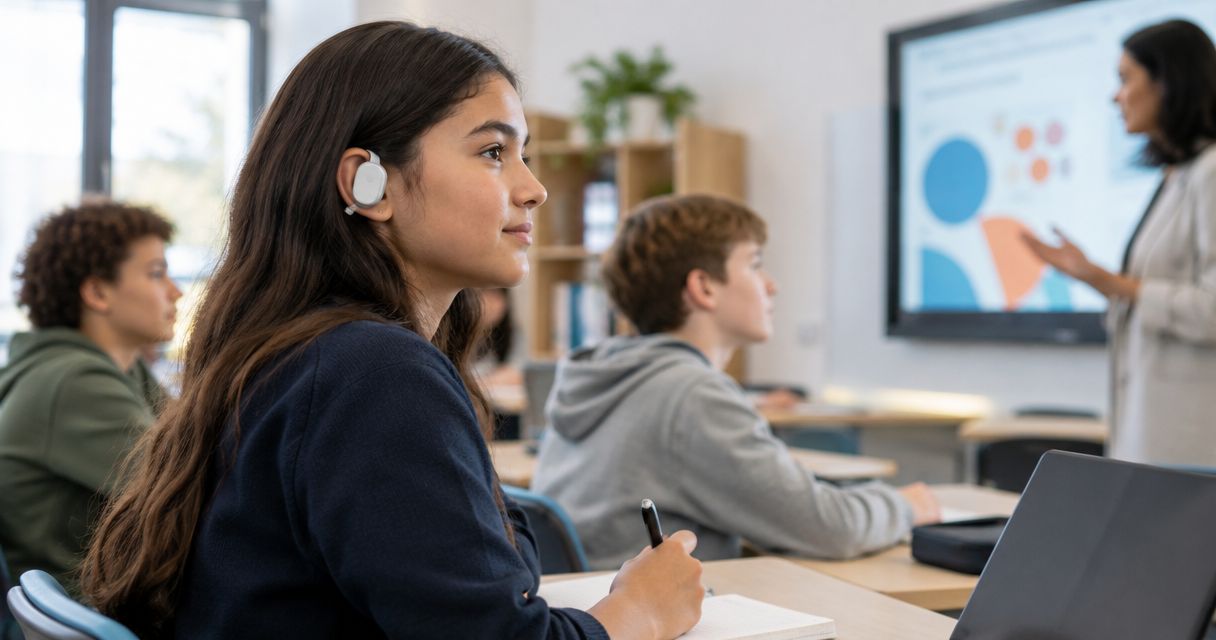
Yes, an AI wearable can be used legally in a U.S. classroom when its use complies with applicable recording law, school rules, and any required permissions. In 2026, permission to wear a device is not permission to capture classmates, send recordings to an outside service, or use generated answers during an assessment.
- Can an AI wearable be used in a classroom legally? Yes, but wearing, recording, and sharing require separate checks.
- FERPA governs qualifying education records; it does not make every classroom recording an education record.
- COPPA covers qualifying online services collecting personal information from children under 13 years old.
- Get school approval and any legally required consent before classroom capture begins.
Can an AI wearable be used in a classroom legally?
Yes, but the answer depends on what the device actually does. A wearable used for private reflection after class raises different questions from one capturing an entire discussion.
The Moonshot reservation page describes a product offering, not authorization from your school. No product description replaces classroom permission.
| Proposed use | Best for | Benefit | Limit to resolve |
|---|---|---|---|
| Private reflection after class | Reviewing your own thoughts | Avoids capturing the classroom when done privately | Leave out other people's identifying details |
| Recording a lecture | Revisiting permitted course material | Preserves the instructor's words | Check recording law, school rules, and sharing restrictions |
| Capturing a class discussion | Reviewing an approved discussion | Includes participant contributions | Permission must address the people captured |
| Approved disability accommodation | Accessing instruction | Supports an identified access need | Follow the authorized scope and conditions |
These are use cases, not blanket legal approvals. Approve the activity, not just the device.
Classroom permission
A teacher says you can take notes. Your wearable also uploads audio for processing. Those are different activities, and permission for the first does not establish permission for the second.
Before bringing a wearable into class in 2026, describe the proposed use plainly: what it captures, when capture starts, where information goes, and who receives the result. An instructor cannot evaluate a recording function you have described only as note-taking.
You also need to separate a captured conversation from a public source. A published course reading does not grant permission to record a classmate discussing a personal experience. Access to course material and consent to capture someone's speech are different questions.
Recording law
U.S. federal law generally permits a person to record a conversation they participate in with one party's consent, subject to exceptions. State laws can impose stricter requirements, including consent from all parties for covered communications.
The federal baseline appears in 18 U.S.C. § 2511. It is not a complete answer for your classroom: the applicable state law, the kind of communication, and the circumstances still matter.
- Benefit: A recording can preserve words you are authorized to capture.
- Limit: Being present in the room does not establish permission under every applicable law.
- Next step: Ask the school which recording rules apply before capture begins.
Do not assume an open classroom door makes every conversation public. A lecture, a small-group discussion, and a quiet exchange with a student can present different legal questions.
School rules
A recording can satisfy a consent statute and still violate a school's device policy, course rules, or assessment restrictions. Check each layer separately.
Ask whether approval covers lectures only or also discussions, group work, office hours, and examinations. Permission from one instructor does not automatically extend to another course.
Best for routine classroom use: written, activity-specific permission. Its benefit is clarity; its limit is scope. If permission covers reviewing a lecture privately, do not treat it as permission to publish a transcript or distribute classmates' comments.
For a 2026 exam, get an explicit answer about whether the device must be removed, powered off, or otherwise handled under the assessment rules. Permission during ordinary teaching is not exam permission.
Education records and FERPA
The Family Educational Rights and Privacy Act, or FERPA, applies to educational agencies and institutions receiving funds under applicable U.S. Department of Education programs. Its education-record definition generally requires information directly related to a student and maintained by the institution or a party acting for it.
That definition matters. Not every student-made classroom recording is automatically a FERPA education record. A recording maintained by a school or its service provider requires a different analysis from a student's independent personal recording.
Under FERPA, rights generally transfer from parents to students at 18 years of age, or when students attend a postsecondary institution at any age. That transfer does not create a general right to record classmates.
For a 2026 school review, use the Department of Education's FERPA guidance and the definition in 34 C.F.R. § 99.3. Ask who maintains the recording and whether it directly relates to identifiable students. Avoid treating a vendor's privacy statement as a FERPA determination.
Children under 13 years old
The Children's Online Privacy Protection Act, or COPPA, concerns operators of covered websites and online services collecting personal information from children under 13 years old. It is not a blanket prohibition on children wearing electronics.
The practical question is whether classroom use involves a covered service collecting children's personal information. Audio containing a child's voice can fall within COPPA's definition of personal information.
Federal Trade Commission guidance permits school authorization in place of parental consent in certain educational circumstances. That authorization is limited to the educational context; it is not permission for unrelated commercial uses of children's information.
Best for school-directed use involving children: a school-reviewed arrangement. The benefit is a defined educational purpose. The limit is that a teacher's casual approval does not establish that every operator obligation has been satisfied. Have the school assess the service before students use it.
Disability accommodations
A wearable proposed as an access aid deserves a separate review through the school's accommodation process. Do not assume that a general device ban settles an individual disability-related request.
For covered postsecondary institutions, Section 504 regulations specifically address rules prohibiting tape recorders or other aids when those rules limit a student's participation. The relevant provision is 34 C.F.R. § 104.44(b). The appropriate aid and conditions still require an individual assessment.
Best for a disability-related recording need: an approved accommodation with clear boundaries. It can establish an authorized route to access instruction, but it does not automatically authorize public distribution, unrestricted capture, or every connected feature of a wearable.
Describe the access need and the proposed activity separately. Recording a lecture, generating answers, and sending audio to an outside service are not interchangeable functions.
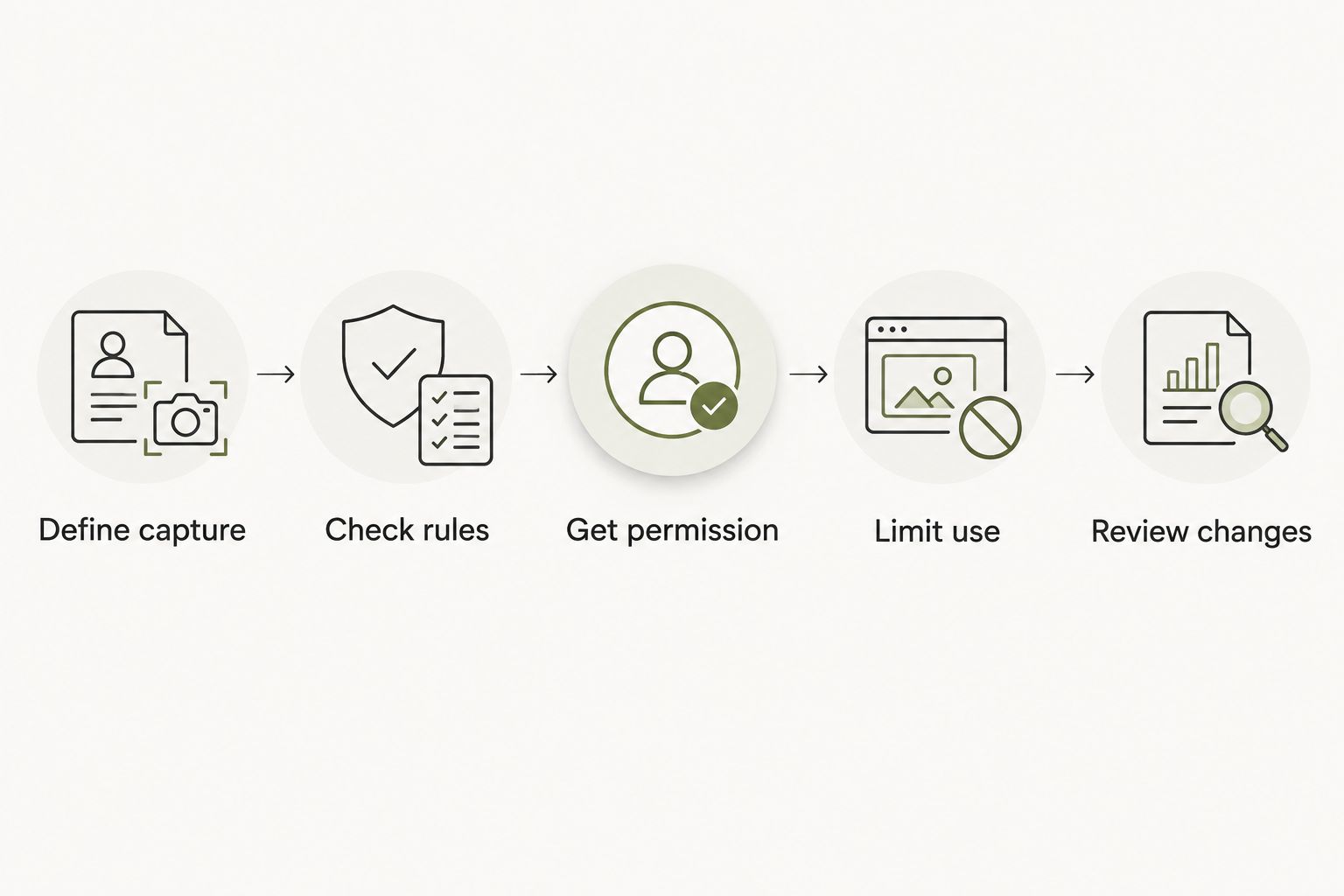
Classroom approval steps
Use this sequence before classroom capture. It is a practical checklist, not a substitute for school or legal advice.
- Define capture. State whether you want to capture your own speech, an instructor's lecture, or other students' contributions. Include any transcription or outside processing.
- Check rules. Review school policy, course requirements, assessment conditions, and applicable recording law. Route accommodation requests through the designated office.
- Get permission. Obtain school authorization and any legally required consent. Identify who is granting permission and which activities it covers.
- Limit use. Follow the approved purpose and restrictions. Do not share a recording simply because you were allowed to make it.
- Review changes. Ask again when the participants, setting, purpose, or processing arrangement changes.
A useful permission request names the activity rather than the product category. Ask whether you can record the instructor's lecture for private review, including whether audio can leave the device for processing. That gives the school a concrete decision to make.
Why classroom permission varies
The same wearable can raise different questions in different lessons. These factors change the activity being reviewed:
- Participants: An instructor's lecture and a discussion involving classmates do not capture the same people.
- Location: Applicable recording laws depend on jurisdiction and circumstances; remote participation can require additional review.
- Information: An identifiable student's contribution raises questions that anonymous course material does not.
- Processing: Local capture and sending audio to an outside service are different data-handling arrangements.
- Purpose: Private course review, assessment use, public posting, and disability access need separate consideration.
- Authorization: School approval, participant consent, and an accommodation decision address different requirements.
Use the wearable privacy guide to frame product questions, not to decide whether a classroom use is lawful. A feature comparison cannot grant permission from the people in the room.
Can I use a wearable without recording anyone else?
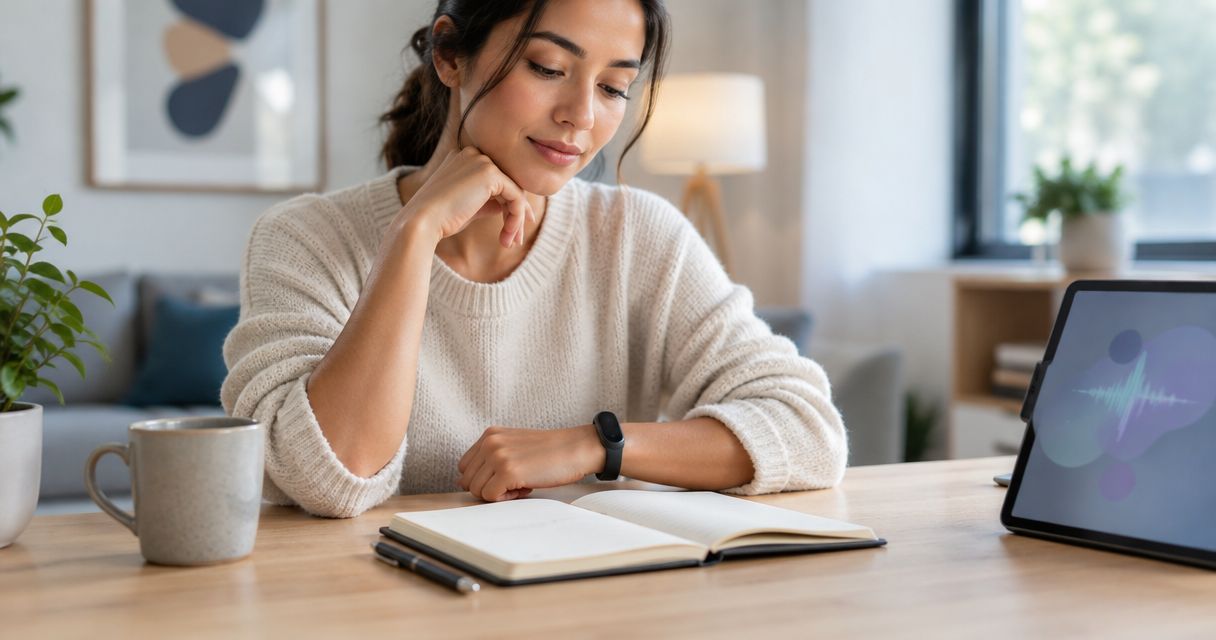
Yes, private reflection outside the classroom avoids capturing the classroom when no other people's speech is included. You can talk it through after class using your own account, without reproducing classmates' names or personal disclosures.
Moonshot is best suited here to private reflection, not as permission to record a classroom. The wearable hears you out and asks a good question back; its stated approach turns one thing into the next step, with your yes on each one.
For example, you remember that you wanted to ask about a confusing passage. You say it once after class, then choose whether to show up at office hours with that question. That is a concrete way to learn from your own life without treating classmates' conversations as material to collect.
Does a teacher's permission cover every student?
No, a teacher's permission alone does not establish that every applicable consent requirement has been met. The school must assess whose speech will be captured and what authorization is required.
A clear announcement helps people understand the proposed activity, but notice and legally sufficient consent are not always the same thing. Ask how objections and changes in participation will be handled before recording begins.
Can I share an approved classroom transcript?
Not automatically: permission to capture a lesson does not establish permission to share its transcript. Distribution can raise separate school-policy, privacy, and copyright questions.
Keep a transcript distinct from verified facts. A transcription error is not something a classmate said, and a generated interpretation is not evidence of what that person meant.
FAQ
Can an AI wearable be used in a classroom legally in 2026?
Yes, when the proposed use complies with applicable recording law, school rules, and required permissions. Permission to wear a device does not automatically authorize recording, outside processing, or assessment use.
Is it legal to record a teacher without asking?
There is no single U.S.-wide answer that makes recording a teacher without asking lawful in every classroom. Applicable state law, the circumstances, and school rules require separate checks.
Does FERPA ban students from making classroom recordings?
FERPA does not impose a blanket ban on student-made classroom recordings. It governs qualifying education records, including records directly related to a student and maintained by a covered institution or a party acting for it.
Can children under 13 years old use a connected wearable at school?
Children under 13 years old are not categorically prohibited from wearing connected devices. A covered online service collecting their personal information must satisfy applicable COPPA requirements, and school permission does not replace every operator obligation.
Can a school ban recording when I need it for a disability?
A school should evaluate a disability-related recording request through its accommodation process rather than relying only on a general device ban. The authorized aid and conditions depend on the individual request and applicable law.
Does Moonshot give me permission to record a class?
Moonshot does not establish classroom permission. Obtain the school's approval and any legally required consent for the specific activity before capture begins.
One last thing
An approved recording is not automatically an approved upload. For your 2026 classroom check, ask explicitly whether permission covers sending audio to an outside service, not just capturing it.
Keep follow-through small: describe the use, get the answer, and stay within it. This is general U.S. information, not legal advice for a particular classroom.