 moonshot
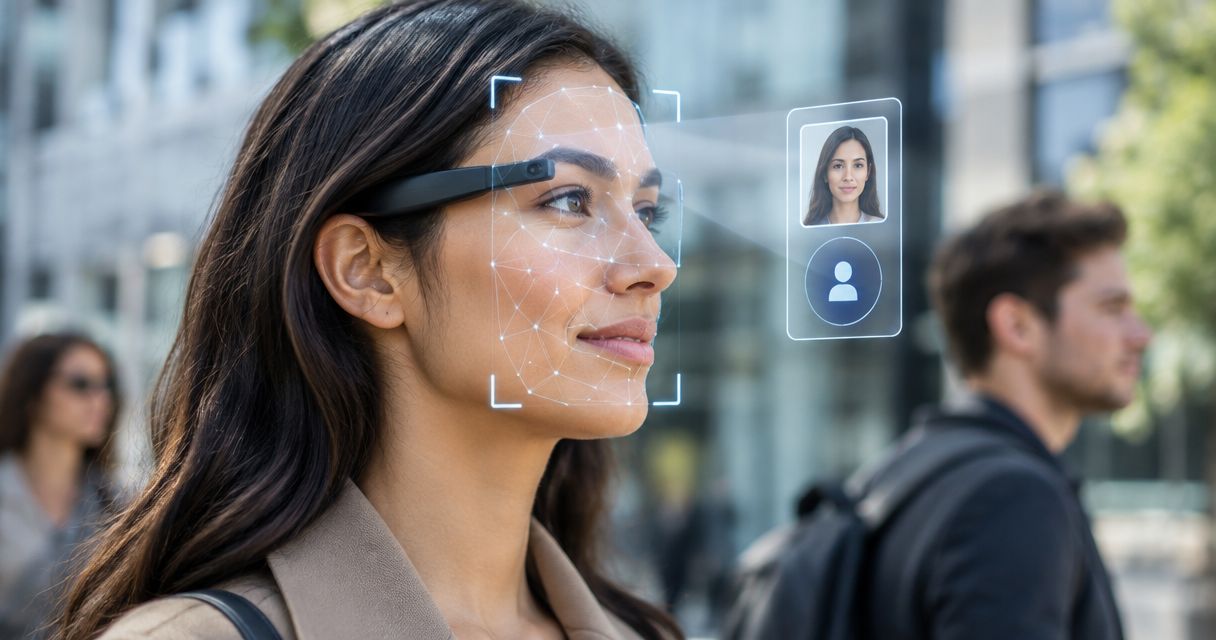
An AI wearable can recognize faces if it has access to images and a supported facial-recognition feature; being a wearable does not establish either capability. In 2026, check whether the device actually matches faces to identities, rather than merely detecting a face, describing a scene, or remembering a name you supplied.
- Can an AI wearable recognize faces? Yes, with supported image capture and facial recognition—not from audio alone.
- Face detection finds a face; facial recognition compares it with reference images to assess identity.
- A camera does not establish face recognition, reliable identification, or permission to identify someone.
- Moonshot is a wearable for talking things through; do not treat face recognition as a confirmed feature.
Why this matters
You meet someone at an event and remember the conversation, but not their name. A device that describes their jacket has not solved that problem. Neither has a transcript that labels different speakers without identifying them.
Decide whether you need help recalling a conversation or identifying a person. Those are different jobs, with different evidence and permission requirements. If your question concerns voices rather than images, start with whether a wearable can detect who is speaking.
The distinction matters before you buy, connect a photo collection, or record anyone. A broad promise about remembering your day does not tell you whether face matching exists.
Can an AI wearable recognize faces?
Yes, when the wearable or a connected service supports facial recognition and receives usable images. The recognition process compares facial information from an image with reference information. Its result is a match assessment, not independent proof of identity.
For a 2026 purchase, separate the following functions. They answer different questions, even when a demonstration makes them look similar.
| Function | What it establishes | Best for | Limitation |
|---|---|---|---|
| Face detection | An image contains a face | Finding faces within an image | Does not establish whose face it is |
| Face verification | A face matches a claimed identity against a reference | Checking a specific identity claim | Depends on the reference and matching conditions |
| Face identification | A face matches an entry in a reference collection | Looking for a person within a defined collection | Can return the wrong candidate or no match |
| Name recall from conversation | A name appeared in captured conversation | Reviewing what someone said | Does not connect that name to a face by itself |
These functions can appear together, but none guarantees the others. A wearable might capture images without identifying anyone. A system might also associate a spoken name with a meeting without ever analyzing a face.
Ask the seller to describe the exact input and output. An image going in and a name coming out still leaves questions about where the name originated and how the match was made.
Face detection: a face, not a name
Face detection locates faces in an image. That can support framing, counting, or later processing, but detection alone does not identify a person.
The distinction is easy to miss in a demonstration. A box around a face shows detection. A description of someone's glasses shows image description. Neither establishes that the device knows who the person is.
Treat detection as detection, even when the demonstration feels personal. If your goal is remembering names, ask for a separate demonstration of identification and its source.
Face verification: checking a claimed identity
Face verification compares a face against a reference associated with a specific identity. The question is whether the two belong to the same person, not who the person might be among everyone in a collection.
Its benefit is a narrower task. Its limitation is that the result still depends on reference quality, image conditions, and the system's decision threshold.
A successful face-verification demonstration does not establish that a wearable can identify strangers. Nor does recognizing the wearer establish the ability to name other people in a room.
Face identification: searching a reference collection
Face identification searches for a match within a collection of reference faces. The collection defines the search. Someone outside it cannot receive a supported identity match from that collection alone.
This can help locate images of a known person within a permitted collection. It also introduces the possibility of returning the wrong candidate, especially when the captured image provides weak evidence.
A plausible name is not a confirmed identity. Before relying on a result, check which image supplied the match and whether the name attached to that reference is correct.
Recognition results: why they vary
A face-recognition claim needs context. A clear portrait and a blurred image taken while walking do not present the same task.
The main factors include:
- Image quality. Blur, poor exposure, and limited facial detail reduce the information available for comparison.
- Face position. A face turned away from the camera presents different information from a front-facing reference.
- Obstruction. Clothing, objects, or another person can hide features needed for matching.
- Reference quality. Incorrect labels or unsuitable reference images weaken the basis for an identity claim.
- Matching threshold. A stricter threshold changes which comparisons the system accepts as matches.
- Search scope. Checking a claimed identity is a different task from searching a collection for possible candidates.
Do not accept an accuracy claim without its task and conditions. Ask whether it describes detection, verification, or identification, and whether testing used images resembling the ones you expect to capture.
There is no single accuracy figure that describes every wearable, collection, and setting.
Feature checks before you buy
For a 2026 buying decision, follow the evidence from capture to result. A feature name is not enough.
- Image source. Establish whether images come from the wearable, a connected device, or a collection you separately authorize. Audio alone does not provide facial information.
- Matching task. Ask whether the feature detects faces, verifies a claimed identity, or searches for identities. Request an example of the actual output.
- Reference collection. Establish where reference faces and names originate. A captured conversation, your photo collection, and a public source are distinct sources.
- Error handling. Ask what happens when the system cannot establish a match. An explicit unknown result is more useful than a confident guess presented as fact.
- Your approval. Check what you control before capture, connection, and sharing. Permission to access one source should not be treated as permission to access another.
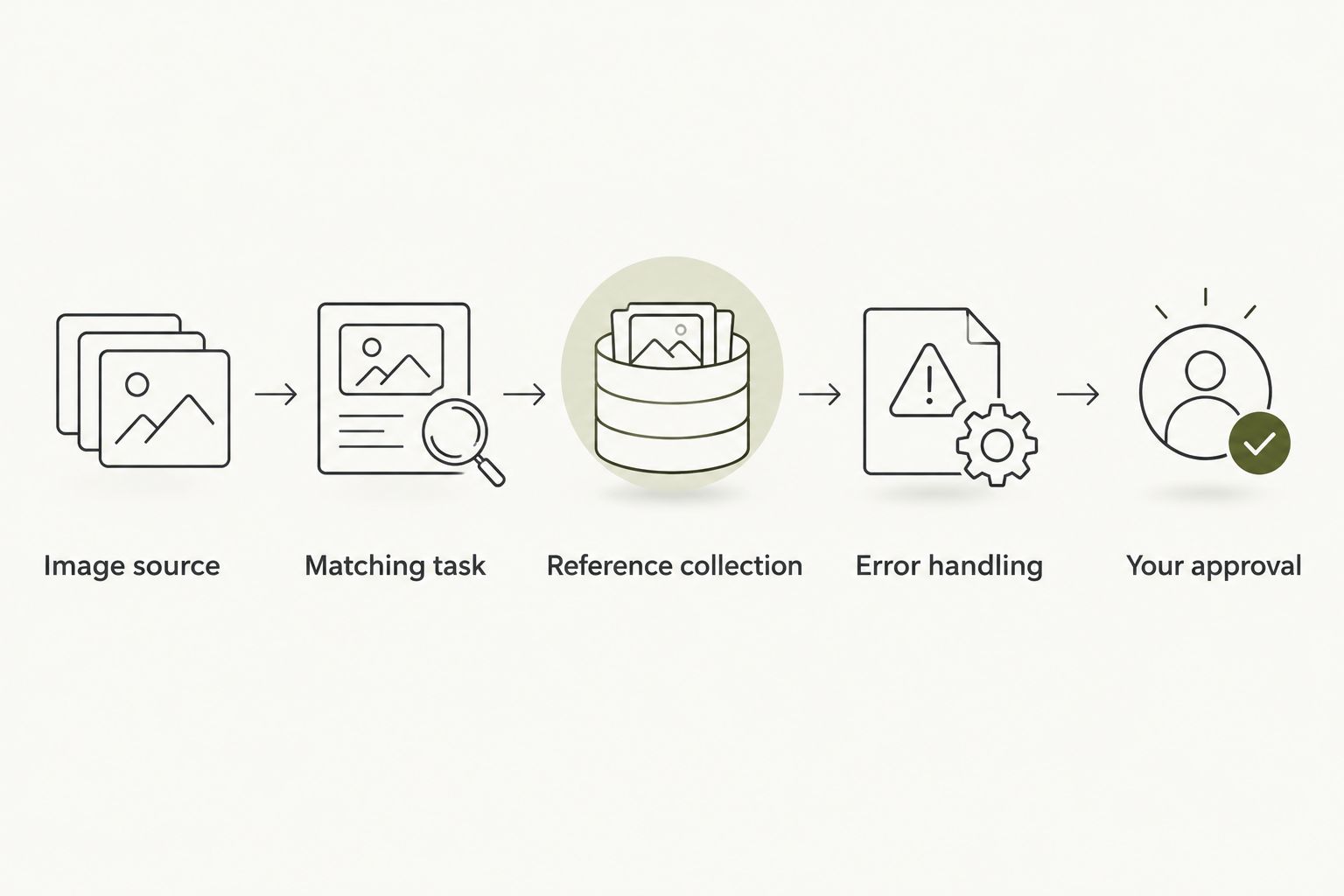
Ask for a demonstration that includes an unsuccessful match, not just a successful one. The failure case shows whether the interface distinguishes uncertainty from identity.
Also separate shipped functionality from a planned feature. A prototype, preview, or future integration does not establish what you receive with the current device.
Photo search and live recognition
Finding a person in a photo collection is not the same task as identifying someone through a wearable during a conversation. The source images, opportunity for review, and timing differ.
In a collection, you can inspect the original image and compare candidate results. During an encounter, a name presented immediately can be harder to check before you act on it.
That is why AI face search accuracy needs a defined task: finding candidate images in an event collection is different from confirming someone's identity during an encounter. Evidence about the former does not establish performance on the latter.
When evaluating a 2026 demonstration, ask which situation it represents. A selected photo collection is not evidence of reliable recognition while walking through a crowded room.
The practical test is simple: can you inspect the source, understand the result, and correct a mistake before using the name? If not, keep the result separate from confirmed information.
Permission and identity
Your permission to use a device is not the same as another person's agreement to be recorded or identified. Access to a photo also does not settle every question about how it should be used.
Set boundaries before capture. Explain what you intend to record, respect a refusal, and check the rules that apply to the setting. Workplace policies can impose restrictions separate from your own preferences.
For any connected source, make the permission specific. Connecting a conversation record should not silently become permission to search a photo collection. Recognizing a face should not silently become permission to share someone's name or image.
Keep these distinctions visible when reviewing a result:
- Captured conversation: what was actually said in the material you chose to capture.
- Public source: information obtained elsewhere, with its own origin and context.
- Inference: a conclusion drawn from available information, not a directly established fact.
None should be presented as another. A person mentioning a name does not prove that the name belongs to the nearest face.
Moonshot and the next step
Moonshot is a wearable best suited to people who want to talk it through and choose the next step themselves. It hears you out and asks a good question back. That is different from a promise to identify faces.
Imagine that you captured your own thought after meeting someone: you wanted to follow up about a book. The useful next moment is deciding whether to send the note. Face identification is not necessary to make that decision, and a remembered intention is not proof of the other person's identity.
Moonshot turns one thing into a next step, with your yes on each one. It makes no calls and moves no money. You choose your priorities, separately grant each source, and approve anything that goes out in your name.
For a 2026 preorder decision, judge Moonshot on that stated purpose, not an assumed camera or face-recognition feature. Its value is helping you learn from your own life; if your requirement is identifying people visually, require explicit confirmation of that capability before choosing a device.
FAQ
Can an AI wearable recognize faces without a camera?
A wearable without a camera can only perform visual face recognition if it receives images from another permitted source and supports face matching. Audio alone does not contain the facial information needed for that task.
Does a camera mean a wearable can identify people?
A camera does not establish that a wearable can identify people. Image capture, face detection, and face identification are separate capabilities that need separate confirmation.
Can a wearable tell me a stranger's name?
A wearable cannot reliably supply a stranger's name merely by detecting their face. Identification requires a supported matching process and a reference that connects the face with a name; the result still needs checking.
Is recognizing a speaker the same as recognizing a face?
Recognizing a speaker is not the same as recognizing a face. Speaker processing uses audio, while facial recognition uses visual information; a label distinguishing speakers does not necessarily establish either person's identity.
Can I trust a face match as proof of identity?
A face match alone is not proof of identity. Check the reference image, the attached name, and the possibility of an incorrect match before relying on the result.
What should I ask before connecting my photos?
Ask which photos the feature accesses, why it needs them, and how you can withdraw access. Also ask how reference names are assigned and what happens to matching information when you disconnect the source.
Can a wearable recognize emotions from a face?
Face recognition does not establish what someone feels. Matching an identity and inferring an internal state are different claims; do not treat a facial expression as a confirmed account of someone's feelings.
One last thing
The most useful result can be unknown. A device that refuses to attach an unsupported name gives you a chance to ask the person instead.
Before choosing a wearable, decide what you actually need to show up for: remembering a conversation, making a call yourself, or keeping a promise. Say it once in your own words. Let follow-through, rather than an impressive identity demonstration, define the next step.