 moonshot
Best for talking a moment through: Moonshot. Best for replaying spoken words: audio-recording wearables. Best for visual records: wearable cameras. Best for measured activity: activity-tracking wearables. The best ai life-logging wearables in 2026 serve different purposes; choose the kind of record you actually want to use.
- Moonshot is best for talking a moment through and choosing the next step.
- Choose the best ai life-logging wearables by capture type and follow-through, not feature count.
- Audio-recording wearables preserve spoken material; wearable cameras preserve visual material.
- Activity-tracking wearables suit measured activity, not the meaning of a conversation.
- Check capture controls, source permissions, and approval before choosing a wearable.
Why this matters
You mentioned a friend you meant to call. Later, the useful thing is not another recording to sort through. It is a question that helps you decide whether to call, and what you want to say.
That is different from wanting the exact words of a conversation, a photograph of a place, or a record of a walk. Each calls for a different kind of capture. None is a complete account of your day.
For a 2026 purchase, start with the next moment you want to make useful. A wearable earns its place when its record helps you do something you already care about. Capturing more is not the same as understanding more.
Keep the distinction between fact and interpretation clear. A captured sentence is something someone said. A suggestion about what it means is an interpretation. You should be able to question the interpretation without losing the original context.
What makes the best life-logging wearable
Use these five criteria before comparing devices in 2026. They make the decision smaller without pretending every wearable does the same job.
- Capture fit: Choose spoken material, visual material, measured activity, or reflection. Start with the record you need, not the device shape.
- Useful return: Ask what you will revisit. An exact phrase, a visible detail, a movement record, and a good question are different outcomes.
- Permission clarity: Check how capture starts and stops. Give each source separate permission, and respect the people whose conversations or images enter the record.
- Decision control: Keep priority-setting separate from capture. A device recording something does not make that thing your priority.
- Follow-through: Identify the next step you would choose. Reviewing a record should serve a purpose, not become a second obligation.
The strongest default is the wearable whose output matches your reason for wearing it. A longer feature list does not resolve a mismatch between the record a device creates and the question you want answered.
Life-logging options at a glance
These four options represent different approaches, not four interchangeable products. The comparison below is a use-case guide for 2026, not a claim that every device in a category has the same functions.
| Option | Best for | Standout purpose | Key limitation |
|---|---|---|---|
| Moonshot | Talking a moment through | Hears you out, asks a good question back, and helps turn one thing into a next step | Makes no calls and moves no money |
| Audio-recording wearables | Replaying spoken words | Preserve an audio record for later listening | Sound alone does not preserve the visual setting |
| Wearable cameras | Revisiting visible details | Preserve photographs or video, depending on the device | Images do not establish someone's intention |
| Activity-tracking wearables | Reviewing measured activity | Record supported activity measurements | Measurements do not explain what an event meant to you |
The table puts reflection first because it answers a particular need: moving from something you said to something you choose. If your need is evidence of the original words or a visible scene, choose the matching capture category instead.
1. Moonshot: best for talking a moment through
Moonshot is a life-logging wearable for people who want to talk it through and choose the next step. It hears you out, asks a good question back, and helps you notice what your days keep saying.
Think about the friend you mentioned earlier. The useful return is a question that helps you decide what to do with that thought. The person, not the wearable, chooses whether the call matters today.
The first-week promise stays small: turn one thing into a next step, with your yes on each one. That is not a promise to conduct your relationships or act in your name. You make the call.
Moonshot pros:
- Hears you out rather than making you work through a formal interview.
- Asks a good question back instead of treating every captured thought as an instruction.
- Connects reflection to a next step you choose.
- Keeps your yes central to follow-through.
Moonshot cons:
- Does not make calls or move money.
- Still needs you to decide what matters and take the step.
- Is not the right selection criterion if your priority is a specified camera function or activity measurement.
Best for: Someone whose useful outcome is a decision, such as whether to reach out to the friend they keep meaning to call.
Verdict: Buy for reflection and chosen follow-through, not for actions taken on your behalf. Check current product information before deciding whether the device fits your capture needs.
2. Audio-recording wearables: best for replaying spoken words
Audio-recording wearables preserve sound so you can listen again. Their defining use is the original spoken material, rather than a later interpretation of it.
Choose this category when the exact phrasing matters. Perhaps you want to revisit an explanation you were permitted to record. A written summary and an audio record answer different questions: one condenses the content; the other lets you hear the words again.
Do not assume a recording function includes transcription, search, or summaries. Check those functions separately on the device you are considering. Also check whether you can export and remove recordings without an awkward process.
Audio-recording wearables pros:
- Preserve spoken wording for later review.
- Let you revisit tone and pauses present in the recording.
- Suit a clear task: listening again to material you intentionally captured.
Audio-recording wearables cons:
- Do not preserve the visual setting through audio alone.
- Require listening time when you need to review the source material.
- Raise permission questions when other people are recorded.
Best for: Someone who wants to return to what was actually said, rather than start with a suggested interpretation.
Verdict: Buy for spoken records; skip if your main need is visual detail. Establish an acceptable recording practice before treating ordinary conversations as material to capture. A device being wearable is not permission to record everyone around it.
3. Wearable cameras: best for revisiting visible details
Wearable cameras preserve visual material through photographs or video, depending on the device. They belong on your shortlist when the thing you want to revisit is something you saw.
Imagine noticing a detail on a walk and wanting to look at it again later. A visual record can preserve that detail. An audio note can describe it, but description and image are not the same record.
Choose the device around its actual capture behavior. A camera designed for deliberate clips and one configured for repeated capture create different review tasks. Check the controls rather than assuming that wearing a camera means everything is recorded.
Wearable cameras pros:
- Preserve visible details that a spoken description can leave out.
- Give you material to revisit without reconstructing the scene entirely from memory.
- Suit visual subjects such as a place or a physical task.
Wearable cameras cons:
- Do not establish the intentions of people shown in an image.
- Require decisions about what to retain, share, or delete.
- Need clear boundaries around filming other people and private places.
Best for: Someone whose question is about what a place or moment looked like.
Verdict: Buy for visual records; skip if you mainly want help deciding what to do next. A camera can preserve a scene without explaining why that scene matters to you. Keep those two jobs separate when comparing devices.
4. Activity-tracking wearables: best for measured activity
Activity-tracking wearables record supported measurements of movement or other activity. Their useful output is a measurement record, not a transcript of your life.
Choose this category when you want to review something the device is designed to measure. A record of a walk answers a different question from a note about the conversation you had during it. Both can matter, but neither replaces the other.
Read the measurement descriptions carefully. Do not treat every displayed number as equally meaningful or assume that different devices measure the same thing in the same way. Select the measurements you need before choosing the hardware.
Activity-tracking wearables pros:
- Provide a structured record of supported activity measurements.
- Suit repeated review of the same kind of activity.
- Give you a narrower purpose than trying to record an entire day.
Activity-tracking wearables cons:
- Do not explain the personal meaning of an event.
- Depend on the device's supported measurements and measurement limits.
- Can create records you never use if you choose metrics without a reason.
Best for: Someone who wants to review measured activity rather than preserve spoken or visual moments.
Verdict: Buy for a defined measurement need; skip as a substitute for reflection. A movement record cannot tell you whether the conversation on that walk changed your mind. Use the record for the question it can actually answer.
Choice before capture
Before choosing a life-logging wearable, write down one moment you want to revisit and one reason to revisit it. Keep it ordinary. The explanation you wanted to hear again is enough.
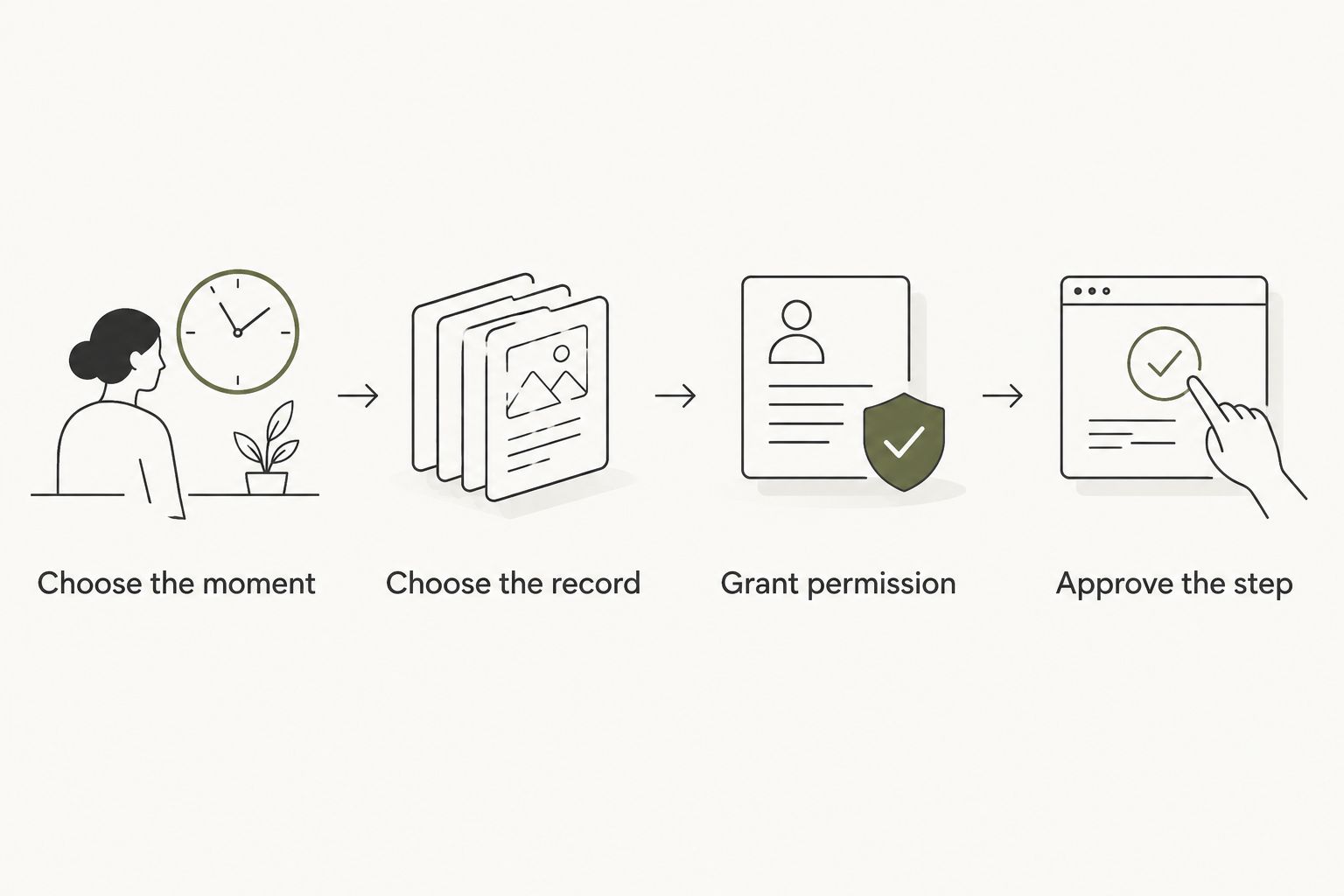
Use these four checks in order:
- Choose the moment. Identify something concrete, not your entire life.
- Choose the record. Decide whether words, images, measurements, or reflection serve that moment.
- Grant permission. Review each source separately and establish appropriate boundaries with other people.
- Approve the step. Decide what, if anything, should happen next. Capture is not approval to act.
Try the decision with three questions: What will I return to? What does this record leave out? What will I do differently after reviewing it? If the last answer is nothing, you have identified a record without a purpose.
For a first-week evaluation, choose one payoff. Say it once, then judge whether the return helps you show up for the thing you chose. Do not make an entire personal archive the condition for a useful first step.
Ranking criteria
The 2026 order follows capture fit, useful return, permission clarity, decision control, and follow-through. Reflection comes first for a reader seeking a chosen next step; audio, cameras, and activity tracking follow as distinct alternatives for distinct records.
This is not a hardware-performance ranking. No claim about recording quality, measurement accuracy, battery life, or superiority over another model is needed to make the central choice. First choose the job. Then verify the relevant product details.
Which life-logging wearable should you choose?
Choose Moonshot if you want to learn from your own life by talking a moment through and choosing what follows. Choose an audio-recording wearable for spoken wording, a wearable camera for visible details, or an activity tracker for supported measurements.
For an undecided buyer in 2026, the deciding question is simple: do you want a record, or do you want to return to a thought and make a choice? Answer that before comparing hardware.
Then check the current product description. Separate a shipped function from a planned capability, and a captured conversation from material drawn from a public source. Those distinctions matter more than a broad promise to remember your life.
FAQ
What's the best life-logging wearable for talking things through?
Moonshot is best for talking a moment through and choosing the next step. It hears you out and asks a good question back; you choose what to do with it.
Is an audio-recording wearable better than a wearable camera?
An audio-recording wearable is better for spoken words; a wearable camera is better for visual details. Neither capture type is a complete record of a moment.
Can a life-logging wearable make calls for me?
Moonshot makes no calls and moves no money. It helps turn one thing into a next step, with your yes on each one.
Does wearing a recorder mean I can record every conversation?
No. Establish appropriate permission and check the rules that apply to the situation before recording other people.
How do I choose between reflection and activity tracking?
Choose reflection when you want to think through what a moment means; choose activity tracking when you need supported measurements. A measurement does not explain why an experience mattered to you.
What should I check before buying a life-logging wearable?
Check capture controls, source permissions, access to records, and approval boundaries. Verify current product details rather than treating planned capabilities as shipped functions.
What should I expect in the first week?
Choose one useful outcome for the first week. A record you revisit or a next step you choose is a clearer evaluation than trying to capture your whole life.
One last thing
Choose the moment before you choose the wearable. The friend you meant to call is a better starting point than a promise to remember everything.
A useful record does not have to be large. It has to help you return to something that matters, choose the next step, and follow through with your yes.