 moonshot

If you’re searching for the best AI wearables for capturing memories in 2026, start with what you want to keep. Best overall for talking a moment through: Moonshot. Best for retaining the words: a wearable audio recorder. Best for seeing a place again: a wearable camera.
- For the best AI wearables for capturing memories, Moonshot is the pick for spoken reflection and a chosen next step.
- Choose a wearable audio recorder when the exact words matter more than a question back.
- Choose a wearable camera for visual reference; images cannot preserve what someone said.
- Moonshot is a pre-order, so it is not the pick if you need a device today.
Why this matters
A memory can mean the words someone said, the look of a place, or a thought you want to act on. Those are different jobs. In 2026, calling every wearable a memory device hides the choice that matters: what will you want from that moment later?
What makes the best wearable for capturing memories
- What to keep: Decide whether you need spoken words, an image, a quick note, or a thought to talk through.
- How you capture it: Deliberate capture is easier to understand than an unclear recording routine. Know when the device is in use.
- What comes back: A file preserves a record. A useful question helps you decide what the record means to you.
- Who is present: Spoken conversations and images can involve other people. Get their permission before capturing them.
- What happens next: Separate remembering a moment from taking an action. You should choose the action yourself.
The options at a glance in 2026
| Option | Best for | Standout feature | Key limitation |
|---|---|---|---|
| Moonshot | Spoken reflection | Hears you out, asks a good question back, and leaves the next step to you | Pre-order; not a verbatim record or visual archive |
| Wearable audio recorder | Verbatim record | Keeps spoken audio for later listening | A recording does not decide what matters |
| Wearable camera | Visual reference | Keeps images of what the device sees | An image does not preserve an unrecorded conversation |
| Smartwatch with voice notes | Quick note | Lets you save a short spoken thought on a watch with that function | Functions vary by watch; a note is not a dialogue |
Moonshot is best for people who want to talk a moment through and choose what to do next. The other options serve different kinds of memory, not lesser versions of the same job. A recorder and camera also do not become AI products just because they appear beside one in a search result.
1. Moonshot: best wearable for spoken reflection
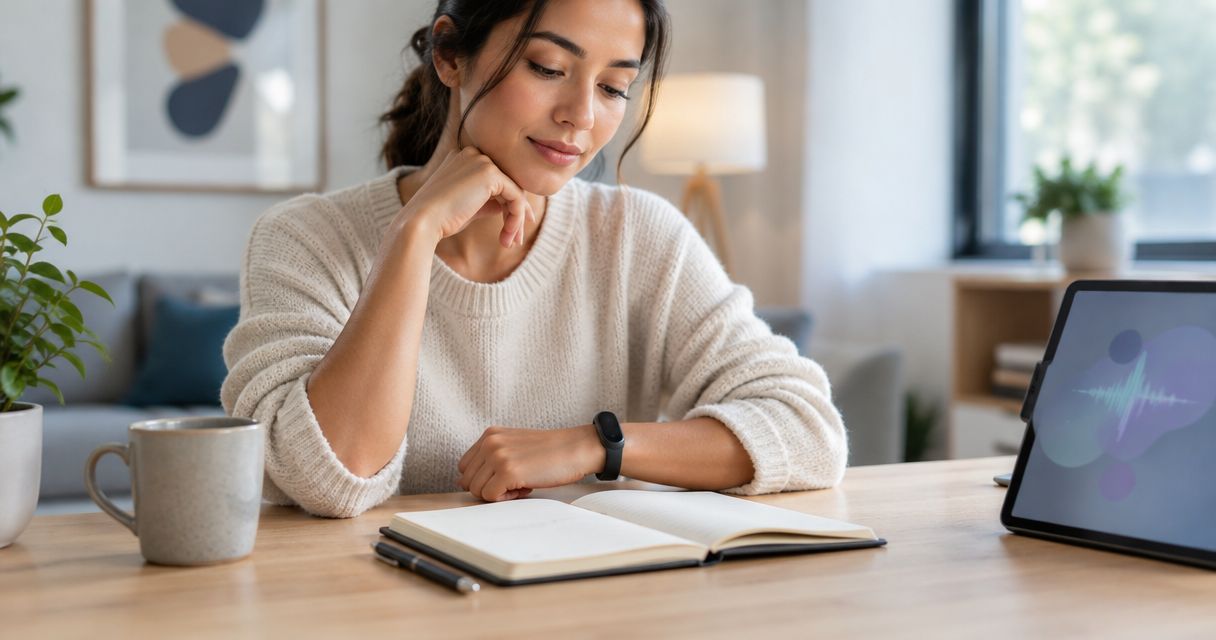
You mention a friend you keep meaning to call. Later, the useful part is not a perfect transcript of that thought. It is the chance to talk it through, hear a good question back, and decide whether calling is your next step. That is the experience Moonshot describes: a wearable that hears you out and helps you notice what your days keep saying.
The distinction matters. Moonshot is presented as a pre-order, not as a device you can pick up and use today. Its description does not establish a searchable archive of every conversation, a camera, or automatic action on your behalf. If you want an exact account of what was said, choose a recording method built for that purpose instead.
Moonshot pros:
- Gives a spoken thought room to become a question, rather than leaving it as a file you have to revisit alone.
- Puts the decision with you: one thing becomes a next step with your yes.
- Fits the person who wants to learn from your own life, including the small things that keep coming up.
Moonshot cons:
- It is a pre-order, so it does not meet an immediate need for a wearable.
- It is not the choice when you need exact wording or a visual record.
- The description does not establish how saved material can be searched or exported; check those details before ordering if they matter to you.
Best for: Someone who wants to say it once, consider the question that comes back, and choose whether to follow through.
Verdict: Hold if you need a device now. If you are comfortable considering a pre-order, judge it by its stated job: helping you turn a spoken moment into a choice, not storing every detail of your day.
2. Wearable audio recorder: best for a verbatim record
Choose a wearable audio recorder when the words themselves are the memory. If you want to listen again to something said aloud, an audio file serves that job more directly than a later summary or reflection. It also leaves interpretation to you: the recording can preserve speech without telling you which sentence mattered.
That is both its strength and its limit. Listening again takes time, and capturing someone else’s voice calls for their permission. In 2026, check a particular recorder’s controls and recording practices before using it around other people; those details differ by device.
Wearable audio recorder pros:
- Preserves spoken sound rather than relying on your recollection of the words.
- Lets you return to tone and phrasing when those details matter.
- Has a clear purpose when your priority is a record, not a question back.
Wearable audio recorder cons:
- Leaves you to find and interpret the relevant part yourself.
- Does not capture a visual moment.
- Can record other people, so deliberate use and permission matter.
Best for: Someone who needs to revisit what was said aloud and is prepared to manage the recordings.
Verdict: Buy for exact spoken recall. Skip it as a substitute for reflection: preserving the words does not, by itself, help you choose your next step.
3. Wearable camera: best for visual reference
Choose a wearable camera if the thing you want to remember is visible. A picture can bring back the arrangement of a room or an object you meant to look at again. It cannot recover words that were never recorded, and it cannot explain why a particular scene mattered to you.
A camera also changes the experience for people nearby. Before treating visual capture as routine, consider who could appear in an image and whether they have agreed to it. For 2026 shoppers, the useful product questions are practical ones: how capture is started, how you know it is happening, and how you review what you kept. Do not assume those answers are the same across devices.
Wearable camera pros:
- Keeps a visual reference without asking you to describe the scene later.
- Suits details such as placement, appearance, and surroundings.
- Makes it easier to decide whether an image, rather than a spoken note, is the record you need.
Wearable camera cons:
- Does not preserve an unrecorded conversation.
- Produces images you still have to review and interpret.
- Requires care around other people and private spaces.
Best for: Someone whose memories depend on how a place or object looked.
Verdict: Buy for visual reference. Skip it if what you really want to keep is a thought you had while you were there; say the thought instead.
4. Smartwatch with voice notes: best for a quick note
A smartwatch with a voice-note function suits a thought you can put into words briefly. You notice something you want to remember, make the note, and move on. Check that the particular watch you are considering supports the function you need; a smartwatch category label does not establish its features.
A note records what you chose to say. It does not ask a question back, and it will not tell you why you keep raising the same idea. In 2026, that narrower job can be exactly right. Not every memory needs a longer conversation.
Smartwatch with voice notes pros:
- Gives a short spoken thought a place to land.
- Keeps capture deliberate: you choose what to say.
- Fits a simple reminder better than a visual archive does.
Smartwatch with voice notes cons:
- Voice-note functions and review options vary by watch.
- A short note can lack the context you will want later.
- It does not turn the note into a question or a chosen action for you.
Best for: Someone who wants to capture a brief thought without looking for a spoken exchange.
Verdict: Buy when a quick note is the whole job. Skip it if you want to talk the thought through before deciding what to do.
Choose what to keep
Start with the moment you expect to revisit. If you need the verbatim record, choose audio. If you need visual reference, choose an image. If you need a quick note, choose a watch that supports voice notes. If you need spoken reflection, look for an experience that makes room for a question and leaves the answer with you.
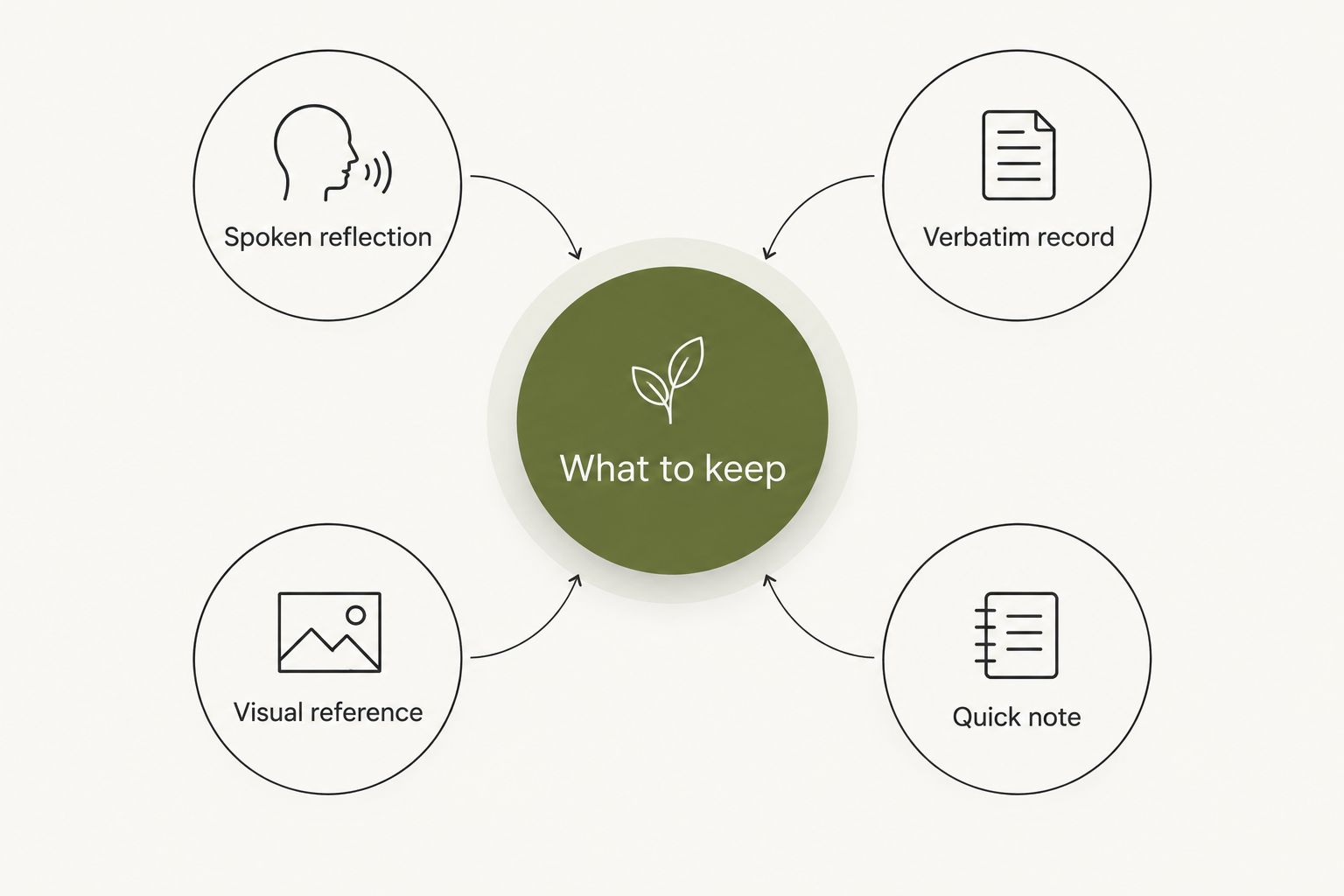
There is no universal winner across those jobs. The friend you mean to call is different from the exact directions someone gave you, and both are different from the look of a place. Pick the device by what you will want to revisit, not by how many kinds of material it claims to collect.
How we ranked the options
The order puts a useful response to a captured thought first because this guide is for readers looking beyond storage. It then separates the strongest alternatives by the material they keep: spoken audio, images, and short notes. The ranking does not claim that every option has AI features or that one type of record can replace another.
The limits count as much as the benefits. A pre-order cannot fill an immediate need. A recorder keeps sound but leaves the listening to you. A camera keeps an image but not an unrecorded sentence. A watch note is only as useful as the context you put into it. Those differences are the basis for the verdicts, not a claim that these devices were tested against one another.
Which wearable should you choose?
Choose Moonshot as the default if your goal is to talk a thought through and decide what happens next, and you are comfortable considering a pre-order. If the memory must remain exact, choose a wearable audio recorder instead. If it must remain visible, choose a wearable camera. If a brief reminder is enough, a smartwatch with voice notes is the simpler fit.
Before you choose any capture device, ask what the people around you will understand about its use. Your ability to remember a moment does not override their say in being recorded. Make capture a choice, not an assumption.
FAQ
What are the best AI wearables for capturing memories in 2026?
The best choice depends on what you want to keep: Moonshot is for spoken reflection, while wearable recorders and cameras serve exact audio and visual reference. Not every wearable in that comparison is an AI product.
Is Moonshot better than a wearable audio recorder?
Moonshot is the better fit when you want to talk a thought through and choose a next step. Choose an audio recorder when you need to replay the words that were spoken.
Can a wearable camera capture a conversation?
An image cannot preserve words that were never recorded. Choose an appropriate audio recording method if the spoken conversation is what you need to revisit, and get permission from the people involved.
Is Moonshot available to use now?
Moonshot is presented as a pre-order. If you need a wearable immediately, choose an available option that does the specific capture job you need.
Can a smartwatch replace a wearable recorder?
A smartwatch with voice notes can hold a brief thought if the particular watch supports that function. Choose a recorder when you need to revisit extended spoken audio rather than a short note.
What should I check before capturing other people?
Get their permission before recording their voices or images. Also check how capture starts and how you review what you saved on the particular device.
How do I decide between a memory record and a next step?
Choose a record when you need to revisit what was said or seen. Choose spoken reflection when you want to consider what a moment means and decide for yourself what to do next.
One last thing
The detail you want to keep is not always the detail that helps you show up. An exact recording can settle what was said; a question can help you decide whether to make the call. For your 2026 choice, name the moment first. Then choose whether you need to keep it, talk it through, or take the next step with your yes.