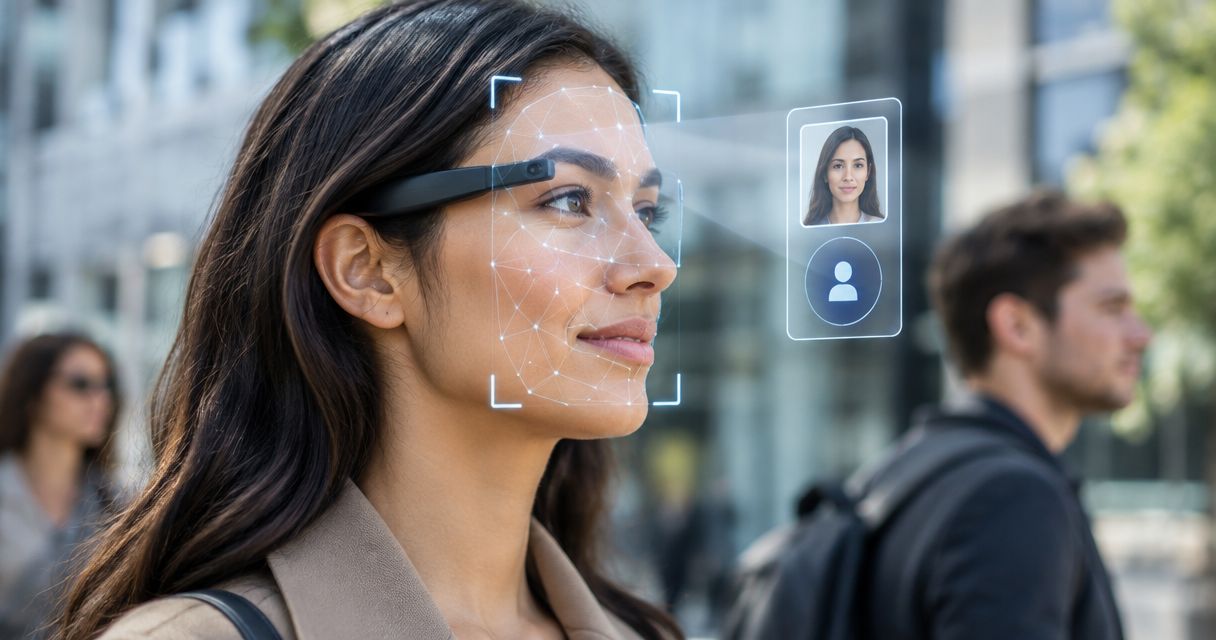
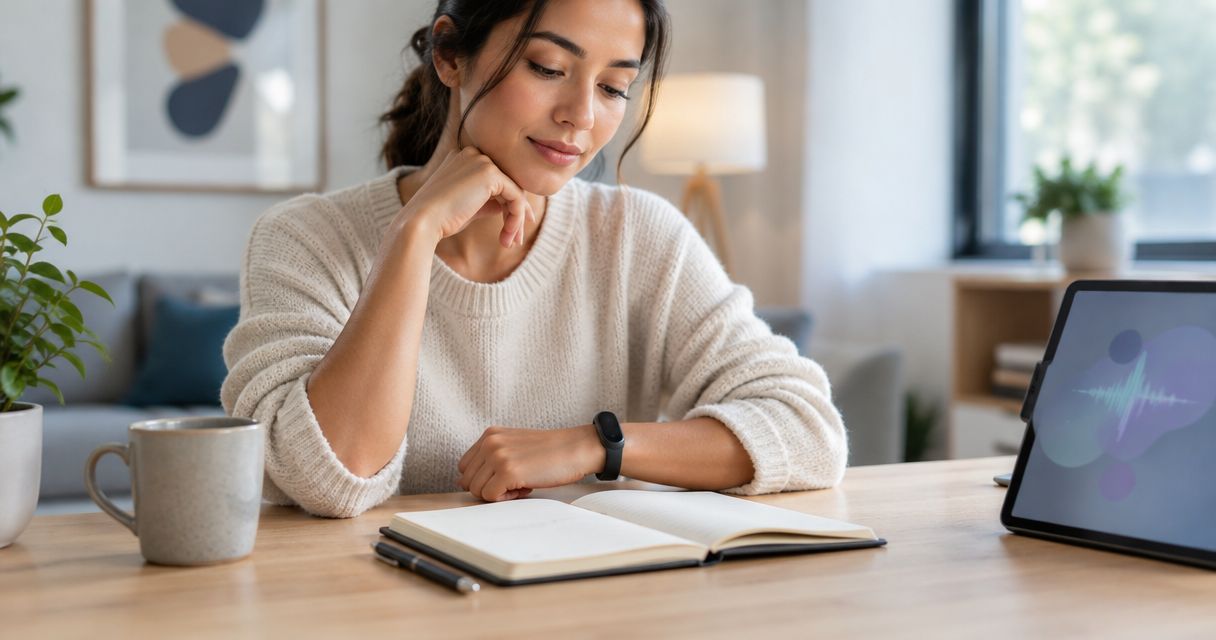
 moonshot

Best for off-duty reflection: Moonshot. Best for activity tracking: a fitness wearable. Best for time-sensitive alerts: a notification-focused smartwatch. For clinical recording, the best choice in 2026 is not a consumer favorite; it is a device and workflow your employer has explicitly approved.
- The best ai wearables for healthcare professionals depend on whether the task is personal or clinical.
- Moonshot fits off-duty reflection: it hears you out and asks a good question back.
- Choose fitness wearables for activity tracking and notification-focused smartwatches for selected alerts.
- Clinical recording requires workplace approval, appropriate consent, and a defined process for handling patient information.
Why this matters
You finish a shift and remember the friend you meant to call. You also remember an unfinished conversation at work. Those thoughts belong to different settings, with different boundaries. A wearable that helps you talk it through privately is not automatically suitable for recording either conversation.
The useful distinction is personal support versus clinical use. Personal support includes reflecting on your own day, checking activity, or receiving selected notifications. Clinical use includes capturing patient conversations or putting information into a care workflow. Do not treat those jobs as interchangeable.
For healthcare professionals choosing a wearable in 2026, the first question is not how much it can capture. It is what you want it to do—and what information it is permitted to handle.
What makes the best wearable for healthcare professionals
Judge the device against its intended job before comparing features. These criteria keep a personal purchase from becoming an unapproved workplace system.
- Task fit: Name the outcome. An activity check, a personal reflection, and a patient note require different tools.
- Recording boundaries: Know when capture begins, how it stops, and whether people nearby need notice or consent.
- Source permissions: Grant each source separately. Access to your personal information does not authorize access to workplace information.
- Information handling: Check where recordings go, who can access them, and how deletion works before capturing anything sensitive.
- Physical suitability: Check your workplace rules for wristwear, cleaning, charging, and use during patient care.
- Action control: Keep decisions with you. Any communication or action in your name needs your yes.
A device fails the comparison if it cannot meet the requirements of its intended setting. A useful personal feature does not compensate for an unclear clinical recording policy.
Wearable options at a glance
These are distinct buying routes, not interchangeable products. The category entries below describe what to look for; they do not imply that every device in the category includes those functions.
| Option | Best for | Standout purpose | Key limitation |
|---|---|---|---|
| Moonshot | Off-duty personal reflection | Hears you out and asks a good question back | Its personal purpose does not establish suitability for patient information |
| Fitness wearable | Personal activity tracking | Keeps activity measures separate from conversation capture | Activity measures do not explain the whole day |
| Notification-focused smartwatch | Selected personal alerts | Puts chosen notifications within view | Mirrored notifications can expose sensitive information |
| Employer-approved clinical recording wearable | Authorized patient-conversation capture | Fits a defined clinical recording workflow | Requires approval of the workflow, not just the hardware |
Choose the task first. Choose the device second. A broad feature list is not a substitute for a clear boundary between home and work.
1. Moonshot: best wearable for off-duty personal reflection
Moonshot is a wearable that hears you out, asks a good question back, and helps you notice what your days keep saying. Its relevant use here is personal reflection outside patient care. You choose what to do with what comes up.
Picture the end of a shift. You talk about your own evening and return to the friend you keep meaning to call. The useful outcome is not a longer record of the day. It is deciding whether that call is the next step you want to take.
Keep the scene personal. Leave out patient names, case details, colleague disclosures, and anything that belongs in an authorized workplace system. Removing a name alone does not guarantee that a story cannot identify someone.
Moonshot is best for healthcare professionals who want a wearable for off-duty personal reflection, not clinical documentation.
Personal-reflection pros
- Its stated purpose fits talking through your own experiences.
- A good question can give you something specific to consider rather than another item to collect.
- You remain the person who chooses the next step.
- The personal use case can stay separate from patient-care records.
Personal-reflection cons
- A personal reflection device is not a substitute for an authorized clinical documentation system.
- Talking about work can bring sensitive information into an otherwise personal conversation.
- Noticing an intention is different from carrying it out; follow-through still belongs to you.
Best for: Your own decisions and off-duty reflection.
For a 2026 purchase, keep the first-week goal narrow: talk it through and choose one personal next step. Do not turn that goal into a claim about clinical accuracy, workplace integration, or medical use.
Verdict: Buy for personal reflection; skip for patient documentation.
2. Fitness wearable: best for personal activity tracking
A fitness wearable is the right category when your main question concerns movement or another supported personal activity measure. Choose a model by the specific measure you want to review, rather than by the presence of a conversational feature.
The distinction matters after a demanding day. An activity total can tell you something about movement. It cannot tell you why a conversation stayed with you, whether you should make a call, or what a colleague meant.
Before buying, check the model's stated functions and your workplace's wristwear rules. A device that suits your weekend routine still needs to fit the setting in which you intend to wear it.
Fitness wearable pros
- It gives a defined purpose to the purchase: review a supported activity measure.
- You can choose activity tracking without choosing conversation recording.
- Repeated measures give you a consistent reference for your own routine.
- Its value does not depend on capturing what patients or colleagues say.
Fitness wearable cons
- A measure is not an explanation of your circumstances.
- Measurement limitations vary by device and function.
- Wristwear can conflict with local dress, cleaning, or infection-prevention rules.
Best for: Healthcare professionals who want to review personal activity, not capture conversations.
Ask whether the measure will change a decision you actually make. If you only want to collect more data, the purchase has no clear job yet. Do not interpret a consumer measurement as a medical diagnosis or use it to replace an appropriate clinical assessment.
Verdict: Buy for a specific activity question; skip if reflection is the real goal.
3. Notification-focused smartwatch: best for selected alerts
A notification-focused smartwatch suits you when the immediate benefit is seeing a permitted alert without reaching for your phone. Choose a model that supports the particular notification controls you need. More alerts are not automatically more useful.
Imagine checking a personal reminder during a break. That is a different use from displaying a patient-related message where someone nearby can read it. The watch face changes where information appears, not the rules governing that information.
Start with a small set of permitted personal notifications. Add a workplace source only through the process your organization authorizes. Do not assume that permission to receive a message on one device extends to every connected screen.
Notification-focused smartwatch pros
- Selected alerts can be easier to check without handling a phone.
- A defined notification list keeps the purpose concrete.
- Models with suitable controls let you limit what appears on the watch.
- You can use alerts without choosing a conversation-recording workflow.
Notification-focused smartwatch cons
- A visible screen can disclose message content to people nearby.
- Too many alerts add interruptions rather than remove them.
- Workplace messaging requirements can rule out otherwise useful personal setups.
Best for: Healthcare professionals who want selected personal reminders or explicitly permitted work alerts.
For your 2026 shortlist, verify notification previews, source controls, and compatibility before deciding. Treat those as model-specific questions. A category label does not establish that a particular watch can meet your workplace's requirements.
Verdict: Buy for selected alerts; skip unrestricted message mirroring.
4. Clinical recording wearable: best for an approved capture workflow
A clinical recording wearable belongs on your shortlist only when your organization has authorized the device and its use. This is a selection condition, not an endorsement of an unnamed product. Hardware alone cannot establish that a patient-conversation workflow is appropriate.
The workflow needs to define when recording is allowed, how people are informed, where information goes, and who checks any resulting text. It also needs a clear stop procedure. A recording that begins easily still needs boundaries you can explain.
Distinguish the captured conversation from any interpretation of it. Someone's words, a generated summary, and a clinician's judgment are different things. A summary should not quietly become a verified fact in the record.
Approved clinical workflow pros
- A defined process makes responsibilities explicit.
- Authorized capture can keep patient information within the organization's chosen workflow.
- A review step separates recorded speech from the final clinical record.
- Clear start and stop rules make the recording boundary understandable.
Approved clinical workflow cons
- Approval requires more than checking a device's feature page.
- Recording introduces consent, access, retention, and security questions.
- Generated text still needs review before it supports documentation or care decisions.
Best for: Healthcare professionals whose organization has established an authorized patient-conversation capture process.
HIPAA obligations do not disappear because a device is small or wearable. Follow your organization's privacy and security process, together with applicable recording-consent requirements. Do not independently introduce a consumer recording device into patient care.
Verdict: Hold until the device and complete workflow are approved.
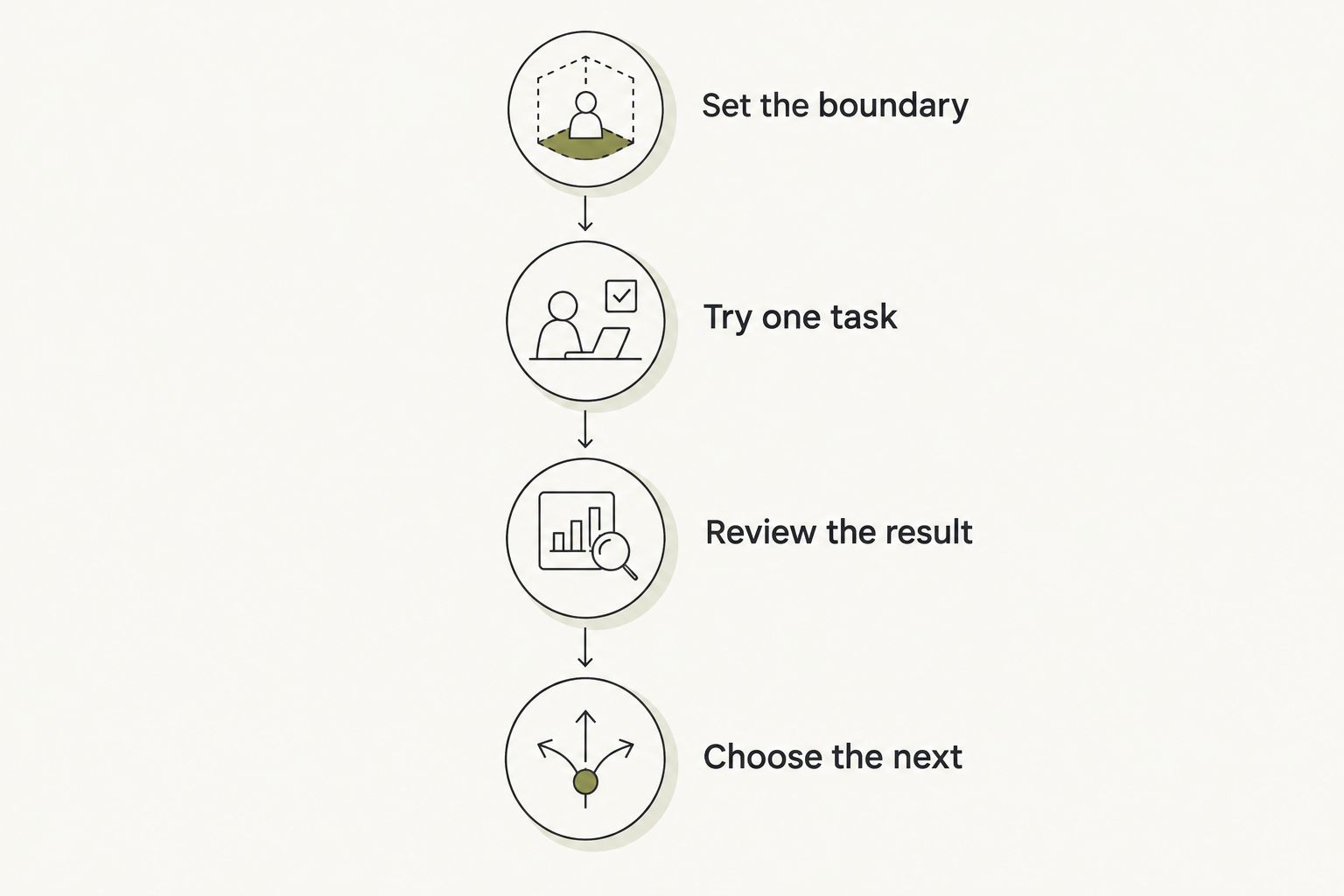
A first-week decision check
Use this as a proposed personal exercise, not a device-performance benchmark. Over a 7-day trial, give the wearable one permitted job. Keep patient information out of a personal trial entirely.
Set the boundary
Before use, write down the information you will exclude. Make a 1-minute permission check part of each recording decision: whose information is involved, which source is authorized, and whether capture belongs in this setting. Stop if any answer is unclear.
Try one task
For personal reflection, try a 5-minute off-duty check-in about your own life. For activity, review the specific measure you selected. For notifications, check whether the permitted alert reached you usefully. These are separate exercises; you do not need to combine them.
Review the result
Ask whether the device helped with the task you chose. Did you make the call, review the activity measure, or see the reminder? Do not count the amount captured as proof of usefulness.
Choose the next step
Keep, change, or stop the setup. Your decision should follow the result and the boundary, not the novelty of wearing a new device.
How the options are ranked
This 2026 guide ranks options by task fit, recording boundaries, source permissions, information handling, physical suitability, and action control. It is a use-case comparison, not a claim of hands-on testing or measured superiority.
Personal reflection comes first because it matches the named product's stated purpose. Activity tracking and notifications each have a separate job. Clinical recording stays conditional because organizational approval governs whether it belongs in patient care at all.
Which wearable should you choose?
For the undecided reader, choose the narrowest option that solves the actual problem. If you want to talk through your own day, choose personal reflection. If you want an activity measure, choose a fitness wearable. If you want a selected alert, choose a notification-focused smartwatch.
If your goal involves patient conversations, stop the consumer comparison and use your organization's approval process. The next step is defining the authorized workflow, not finding the most appealing recorder.
FAQ
What's the best ai wearables for healthcare professionals buying approach?
Choose by task and permission boundary, not by a broad feature list. Personal reflection, activity tracking, notifications, and clinical recording require different buying decisions.
Is Moonshot suitable for clinical documentation?
Do not choose Moonshot as a clinical documentation system on the basis of its personal-reflection purpose. Patient-information use requires an explicitly authorized device and workflow.
Can I record patient conversations with a consumer wearable?
Do not record patient conversations with a consumer wearable unless your organization explicitly authorizes that device and workflow. Follow applicable consent requirements and the organization's information-handling rules.
Is a smartwatch better than a fitness wearable for hospital work?
Neither category is better for every hospital task. Choose a smartwatch for permitted alerts or a fitness wearable for supported personal activity measures, then check local device and wristwear rules.
Does removing a patient's name make a recording safe to use?
Removing a patient's name does not by itself establish that a recording is appropriately de-identified. Other details can identify the person, so follow your organization's approved process.
Should I trust a wearable's generated summary as a clinical fact?
Do not treat a generated summary as a verified clinical fact. Check it against the source and follow the review process required for the clinical record.
What should I check before buying a healthcare wearable in 2026?
Check the intended task, recording controls, source permissions, information handling, and workplace suitability. Verify model-specific functions rather than assuming every wearable in a category works the same way.
One last thing
You do not have to record work to learn from your own life. Start with something that belongs to you: the call you have postponed, the idea you keep returning to, or a decision you want to talk through.
Choose one next step, with your yes. Then show up for it.