 moonshot

Best for guided spoken reflection: Moonshot. Best for keeping your own spoken account: manual voice journaling. Best for deliberate editing: written journaling. This 2026 guide to the best AI wearables for journaling compares a wearable approach with two non-wearable alternatives, so you can choose the format that fits the reflection you actually want.
- Moonshot is best for people who want to talk it through and receive a good question back.
- The best AI wearables for journaling should help you reflect, not simply collect more material.
- Manual voice journaling suits a spoken account; written journaling suits deliberate rereading and revision.
- Choose one next step yourself. A journal entry is not permission to act.
What makes the best journaling wearable
The useful question is not how much a device can capture. It is what you can understand afterward. For a journaling wearable in 2026, judge the relationship between what you said, the question you receive, and what you decide to do.
- Reflection: Does the approach help you examine something, rather than merely preserve it?
- Effort: Can you use the format when the thought arrives, or does it require a writing session?
- Context: Can you distinguish your own account from a captured conversation or a public source?
- Choice: Do you choose the priority and approve the next step separately?
- Review: Does the format suit how you want to revisit an entry: listening, reading, or talking it through?
These criteria produce different winners. Someone who wants a question back has a different need from someone who wants an untouched spoken account. Neither person needs to copy the other's routine.
Why this matters
Imagine you make a journal entry after lunch about a friend you keep meaning to call. When you revisit that entry, you do not need a longer account of lunch. You need to decide whether that call belongs in your day.
That is the distinction between capture and reflection. Capture preserves material. Reflection asks what the material means to you, and follow-through begins only when you choose something to do.
For journaling in 2026, start with that distinction before choosing hardware. A wearable makes sense when its way of supporting reflection suits you. A voice entry or written page remains a useful alternative when you want to supply the questions yourself.
Moonshot is best for people who want a journaling wearable that hears them out and asks a good question back. Its stated purpose is to help you notice what your days keep saying. You choose what to do with that understanding.
Journaling approaches at a glance
Only the first option below is a named wearable. The other two are comparison points, not competing wearable products. They show when buying hardware is unnecessary.
| Rank and approach | Best for | Distinctive benefit | Key limitation |
|---|---|---|---|
| 1. Moonshot | Guided spoken reflection | Hears you out and asks a good question back | You still decide what matters and what to do |
| 2. Manual voice journaling | Keeping your spoken account | Lets you express a thought without composing a written entry | Recording alone does not provide reflective questions |
| 3. Written journaling | Deliberate editing and rereading | Lets you revise your wording and examine it on the page | Requires you to turn the thought into writing |
The ranking favors guided reflection because that is the central wearable use case here. If your goal is simply to preserve an account, the second or third approach is a better starting point.
1. Moonshot: best journaling wearable for guided reflection
Moonshot is a wearable that hears you out, asks a good question back, and helps you notice what your days keep saying. The point is not to produce a more impressive diary. It is to give something you have said enough attention that you can choose the next step.
Consider the friend you mean to call. The useful outcome is your decision to reach out, not a claim that a device knows the relationship better than you do. Moonshot makes no calls and moves no money.
Best for: People who prefer to talk it through and want a question back rather than an entirely self-directed journal.
Moonshot pros
- Spoken reflection fits the purpose. You can approach a thought as something to talk through, rather than something to polish for a page.
- A question is part of the experience. Moonshot is described as asking a good question back, not merely keeping an account.
- The decision stays with you. You choose what to do with what you notice.
- The intended payoff is concrete. A recurring idea or a friend you mean to call gives the reflection somewhere to go.
Moonshot cons
- It does not replace your judgment. You still have to decide whether an idea deserves attention or a next step.
- A wearable is unnecessary for a writing-only routine. If arranging sentences is the part you value, start with a written journal.
- It is not a way to delegate the call. The follow-through remains yours.
For your first week, choose one ordinary subject: the conversation you want to have, the idea you keep returning to, or the commitment you want to examine. These are examples of reflection subjects, not a promise of particular results.
Keep the evaluation narrow. Did talking help you express the issue? Did the question help you think? Did you choose a next step that still felt like your own?
Verdict: Buy for guided spoken reflection; skip if your only goal is a written diary.
2. Manual voice journaling: best for keeping your spoken account
Manual voice journaling means making a spoken entry yourself and returning to it later. You supply both the account and the reflective questions. It is a non-wearable alternative, not a recommendation for a particular recording product.
This approach fits when you want to hear how you originally described an experience. You do not need to organize every sentence before speaking. You do need to return to the entry if you want more than a collection of recordings.
Best for: People who want a spoken journal and prefer to lead their own reflection.
Manual voice journaling pros
- Speech is the starting point. You can express the thought without first turning it into a paragraph.
- You set the direction. You choose the subject, the questions, and whether the entry leads anywhere.
- The scope can stay small. A single topic gives you something specific to revisit.
- It provides a non-wearable comparison. You can examine whether spoken journaling suits you before choosing a wearable format.
Manual voice journaling cons
- Capture is not reflection. An entry does not examine itself merely because it exists.
- Listening is part of the work. Reviewing audio requires listening to the passage you want to reconsider.
- You supply the question. This format does not, by itself, ask what the entry means to you.
Use a repeatable closing question: What do I want to return to? That keeps the entry open without forcing a task out of every experience.
For a 2026 buying decision, use manual voice journaling as a baseline. If speaking is useful but supplying every question feels like the wrong fit, guided spoken reflection addresses a different need.
Verdict: Buy into the method if you want a self-directed spoken account; hold on buying a wearable solely for capture.
3. Written journaling: best for deliberate editing and rereading
Written journaling puts the thought on a page, whether you write by hand or type. Its distinctive benefit is the ability to stop, revise a sentence, and compare what you wrote with what you meant. That is a different experience from talking it through.
A written entry can begin with an observation and end without a task. You do not have to turn every page into a plan. Sometimes the useful result is a clearer description of what happened.
Best for: People who value wording, revision, and returning to a passage they can read.
Written journaling pros
- You can revise the wording. A sentence can become more precise as you examine it.
- You can reread a chosen passage. The page gives you a visible place to return to.
- You control the structure. Use a paragraph, a question, or a short account without adopting someone else's routine.
- Reflection can remain unfinished. An entry does not need a decision to count as useful writing.
Written journaling cons
- You have to compose the entry. Writing asks you to choose words and put them in order.
- You supply the prompts. A blank page does not ask a question back.
- It does not serve a wearable preference. If the wearable format is central to your choice, writing is a comparison point rather than a substitute for that experience.
Try separating an observation from its interpretation. Write what happened first, then what you think it meant. The second sentence is your reading of the event, not an additional fact about it.
Verdict: Buy into written journaling when editing helps you think; skip a wearable purchase made only to imitate a page.
A first-week reflection routine
Use this suggested routine to compare formats in 2026. Start with 1 entry per day, ask 1 question per entry, and choose no more than 1 next step per entry. These are boundaries for the exercise, not product performance claims.
Say it once
Choose an ordinary event you want to examine. A conversation you keep revisiting is enough. Describe what you remember, without treating your account as a complete record of everything that happened.
Ask a question
Pick the part you want to understand. For example: What did I leave unsaid? That is a sample journaling prompt, not a promised device response.
Choose a step
Decide whether anything needs doing. Calling someone, drafting a message, or leaving the entry alone are all choices. Reflection does not require you to create work for yourself.
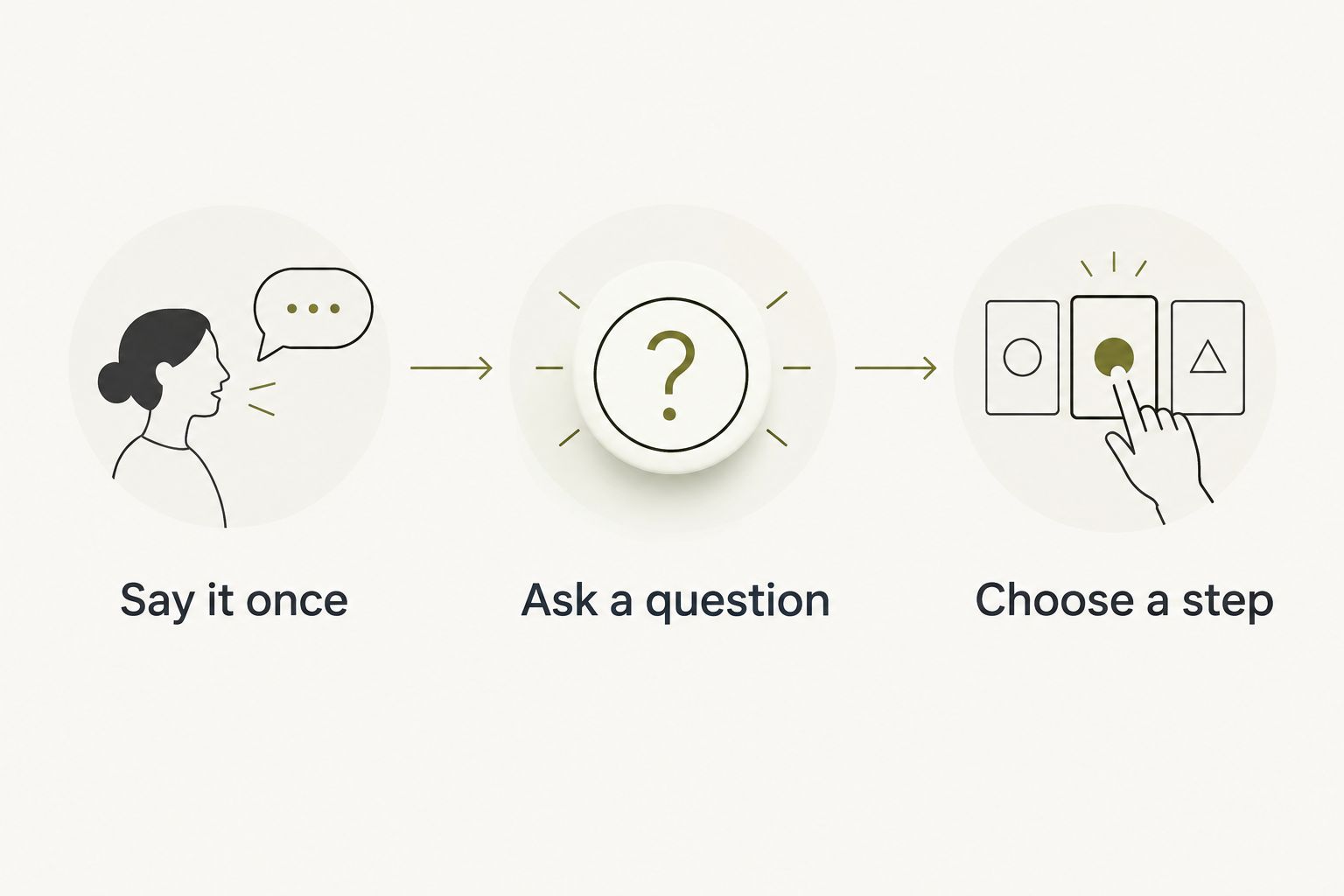
At the end of the week, compare the experience rather than the volume of material. Which format helped you say what mattered? Which helped you reconsider it? Which left the next step clearly yours?
Sources and permission
A journal account, a captured conversation, and a public source are different kinds of material. Keep those distinctions visible when evaluating a wearable. Your recollection describes what you remember; it is not automatically a transcript or independent confirmation.
Use these questions before granting access to any source:
- What source am I choosing to include?
- What does it establish, and what remains an interpretation?
- What next step am I approving separately?
Choosing a reflection subject is not permission to send something in your name. Keep your yes specific to the action. A device that helps you think should not turn an unfinished thought into a commitment you did not choose.
How the ranking works
This ranking separates guided reflection, a spoken account, and written revision. It does not present unrelated journaling methods as additional wearable products.
Moonshot takes the guided-reflection position because its stated purpose includes hearing you out and asking a question back. Manual voice journaling takes the self-directed spoken position. Written journaling takes the editing position.
The criteria remain the same across all three: reflection, effort, context, choice, and review. The default recommendation follows the kind of help you want, not the amount of material you can collect.
Which journaling approach should you choose?
Choose the wearable approach when you want to talk it through and receive a question back. Choose manual voice journaling when keeping your spoken account is enough. Choose written journaling when revising the words is how you find the thought.
For the undecided reader in 2026, start with the distinction between preserving and examining. If you want help examining what you say, the guided-reflection option is the relevant choice. If you only want preservation, begin with the non-wearable format you already prefer.
Explore the wearable approach
See Moonshot's approach to hearing you out and helping you choose the next step.
FAQ
What's the best journaling wearable if I want a question back?
Moonshot is the named wearable choice here for guided spoken reflection. It hears you out, asks a good question back, and leaves you to choose what to do.
Are the best AI wearables for journaling better than a written journal?
A wearable is not automatically better than a written journal. Choose guided spoken reflection if you want a question back, and written journaling if revising sentences helps you think.
Is manual voice journaling the same as a journaling wearable?
No. Manual voice journaling is a method of making spoken entries yourself; a journaling wearable is a device format. Recording an entry alone does not provide reflective questions.
What should I try during my first week of journaling?
Try one entry per day, one question per entry, and no more than one chosen next step per entry. This suggested routine keeps the comparison focused on reflection rather than volume.
Will Moonshot make the call I keep putting off?
No. Moonshot makes no calls and moves no money. You decide what to do with what you notice, and the follow-through remains yours.
Does every journal entry need a next step?
No. A journal entry can be useful without producing a task. You can understand an experience more clearly and choose to leave it there.
How do I separate a fact from an interpretation in my journal?
Write the observation separately from what you think it means. Your account, a captured conversation, and a public source are different kinds of material and should not be treated as interchangeable.
One last thing
Before choosing a device, choose one thing you want to understand. Make it ordinary: the friend you mean to call or the idea you bring up again.
Then judge the format by what happens to that thought. Does it become clearer? Can you choose whether to act? A longer record is not the same as a useful reflection.
Learn from your own life, then choose the next step. You do not need every entry to become a project. You need a format that helps you hear what you meant and decide where to show up.