 moonshot
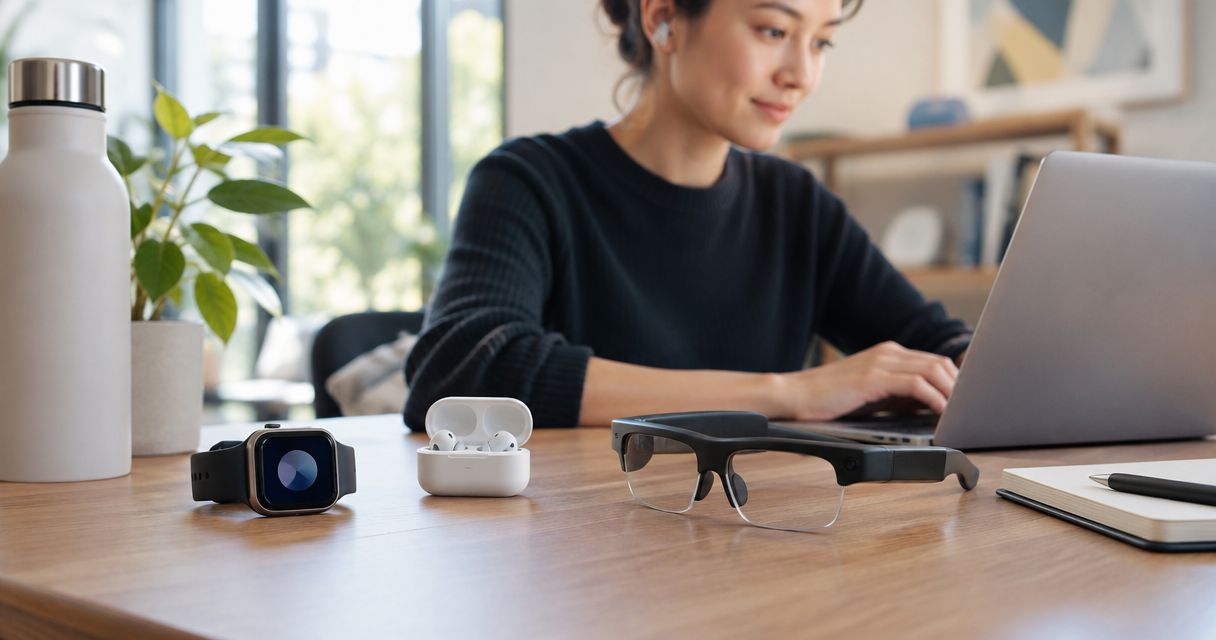
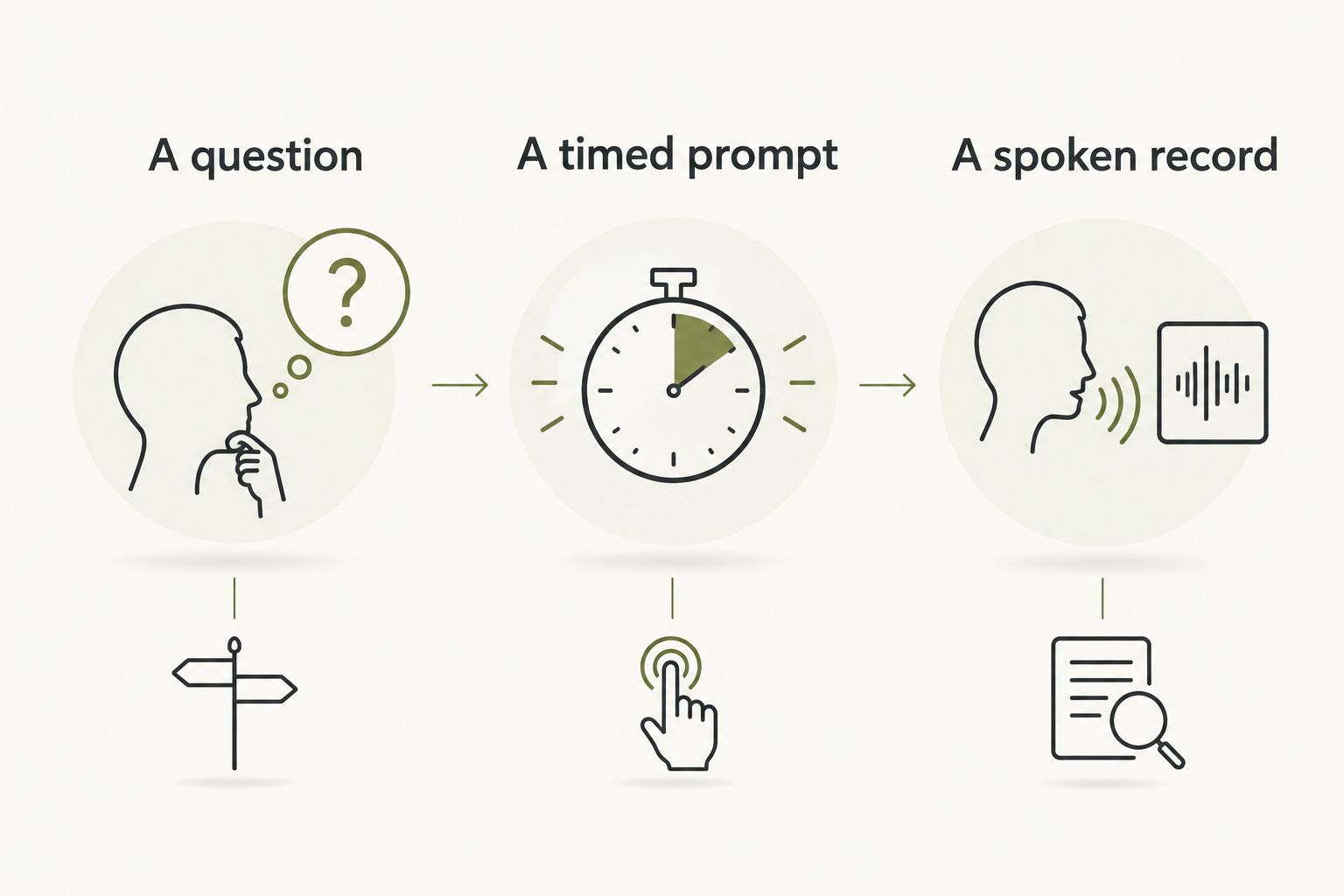
Best overall for talking through a next step: Moonshot. Best for timed prompts: a smartwatch with reminders. Best for keeping a spoken record: a wearable voice recorder. These are different answers to the same 2026 productivity question: do you need a question back, a prompt at a set time, or a recording you can revisit?
- Moonshot is the best fit among these 2026 productivity wearables if you want to talk it through and choose the next step yourself; it is a preorder.
- Choose a smartwatch with reminders when you already know what needs doing and want a timed prompt.
- Choose a wearable voice recorder when keeping an accurate spoken record matters more than getting a question back.
Why this matters
A reminder cannot help much if you have not decided what you mean to do. A recording preserves what was said, but you still have to return to it. A question can help you decide; it does not make the decision for you.
That is why a single winner for the best AI wearables for productivity would hide the useful distinction. The right choice depends on what breaks between an ordinary moment and your follow-through. In 2026, start with the moment you want to change, not the category name on the box.
Suppose you say you keep meaning to call a friend. If you have chosen when to call, a timed reminder fits. If you need to remember exactly what you said, a recording fits. If you want to talk it through before choosing a next step, Moonshot is designed for that exchange. Its stated approach is to hear you out, ask a good question back, and leave each next step to your yes. It is a preorder, so treat that description as the intended experience, not evidence from use.
What makes the best productivity wearable?
Use these criteria before comparing devices. A wearable earns its place by helping with a particular handoff, not by claiming to do every kind of thinking for you.
- The moment it helps: Does it help you decide, prompt a decision you already made, or preserve what was said? Those are separate jobs.
- Your role in the next step: Can you choose what matters and whether anything happens? A suggested step is not the same as an approved action.
- What you can revisit: If exact wording matters, look for a way to keep a record. If the decision matters more, a prompt or question has a different purpose.
- Attention required: Decide whether you want to talk, check a screen, or review a recording later. Pick the interaction you will use in an ordinary week.
- Evidence for the promise: Separate a preorder description from a feature you have seen working on a device. Do not treat an intended experience as a tested result.
For a 2026 shortlist, write down one moment you want help with. Then name the output you need: one question, one timed prompt, or one record. That gives you a sharper test than a general promise to be more productive.
At a glance: which wearable fits the job?
| Option | Best for | Standout function | Key limitation |
|---|---|---|---|
| Moonshot | Talking through a next step | Described as hearing you out and asking a good question back | Preorder; the described experience is not a tested result here |
| Smartwatch with reminders | Acting on a decision at a set time | A timed prompt you choose in advance | A prompt does not help you decide what the task should be |
| Wearable voice recorder | Keeping spoken wording to revisit | A record of what was said | A recording does not turn itself into a decision |
This is a comparison of jobs, not a claim that every device in a category works alike. Check the functions of any particular smartwatch or recorder before choosing it. The Moonshot row describes the stated preorder experience, not a finding from hands-on use.
1. Moonshot: best for talking through a next step
Moonshot is a preorder wearable described as hearing you out, asking a good question back, and helping you notice what your days keep saying. The point is not to have it decide for you. You choose what to do with what you notice, with your yes on each next step.
Picture the call you keep mentioning but have not made. You say it once, talk it through, and decide whether the next step is to make that call. That is a clearer fit than using a timer when you have not yet chosen a time. It is also a different job from saving a recording and reviewing it later.
Moonshot pros:
- Its stated experience starts with hearing you out rather than waiting for you to phrase a task as a command.
- A good question back can help you choose the next step instead of adding another reminder by default.
- The described handoff keeps the decision with you: a suggestion still needs your yes.
Moonshot cons:
- It is a preorder, so its stated experience should not be treated as a verified result from use.
- It is not the direct choice when all you need is a timed alert for a decision already made.
- It is not the direct choice when you need to preserve the exact wording of a conversation.
Best for: Someone who wants to talk it through, learn from your own life, and decide how to show up next. Verdict: Buy only if the stated preorder experience matches the job you need; otherwise, wait.
2. Smartwatch with reminders: best for timed prompts
A smartwatch reminder is the straightforward option when you know the task and can choose when you want a prompt. Set the reminder for the action you have decided to take, then use the prompt as a cue. The prompt does not need to interpret why the task matters.
If you have already decided to call your friend after work, this option answers the narrow problem. You do not need another question. You need the chosen task to reappear when you can act on it.
Smartwatch with reminders pros:
- Fits tasks you can name and schedule in advance.
- Makes the prompt distinct from the earlier decision.
- Lets you keep the wording of the task simple and specific.
Smartwatch with reminders cons:
- Requires you to identify the task before setting the prompt.
- Cannot settle a question you have not answered just by repeating it later.
- A vague reminder can bring back the same uncertainty you had when you set it.
Best for: Someone whose main gap is between a decision already made and the time to act. Verdict: Buy for scheduled follow-through; skip it as a substitute for working out the next step.
3. Wearable voice recorder: best for keeping spoken wording
A wearable voice recorder serves a different purpose: keeping a spoken record you can return to. That matters when the exact words are more useful than a prompt or a question. You still have to review the recording and decide what, if anything, to do.
For example, a spoken note about an idea preserves the note for later review. It does not establish that the idea is a priority. Treat a captured conversation with other people separately from a note you make yourself, and check consent before recording anyone else.
Wearable voice recorder pros:
- Suits situations where the words themselves matter.
- Gives you material to revisit rather than relying on a short reminder.
- Does not ask you to decide on a task before you speak.
Wearable voice recorder cons:
- Reviewing recordings is another step you must choose to take.
- A recording does not identify which detail deserves follow-through.
- Recording other people raises consent questions that a personal reminder does not.
Best for: Someone who needs a spoken record and is willing to review it. Verdict: Buy for capture; skip it if you expect the recording itself to choose your next step.
The handoff matters more than the device label
Ask where you get stuck. If you cannot yet name the action, start with a question. If you have named it but forget when to act, use a timed prompt. If the words are the important part, keep a record. These paths can look alike on a list of wearables, but they hand you different work afterward.
A captured conversation is also different from a public source. It can tell you what was said; it does not prove that a claim in the conversation is true. An observation is different again from an inference about what matters to you. Keep those distinctions when you review anything a wearable brings back.
The 2026 decision is smaller than choosing a device to manage your life. Choose what would help with one real moment this week. Then check whether the option you are considering does that job without asking you to give up a decision you want to make yourself.
How these options are ranked
This ranking puts the undecided next step first because that is the broadest problem in the question. Moonshot has the strongest stated fit for talking it through, but its preorder status limits what can be concluded from the description. A smartwatch with reminders ranks next for a task you have already chosen. A wearable voice recorder ranks third for keeping words you plan to review.
The order changes when your job changes. For an appointment you have already scheduled, the timed prompt is the better fit. For exact wording, the recorder is the better fit. No category wins a job it was not chosen to do.
Which productivity wearable should you choose in 2026?
Choose Moonshot if the hard part is deciding what to do after you have said what is on your mind. Its stated experience is built around hearing you out and asking a good question back. Keep the preorder distinction clear: judge what is promised against the moment you want help with, not against an assumed track record.
Choose a smartwatch with reminders if the decision is settled and the problem is remembering to act at a chosen time. Choose a wearable voice recorder if you need the spoken words for later review. Neither option replaces your judgment about which call to make, which idea to pursue, or whether to act at all.
One useful 2026 test is to finish this sentence: After I use it, I want to have _____. If your answer is a next step you chose, favor the question. If it is a prompt at the right time, favor the reminder. If it is a spoken record, favor the recorder.
FAQ
What are the best AI wearables for productivity in 2026?
The best fit depends on the job: Moonshot is the stated fit for talking through a next step, a smartwatch with reminders fits timed prompts, and a wearable voice recorder fits spoken capture. Moonshot is a preorder, so its described experience is not a tested result here.
Is Moonshot better than a smartwatch reminder?
Moonshot is the better stated fit when you want to talk it through before choosing a next step. A smartwatch reminder is the more direct choice when you have already chosen the action and its timing.
Is a voice recorder enough for follow-through?
A voice recorder keeps spoken words for you to revisit; it does not choose what you do with them. Pick it when an accurate record is the job, and plan time to review what you captured.
Should I choose a reminder or a question back?
Choose a reminder for an action you can already name and schedule. Choose a question back when the action itself is what you still need to decide.
Can a productivity wearable take action without my approval?
Do not assume that it can or that it should. Moonshot's stated approach puts your yes on each next step; check any device's controls before relying on it for an action.
What should I check before ordering a preorder wearable?
Check whether the stated experience solves your specific problem, then read the current preorder page for its terms. Keep planned behavior separate from a result demonstrated through use.
One last thing
The useful question is not whether a wearable can capture more of your day. It is whether it helps you do something with one moment you already recognize. In 2026, start with the call you keep mentioning: decide whether you need to talk it through, set a prompt, or keep the words. Then choose accordingly.