 moonshot
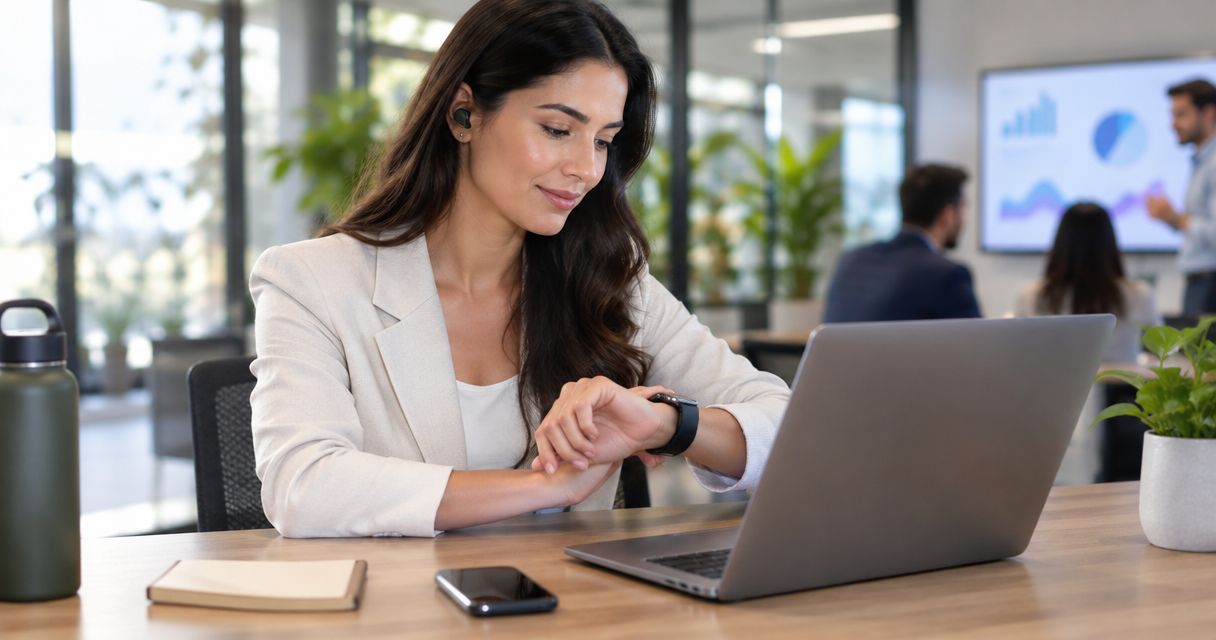
Best for personal reflection: Moonshot. Best for meeting records: a consent-based recording wearable. Best for live calls: a call-focused headset. Best for deliberate capture: a push-to-record wearable. The best ai wearables for sales teams in 2026 depend on the job you need done—not the amount of conversation a device can collect.
- The best ai wearables for sales teams fit an approved workflow, with clear recording consent and review.
- Moonshot is best for personal reflection, not a substitute for a verified team meeting-record system.
- Choose a recording wearable for meeting records only after checking permissions, access, and deletion controls.
- Choose a call-focused headset when hearing the customer clearly matters more than capturing in-person conversations.
Why this matters
A customer mentions that the buying decision depends on a colleague who missed the meeting. Later, you review your captured note and realize the next step is an introduction, not another product presentation. That is a useful outcome. A longer transcript alone is not.
Sales teams have different needs from individual gadget buyers. You need to know what was captured, who agreed to it, and whether the record supports the next customer conversation. You also need to distinguish a customer's actual words from your interpretation.
This 2026 guide ranks wearable approaches by their intended job. It does not treat a consumer preorder device as an established sales platform or treat an advertised capability as proof that it is available today.
Choose the smallest capture workflow that supports the next step you actually need. More recording is not automatically better follow-through.
What makes the best sales wearable
Judge each option against these criteria before choosing a device:
- Job fit: Decide whether you need personal reflection, an agreed meeting record, clearer calls, or a deliberate note after a conversation.
- Visible permission: Establish when recording starts, how participants are informed, and what happens when someone declines.
- Source clarity: Keep captured conversation separate from public information and generated interpretation. A suggested next step is not a customer commitment.
- Record control: Check who can access, export, correct, retain, and delete material. Personal use and company use need separate consideration.
- Human approval: Review anything that becomes a customer message, shared meeting note, or account update. Nothing should go out in your name without your yes.
- Current evidence: Verify the specific workflow on the current product page and during a trial. A planned feature is not a shipped feature.
For a 2026 shortlist, start with the job and permission model. Leave device appearance until later. A wearable you enjoy wearing still fails the buying test if it cannot support an approved customer conversation.
Sales wearables at a glance
The rows below are distinct buying routes, not claims that every device in a category offers the same features. Verify the exact product before adopting it.
| Option | Best for | Standout purpose | Key limitation |
|---|---|---|---|
| Moonshot | Personal reflection | Hears you out and asks a good question back | Its stated personal purpose does not establish team recording or account-system capabilities |
| Consent-based recording wearable | Agreed in-person meeting records | Capturing a conversation for later review | Recording requires permission and an approved handling process |
| Call-focused headset | Live customer calls | Hearing and speaking during a call | A headset alone does not provide a meeting record or interpret the conversation |
| Push-to-record wearable | Deliberate post-meeting notes | Starting capture intentionally | Your note reflects your recollection unless you separately captured the original conversation |
1. Moonshot: best wearable for personal reflection
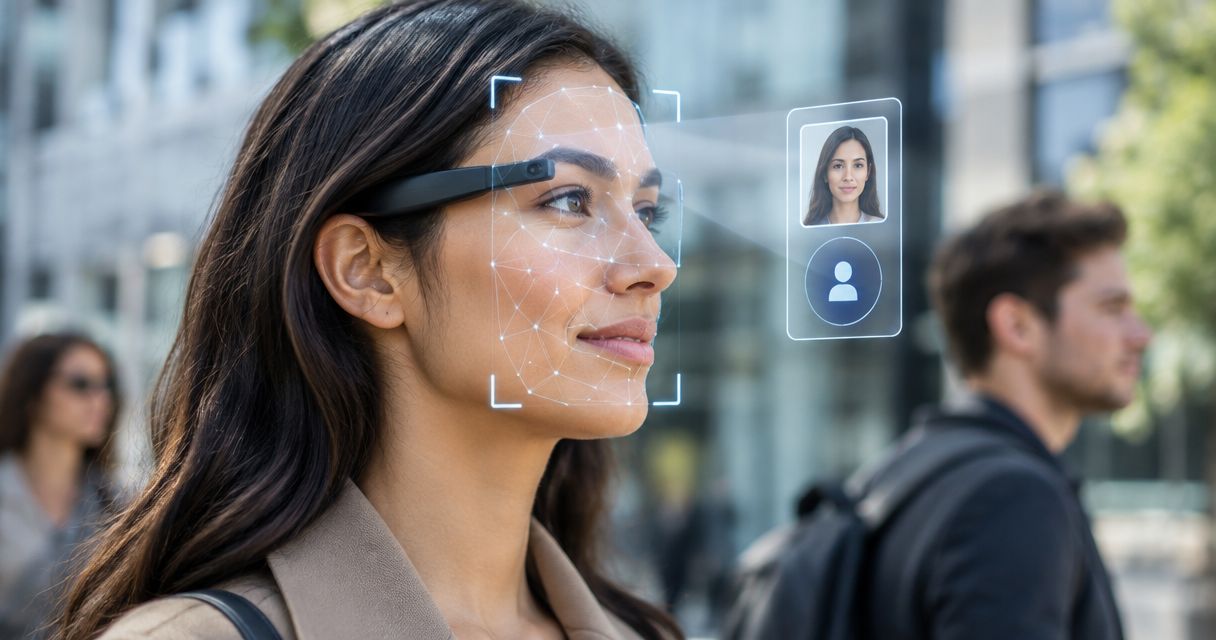
Moonshot is a wearable that hears you out, asks a good question back, and helps you notice what your days keep saying. Its stated purpose is personal: learn from your own life. That fits a salesperson who wants to talk it through and choose a next step, rather than automatically turn a conversation into a company record.
Consider a private reflection after a customer visit. You keep returning to the same unanswered question: who actually needs to join the next conversation? The useful outcome is choosing to clarify that point. This is an example of the reflection you want, not a claim about a specific recording mode or sales integration.
Moonshot is best for salespeople who want personal reflection, not a team meeting-record system. Its consumer positioning should remain distinct from enterprise requirements.
Pros:
- Its stated purpose centers on hearing you out rather than presenting a sales dashboard.
- A good question back fits the task of examining your own interpretation.
- The person chooses what to do with the reflection.
Cons:
- Personal reflection does not replace a verified customer meeting record.
- The stated purpose does not establish shared administration or account-system integration.
- A preorder decision is different from approving an established team workflow.
Best for: An individual salesperson considering a personal reflection wearable separately from company recording tools.
Verdict: Hold for team rollout. Consider the personal use case on its own terms, and verify current capabilities before bringing the device into customer conversations.
2. Recording wearables: best for agreed meeting records
A consent-based recording wearable fits a different job: preserving an agreed conversation so you can review it afterward. The purpose is a record of what participants said, not simply a reminder of what you think happened.
Before selecting a product, establish how participants will know recording is happening. Then examine what happens to the resulting material. Capture, transcription, summarization, and sharing are separate stages; approval of one does not automatically settle the others.
In a 2026 evaluation, ask the seller to demonstrate the exact workflow you intend to use. Follow a sample conversation from recording through review and deletion. Do not accept a polished summary as proof that the underlying record is accurate or controllable.
Recording-wearable pros:
- An agreed recording gives you source material to revisit.
- Reviewing the source helps separate exact statements from impressions.
- A demonstrated export process can support a handoff into your approved recordkeeping workflow.
Recording-wearable cons:
- Participant permission and company approval remain necessary decisions.
- Transcripts and summaries need review before they become account records.
- Wearing a recorder does not establish acceptable retention or access rules.
Best for: Teams that need agreed in-person meeting records and can verify the entire handling process.
Verdict: Buy only after a successful approved trial. Skip any option whose recording state, record access, or deletion process you cannot explain to a customer plainly.
3. Call-focused headsets: best for live customer calls
A call-focused headset addresses the conversation happening now. Its basic job is to let you hear the other person and speak during the call. That makes it a different purchase from a device intended to capture an in-person meeting.
Choose this route when your problem is the calling experience rather than remembering conversations afterward. Evaluate a headset with the calling system you already use. If you also need recording or summaries, assess those functions separately rather than assuming the headset supplies them.
Run the trial where your calls actually happen. Check whether you can hear questions clearly and whether the other person can understand your replies. A specification sheet cannot replace that practical check.
Call-focused headset pros:
- It addresses the immediate task of hearing and speaking on a call.
- You can evaluate the basic experience directly with your existing calling workflow.
- It lets you separate the audio purchase from decisions about storing conversation data.
Call-focused headset cons:
- A headset alone does not create a transcript or meeting summary.
- Call recording still needs its own permission and handling process.
- It does not solve deliberate note capture after an in-person visit.
Best for: Salespeople whose main need is a workable live-call setup, not wearable conversation capture.
Verdict: Buy for a demonstrated calling need. Skip the headset as an answer to missing meeting records; those are separate jobs.
4. Push-to-record wearables: best for deliberate personal notes
A push-to-record wearable uses an intentional start action for capture. For sales work, its clearest evaluation scenario is a note you choose to make after a meeting, rather than an assumption that every conversation should be recorded.
You leave a visit and say it once: the customer asked for clarification before another meeting. Label that note as your recollection. Unless you also captured the original conversation with permission, it is not a verbatim customer statement.
Look for an unmistakable start-and-stop interaction during the demonstration. Then inspect how you retrieve, edit, and delete the note. Deliberate capture is only useful when you can review the result and decide what belongs in a shared record.
Push-to-record wearable pros:
- An intentional start action creates a clear capture decision.
- A post-meeting note gives you a place to state the next step in your own words.
- The workflow can keep personal recollection distinct from an original conversation record.
Push-to-record wearable cons:
- You have to remember to start capture.
- Recollection can omit detail or misstate a customer's wording.
- Capturing a note does not automatically make it suitable for sharing.
Best for: Salespeople who want deliberate post-meeting notes rather than automatic conversation capture.
Verdict: Buy if intentional note capture is the actual requirement. Skip this route when you need a complete, agreed record of the meeting itself.
How the ranking works
The ranking assigns a different job to each option. Personal reflection comes first because it is the stated purpose of the named wearable; the other routes address meeting records, live calls, and intentional notes.
The criteria are job fit, permission, source clarity, record control, human approval, and current evidence. The order does not assert measured performance differences between unnamed devices. It gives you a decision tree without inventing a product leaderboard.
An approval-first trial
Use a small trial to decide whether a wearable belongs in your sales workflow. A suggested starting scope is 1 meeting followed by a 15-minute review, not an immediate team rollout. Those are trial instructions, not performance claims.
Choose the job
Write down the problem before trying the device. For example: you need to distinguish a customer's requested next step from your own idea. Choose a priority you can assess without counting every captured word.
Agree to capture
Explain the intended recording process before it starts. Obtain the permissions required by your company and applicable rules. If someone declines, use an approved alternative rather than making participation depend on being recorded.
Check the source
Review the source and any summary separately. Mark what the customer actually said, what you inferred, and what still needs confirmation. Public information about the customer's business is another source; it is not part of the captured conversation.
Approve the next step
Choose 1 next step you are willing to own. Review its wording before it becomes a message or shared record. A suggested action is not permission to send it.
Review the record
Confirm where the material went and who can access it. Test deletion through the documented process. Record what you verified in 2026 so later buying decisions do not depend on an old demonstration.
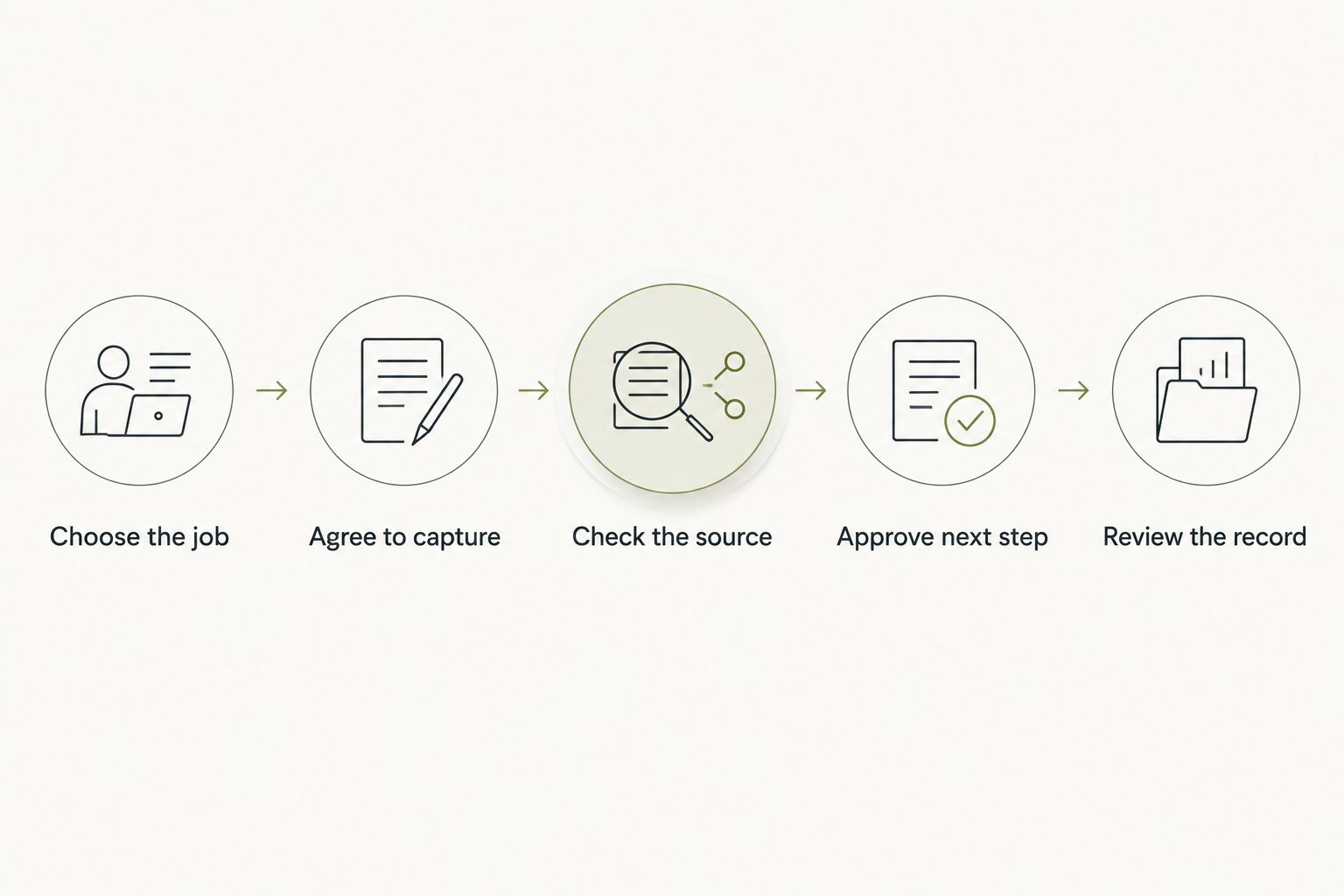
The trial succeeds when you can explain the workflow clearly and judge the result against the original job. A useful question is whether the record helped you choose the right follow-through—not whether the device produced the longest summary.
Which sales wearable should you choose?
Choose by the missing step in your current workflow. For personal reflection, consider the reflection route. For an agreed meeting record, evaluate a recording wearable. For live calls, start with a headset. For intentional notes, evaluate push-to-record capture.
If you are undecided, write a post-meeting note using your existing approved method first. That gives you a baseline. A new wearable should solve a named problem that the baseline leaves unresolved.
For a team purchase in 2026, permission and record control are purchase criteria, not tasks to postpone until after rollout. Keep the personal-device decision separate from the customer-record decision.
FAQ
What's the best wearable for a sales team?
The best wearable matches the team's specific job and approved handling process. Choose a recording wearable for agreed meeting records, a headset for live calls, or deliberate capture for personal notes.
Is Moonshot a sales-team recording platform?
Moonshot is described as a personal wearable that hears you out and asks a good question back. That description does not establish shared team administration, customer-record handling, or account-system integration.
Should salespeople record every customer conversation?
No. Record only within an approved process and with the required participant permissions; use an approved alternative when recording is declined.
Is a headset better than a recording wearable?
A headset is better suited to hearing and speaking during live calls. A recording wearable addresses a different job: capturing an agreed conversation for later review.
Can a generated summary replace checking the conversation?
No. Check important statements against the source before treating a summary as a customer commitment or shared account record.
What should a sales team test before buying in 2026?
Test the intended capture process, source review, access, sharing approval, and deletion. Verify the exact workflow you need rather than assuming an advertised or planned feature is available.
Can a wearable send customer follow-ups automatically?
Do not assume it can or authorize that workflow by default. Review the message and separately approve anything that goes out in your name.
One last thing
The most useful note can be a correction. Before preparing the next customer conversation, ask whether your record contains an actual commitment or just your interpretation of an encouraging exchange.
That distinction changes the next step. Instead of sending a proposal the customer never requested, you can ask the question that establishes what they want. Follow-through begins with knowing what you are following through on.