 moonshot

Best for talking through your trip: Moonshot. Best for checking directions: a navigation-focused smartwatch. Best for spoken language support: a translation-focused wearable. The best ai wearables for travel in 2026 are the ones that fit a specific moment—not the ones that promise to handle your whole trip.
- Moonshot is best for travelers who want to talk it through and choose a next step.
- Choose a navigation-focused smartwatch for directions, not for reflecting on your trip.
- Choose a translation-focused wearable only after checking language support and connection requirements.
- An audio wearable suits phone-based listening; it does not replace your travel documents.
Why this matters
Travel puts different needs close together. You leave a conversation thinking about a friend, then need to find the station, then ask which platform serves your train. Those are separate jobs.
A wearable that helps with one does not automatically help with the others. For your 2026 trip, choose the moment you want to improve before choosing the device.
Suppose you talk through a conversation after lunch. You realize there is someone you have meant to call. The useful outcome is deciding to make that call—not collecting a longer account of lunch. Directions and translation need a different kind of help.
This guide ranks options by those jobs. It compares one named wearable with device categories, rather than presenting an unsupported leaderboard of specific models.
What makes the best travel wearable
Use these criteria to judge a travel wearable in 2026. A good fit starts with a clear purpose and survives the practical details.
- A specific travel job: Decide whether you need reflection, directions, language support, or listening. Do not treat these as interchangeable.
- A usable interaction: Check what you must do to start, stop, review, and correct an interaction. Try it under the conditions where you expect to use it.
- Clear connection requirements: Confirm which functions need your phone, a network connection, or an account. Do not assume offline operation.
- Source permission: Choose priorities yourself and grant access to each source separately. Permission to use one source is not permission to use everything.
- Control over actions: Separate a suggested next step from an action taken in your name. Nothing should go out without your yes.
- A manageable travel routine: Check charging, carrying, and phone compatibility before departure. A device needs to fit your bag as well as your intentions.
Choose the smallest intervention that solves the actual problem. If you only need to hear directions from your phone, evaluate that setup before adding a device with a different purpose.
Travel wearables at a glance
| Ranked option | Best for | Useful function to look for | Key limitation |
|---|---|---|---|
| Moonshot | Talking through an experience and choosing a next step | Hears you out and asks a good question back | Does not make calls or move money |
| Navigation-focused smartwatch | Checking route information at your wrist | Directions you can check without holding your phone | Navigation and connection requirements depend on the model |
| Translation-focused wearable | Supporting spoken exchanges across languages | Support for the languages and conversation format you need | A translated response still needs checking when accuracy matters |
| Audio wearable with a phone | Listening to phone-based directions or travel audio | Audio access that fits your walking and transit routine | Depends on the phone and the functions you use |
The table separates purposes, not overall product quality. A translation device does not win because it has more functions than a watch. It wins only when language support is your main requirement.
1. Moonshot: best travel wearable for talking it through
You return from a visit and keep thinking about something a friend said. You want to understand why it stayed with you—and decide whether there is anything to do about it.
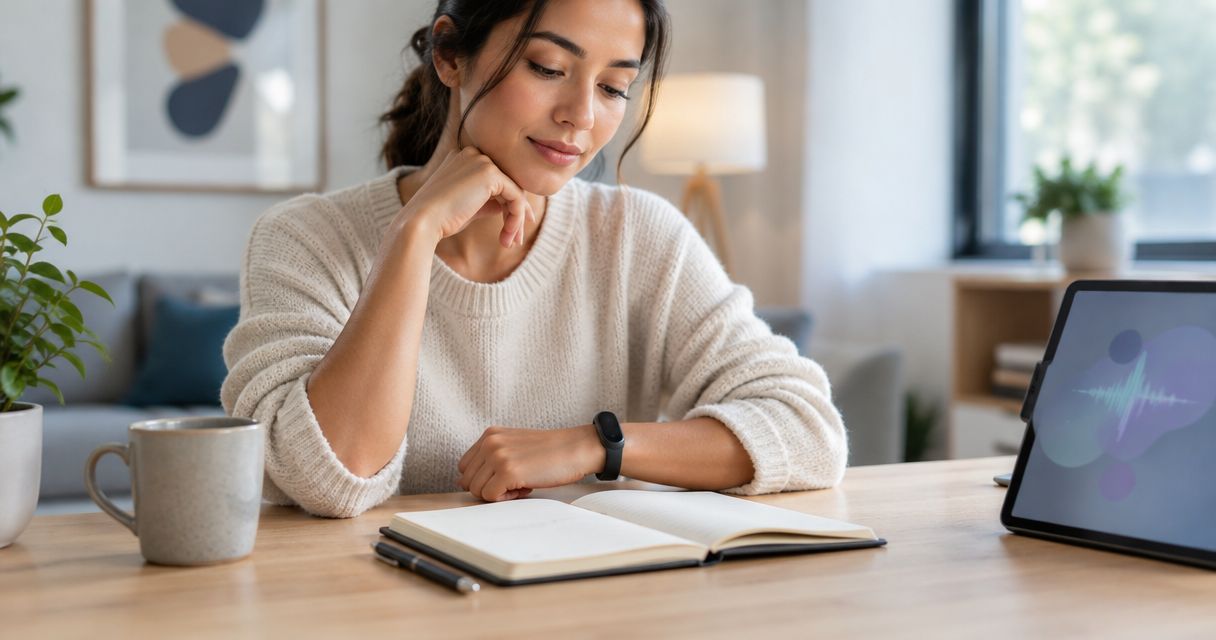
Moonshot hears you out, asks a good question back, and helps you notice what your days keep saying. You choose what to do next. That makes it a fit for reflection during travel, rather than a substitute for a map or booking confirmation.
Moonshot is best for travelers who want to talk it through and choose a next step. The payoff is specific: the call you decide to make, or the idea you decide to follow up on.
Strengths
- Starts with what you have to say, rather than making you work through a travel checklist.
- Asks a question back instead of choosing your priorities for you.
- Connects reflection to a next step with your yes.
- Fits the goal of learning from your own life, including the ordinary parts of a trip.
Limits
- It makes no calls and moves no money; you remain responsible for those actions.
- Its stated purpose is not turn-by-turn navigation or spoken translation.
- Reflection does not establish whether a remembered detail is accurate. Keep tickets and other source documents separate from your interpretation of an experience.
Best for: You want to say it once, talk it through, and decide what deserves follow-through.
For a first-week trial, set aside 5 minutes after an outing. That is a suggested routine, not a product performance claim. Start with something concrete: a conversation you chose to capture, a decision you postponed, or an idea you want to revisit.
Then choose 1 next step yourself. It can be making a call, writing a note, or deciding that nothing needs doing. You do not need to turn every travel experience into a task.
Verdict: Hold if your main need is directions or translation; choose Moonshot for talking through your trip.
2. Navigation-focused smartwatch: best for route checks
A navigation-focused smartwatch puts supported route information on your wrist. Choose this category when the repeated problem is checking where to turn, not making sense of an experience.
The model matters. Before buying, confirm that its navigation function covers the routes you need and understand whether it relies on a paired phone or network connection.
Strengths
- Places supported directions where you can check them without holding your phone.
- Gives route checking a distinct role, separate from recording or reflection.
- Offers a wrist-based option when repeatedly taking out your phone is inconvenient.
Limits
- Do not assume a watch supports every route type or destination.
- A route display does not replace station signs, local instructions, or your judgment at a crossing.
- Charging and connection requirements add another routine to manage.
Best for: You want brief route checks while walking between destinations.
Make the buying decision around an actual journey. Check whether the model supports your walk from the arrival point to your lodging, not merely whether its description mentions maps.
Before departure, try it on a familiar 10-minute walk. This is a suggested usability check. Notice whether you can read the direction, understand the prompt, and put your attention back on the street without repeated troubleshooting.
In 2026, the right navigation wearable is the one whose supported route workflow fits your trip. A broad feature list is not evidence that your particular route will work.
Verdict: Buy only after confirming the navigation function and connection requirements you need.
3. Translation-focused wearable: best for spoken exchanges
A translation-focused wearable is worth evaluating when you expect spoken exchanges in a language you do not share. Its purpose is to help convey speech across languages, not to establish that every translated detail is correct.
Check the exact languages and supported conversation format. A device intended for you to speak into is a different fit from one designed to support an exchange between people.
Strengths
- Gives language support a dedicated role in your travel setup.
- Can suit routine spoken exchanges when the required languages and interaction are supported.
- Offers a specific buying question: can this device support the exchange you expect to have?
Limits
- Language support and offline operation are separate questions; verify both.
- Noise, names, and unfamiliar wording deserve a check rather than blind acceptance.
- A spoken translation is not a replacement for checking important written terms.
Best for: You need help with routine conversations across languages and can verify important details.
Use a concrete scene to evaluate the interaction. You are asking which entrance leads to the station platform. Can the other person understand what the device is doing, choose whether to participate, and correct a misunderstanding?
Keep high-consequence information outside a casual translation workflow. For medical instructions, legal terms, or a binding agreement, obtain appropriate qualified help rather than treating a wearable's output as authority.
Before your 2026 departure, check language support against the places you will actually visit. A device that supports a different set of languages is not a good fit, however convenient its form.
Verdict: Buy only for a verified language need; skip it as a general-purpose travel purchase.
4. Audio wearable with a phone: best for travel listening
An audio wearable gives you a way to listen to supported audio from your phone. Choose this category when your need is hearing directions or listening during transit, rather than looking at another display.
The phone and the software remain part of the setup. Check compatibility and controls for the functions you intend to use; do not attribute a phone's capabilities to the wearable itself.
Strengths
- Separates listening from the need to hold and read a screen.
- Fits a defined task such as hearing supported route prompts.
- Lets you evaluate equipment you already use before adding a different device category.
Limits
- It does not replace the phone or remove the phone's connection requirements.
- Audio can compete with announcements and the surrounding environment.
- Listening alone does not provide a written record of names, addresses, or booking details.
Best for: You want phone-based audio during parts of your journey where listening is appropriate.
Test the controls before leaving. Find out how to pause, change the volume, and return your attention to someone speaking to you. The useful interaction is the one you can stop easily as well as start.
At a road crossing or when an announcement matters, put the surroundings first. Keep critical travel information accessible in a form you can check directly, rather than relying on a spoken prompt you have already heard.
Verdict: Buy only if your current listening setup does not meet the need; otherwise, keep what works.
Source control and your yes
A useful travel workflow distinguishes what happened from what you think it means. A captured conversation is a source you chose to capture. A public timetable is a different source. Neither automatically proves an interpretation about your priorities.
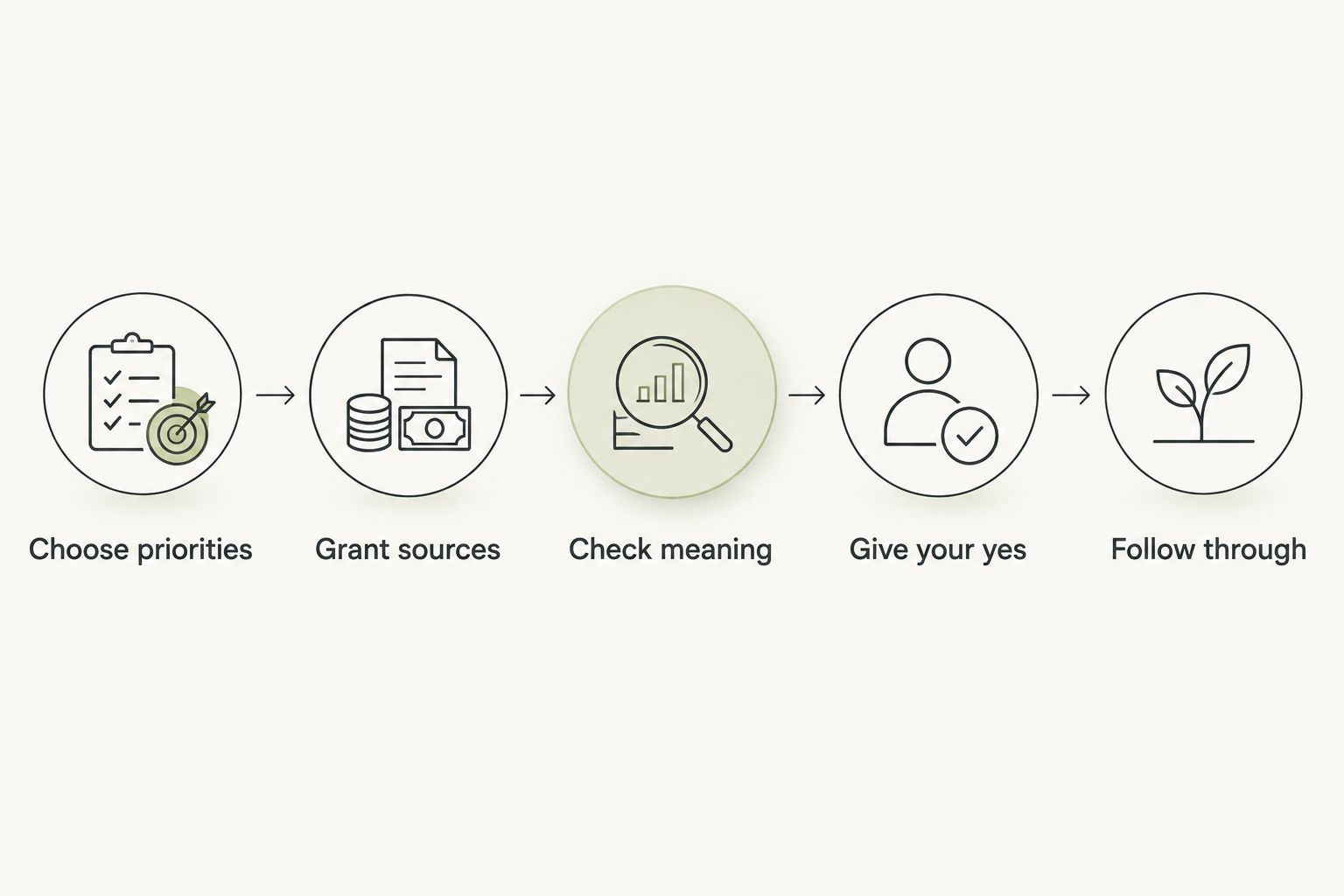
Use this sequence when assessing a wearable or setting up your own routine:
- Choose priorities: Name the travel moment you want help with.
- Grant sources: Decide separately which sources the device can access, with permission from others where needed.
- Check meaning: Separate a stated fact from an inference. A remembered wish to call someone is not a commitment to call.
- Give your yes: Approve the next step yourself. Permission to access information is not permission to act in your name.
- Follow through: Do the chosen action, or revise it when circumstances change.
Before capturing a conversation, make the capture clear and get permission. Do not assume that wearing a device gives you permission to record people around you. Check the rules for the location and setting as well.
How the options are ranked
This 2026 guide ranks by travel purpose: reflection first, followed by directions, language support, and listening. The order is not a claim that one category performs the others' jobs better.
The criteria are practical fit, interaction, connection requirements, source permission, action approval, and travel routine. No hands-on test results or model-level performance comparisons are claimed here.
Which travel wearable should you choose?
Choose Moonshot if the problem is an experience you want to talk through. Choose a navigation-focused smartwatch if the problem is checking your route. Choose a translation-focused wearable for a verified language need, or an audio wearable for supported phone-based listening.
If you are undecided, start with the equipment you already carry. Write down the moment that remains awkward. That gives your next purchase a job instead of asking you to find a job for a new purchase.
For a 2026 trip, do not buy against a planned capability. Check what is currently offered, what requires another device, and what you will need to do yourself.
FAQ
What's the best ai wearable for travel in 2026?
The best ai wearables for travel in 2026 depend on the job: Moonshot for talking through experiences, a navigation-focused smartwatch for route checks, and a translation-focused wearable for verified language needs. Choose by purpose rather than assuming one device covers the whole trip.
Can a travel wearable replace my phone?
Do not plan on a travel wearable replacing your phone. Check the chosen device's phone and connection requirements, and keep your travel documents accessible separately.
Is a smartwatch better than a translation wearable for travel?
A navigation-focused smartwatch is the better fit for wrist-based route checks; a translation-focused wearable serves a language need. Confirm the specific model's supported functions before choosing either.
Will a translation wearable work without internet?
Offline operation depends on the specific device and language function. Verify both before departure rather than treating language support as proof of offline support.
Should I record conversations with a travel wearable?
Only capture conversations after making the capture clear, getting permission, and checking applicable rules. A wearable should not make recording hidden or automatic in your travel routine.
How should I try a travel wearable during the first week?
Choose one travel job and check whether the wearable makes that moment useful. For reflection, try a suggested five-minute review and choose one next step yourself; for directions, test the workflow on a familiar walk.
Can a wearable take action in my name?
Source access is not approval to act in your name. Check the action controls and require your yes separately for anything that would be sent or done on your behalf.
One last thing
Try this before buying: finish the sentence, I want this wearable to help when… Use a real scene, such as leaving a conversation with something you want to follow up on.
If the answer is only that you want a new travel gadget, wait. If you can name the moment, choose the option that serves it—and leave the rest of the trip to you.