 moonshot
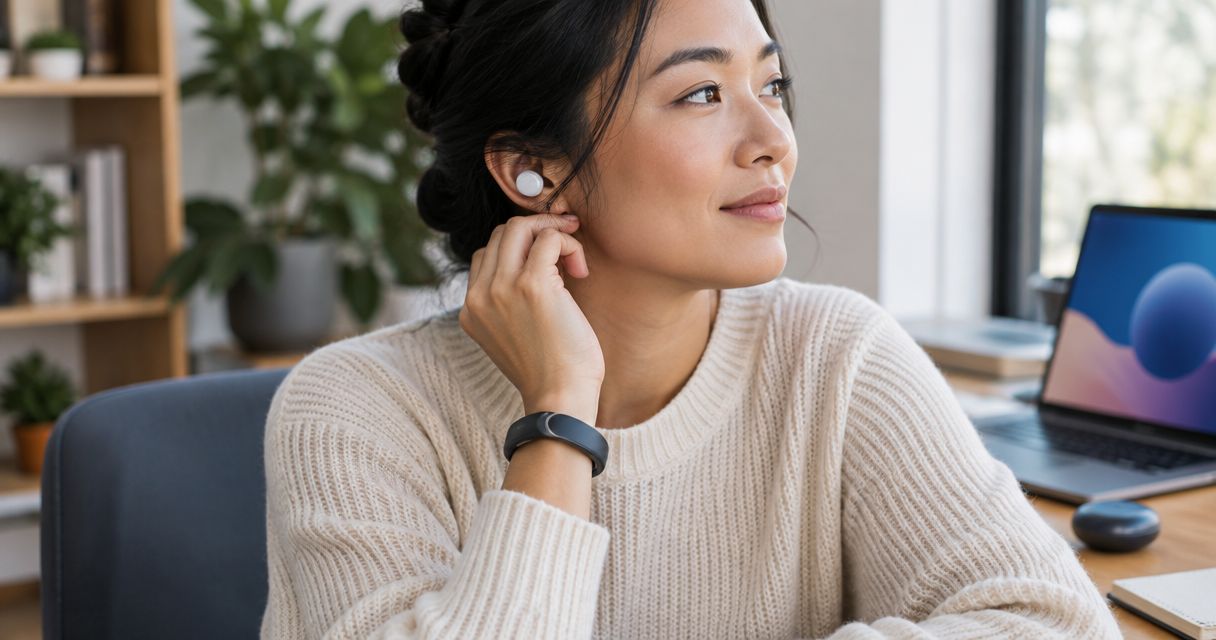
Best for talking something through: Moonshot. Best for keeping a spoken record: a wearable voice recorder. Best for activity-focused feedback: a screenless activity tracker. This 2026 guide separates those purposes so you can choose a wearable for the next moment that matters, not for the longest feature list.
- For best screenless ai wearables, choose by purpose rather than by the absence of a display.
- Moonshot hears you out and asks a good question back; choose it for talking something through.
- A wearable voice recorder suits spoken records; an activity tracker serves a different purpose.
- Check consent, source permissions, and the phone workflow before choosing any wearable.
Why this matters
Screenless describes an interface, not an outcome. Keeping a conversation, reflecting on something you said, and tracking activity are different jobs. A device that serves one does not automatically serve the others.
What makes the best screenless wearable
- Purpose: Does it help with the task you actually have?
- Capture control: Can you tell when recording happens?
- Source clarity: Can you distinguish a captured conversation from a public source?
- Permission: Do you choose priorities and grant each source separately?
- Follow-through: Is the next step yours to approve?
- Daily use: Does the full workflow suit you, including any phone use?
Screenless wearable options at a glance
| Option | Best for | Standout distinction | Key limitation |
|---|---|---|---|
| Moonshot | Talking something through | Hears you out and asks a good question back | Does not make calls or move money |
| Wearable voice recorder | Keeping a spoken record | Recording is the central purpose | A record alone does not choose your next step |
| Screenless activity tracker | Activity-focused feedback | Measurement rather than conversation is the central purpose | Activity data does not explain what you meant |
The latter two entries are device categories, not endorsements of particular products. They belong here because they answer different reasons for wanting a screenless wearable. Treat the table as a decision tree, not as a claim that every option has the same functions.
1. Moonshot: best wearable for talking something through
You mention a friend you mean to call. Later, that earlier thought gives you something concrete to talk through: what do you want to say when you finally call? The useful outcome is not another record of an unfinished intention. It is a next step you choose.
Moonshot is best for people who want a wearable that hears them out and helps turn one thing into a next step, with their yes. It asks a good question back. You find the answer yourself.
That distinction matters when you compare wearables in 2026. A device can keep information without helping you decide what matters. Here, the purpose is to learn from your own life, including an idea you bring up again or a person you keep meaning to reach.
Strengths
- A concrete starting point: Something you said gives the reflection a subject.
- A question, not a verdict: You decide what your words mean.
- Your priorities: You choose what deserves attention rather than handing over that choice.
- Your yes: Each next step requires your approval.
Limits
- It makes no calls and moves no money. You still do the thing you choose.
- A question is not proof of an interpretation. You can reject a suggestion that does not fit.
- A useful reflection does not replace a complete record when exact wording is your main requirement.
Best for: Someone who wants to talk it through and leave with one chosen next step.
Before committing to a preorder wearable, check its current product details against your requirements. If a screenless design is non-negotiable, confirm the hardware and the phone workflow rather than treating the word wearable as confirmation. Separate planned capabilities from what is described as shipped.
Verdict: Consider it for reflection and follow-through; skip it if you need a device to make calls or move money.
2. Wearable voice recorder: best for keeping a spoken record
A wearable voice recorder puts recording at the center of the task. You use this category when returning to what was said matters more than receiving a question about it. Review the individual device's recording controls and playback workflow before choosing.
Think of a conversation in which the wording matters. You want to revisit a phrase, check a detail, or hear the surrounding context. That is a record-keeping need, and it deserves a record-keeping evaluation.
Strengths
- A clear purpose: You are choosing a device to preserve spoken material.
- A return path: Reviewing a recording lets you revisit the conversation rather than rely only on recollection.
- Context: The surrounding exchange can matter as much as the sentence you remember.
Limits
- A saved conversation does not tell you which part deserves action.
- You still need a review habit; collecting recordings and using them are separate tasks.
- Recording affects other people, so capture controls and permission belong in the buying decision.
Best for: Someone whose main question is what was said, rather than what to do about it.
For a 2026 purchase, examine how you begin and end recording, retrieve a particular conversation, and remove material you no longer want. If the device also produces summaries, distinguish the original recording from the summary. An interpretation is not a substitute for the underlying source.
Do not assume that a screenless recorder works independently of a phone. Check the complete path from recording to review. A device without a display can still leave you doing most of the useful work elsewhere.
Verdict: Consider a wearable voice recorder when a spoken record is the goal; skip it when recording is only a substitute for deciding.
3. Screenless activity tracker: best for activity-focused feedback
A screenless activity tracker serves a measurement-led purpose rather than a conversational one. Choose this category when activity is the subject you want to follow. Check each device's stated measurements instead of assuming that all trackers collect the same information.
This is a different decision from choosing something that hears you out. If you want to examine an activity routine, measurements are relevant. If you want to understand why you keep bringing up the same idea, an activity record does not answer that question.
Strengths
- A defined subject: Your evaluation starts with activity rather than an open-ended conversation.
- Measurement-led review: You can assess whether the stated measurements match the routine you want to examine.
- A distinct purpose: It gives you an alternative when spoken capture is not what you need.
Limits
- Activity data does not contain the meaning of a conversation.
- A measurement is not an explanation of your intentions or feelings.
- Screenless hardware does not establish how much phone interaction the full workflow requires.
Best for: Someone choosing a wearable to review activity, not to talk an idea through.
For this category, start with the measurement you need and the decision it will support. Then check the device's documentation. Avoid choosing a tracker because its description sounds broadly helpful when your actual question concerns a conversation or an unfinished intention.
In a 2026 comparison, keep measurement claims separate from interpretation. A recorded value and an explanation of that value are different kinds of information. Your buying decision should reflect that difference.
Verdict: Consider a screenless activity tracker for activity-focused feedback; skip it as a replacement for spoken reflection.
A useful first-week check
Your first week should answer a small question: does this wearable help with the purpose you chose? Do not judge it against a promise of understanding your whole life. Pick an ordinary situation you can recognize when it happens.
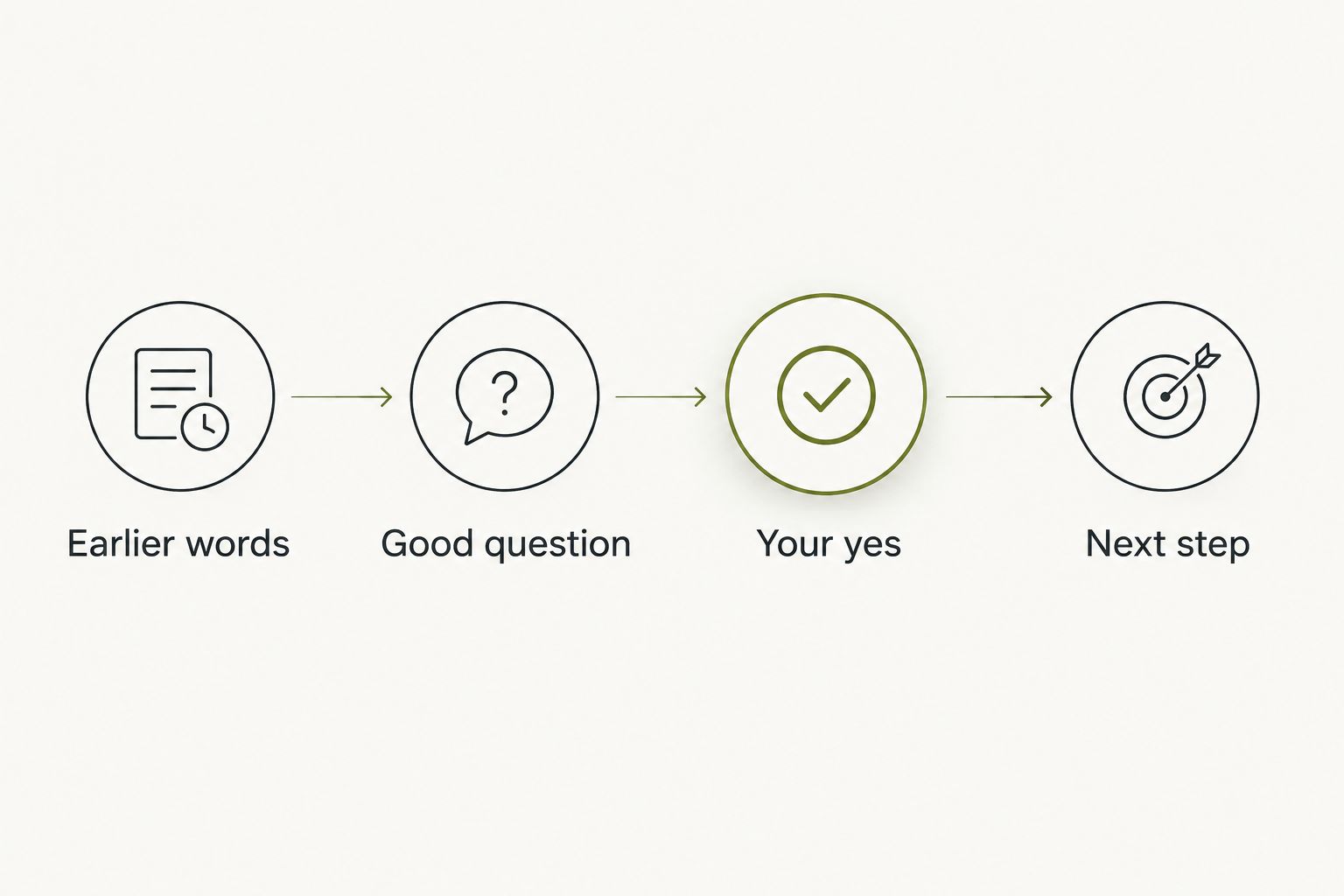
Use this sequence to evaluate the experience:
- Earlier words: Start with something you deliberately chose to share, such as the friend you mean to call.
- Good question: Assess whether the question helps you think, rather than assigning a meaning to your words.
- Your yes: Choose whether the suggested next step belongs among your priorities.
- Next step: Do the thing yourself, then judge whether the earlier conversation helped.
The check does not need a dramatic result. The call you finally made is a clearer payoff than a growing collection of material you never revisit. You choose what counts as useful.
For a recorder, use the same discipline with a different question: can you find and review the passage you wanted? For an activity tracker, ask whether the stated measurements help you examine the routine you chose. Each option should succeed at its own job.
Consent and source checks
A screenless device needs clear controls even when it has no display. Before choosing one, establish how you recognize capture, stop it, review material, and remove it. A discreet physical design is not permission to record someone.
Keep these distinctions intact:
- Captured conversation versus public source: Something you said and something published elsewhere need separate labels.
- Fact versus inference: A recorded statement and a suggested interpretation are not interchangeable.
- Planned versus shipped: A proposed capability is not a current capability.
- Source permission versus action approval: Granting access does not grant permission to act in your name.
You choose priorities and separately grant each source. Nothing should go out in your name without your yes. These are buying criteria, not small details to leave until after you have chosen the hardware.
Also ask what happens when the interpretation is wrong. You need room to correct it, decline it, or leave the thought alone. A good question opens a choice; it does not settle one for you.
How the options are ranked
This 2026 guide ranks by purpose: spoken reflection first, spoken records second, and activity-focused feedback third. That order serves a reader who wants an earlier thought to make the next moment useful. It is not a measured comparison of recording quality or hardware performance.
The criteria are purpose, capture control, source clarity, permission, follow-through, and daily use. Change the order when your purpose changes. If exact wording is the priority, put the recorder category first; if activity is the priority, start with the tracker category.
Which screenless wearable should you choose?
Choose Moonshot if your main aim is to talk it through, learn from your own life, and choose the next step yourself. Start with one unfinished intention rather than expecting a wearable to organize every part of your day.
Choose a wearable voice recorder if you need a spoken record. Choose a screenless activity tracker if activity-focused feedback is the task. Neither is a lesser choice when it matches your purpose.
For an undecided buyer in 2026, write down the moment you want to improve before choosing the device. Is it remembering the exact phrase, deciding what to say on that call, or reviewing an activity routine? That answer narrows the category more usefully than the word screenless.
Review the wearable before choosing
Check the current product details against the purpose you want it to serve.
FAQ
What's the best screenless wearable for talking something through?
Moonshot is the recommendation here for talking something through. It hears you out, asks a good question back, and helps turn one thing into a next step with your yes.
Is a wearable voice recorder better than a reflective wearable?
A wearable voice recorder is the better category when keeping a spoken record is your main purpose. Reflection serves a different need: deciding what a thought means to you and what to do next.
Does screenless mean I will not need my phone?
No. Screenless describes the wearable's interface, not its entire workflow. Check how you review captured material, change settings, and approve a next step.
Can a wearable take action without my approval?
Choose a wearable that requires your approval for anything that goes out in your name. Permission to use a source and permission to act are separate decisions.
Is an activity tracker a substitute for talking something through?
No. Activity measurements and spoken reflection serve different purposes. Choose a tracker for activity-focused feedback, not as an explanation of what a conversation meant.
What should I check before preordering a wearable in 2026?
Check the current product description, recording controls, source permissions, and review workflow. Distinguish planned capabilities from shipped ones, and confirm any hardware requirement that matters to you.
What should a useful first week look like?
A useful first week helps with one ordinary situation you chose. That could mean finding a spoken passage or choosing what to say to the friend you meant to call; judge the device against that purpose.
One last thing
Say it once, then decide what deserves follow-through. You do not need to turn every thought into a task. Keep one next step small enough that you can show up for it, and leave the rest alone.