 moonshot
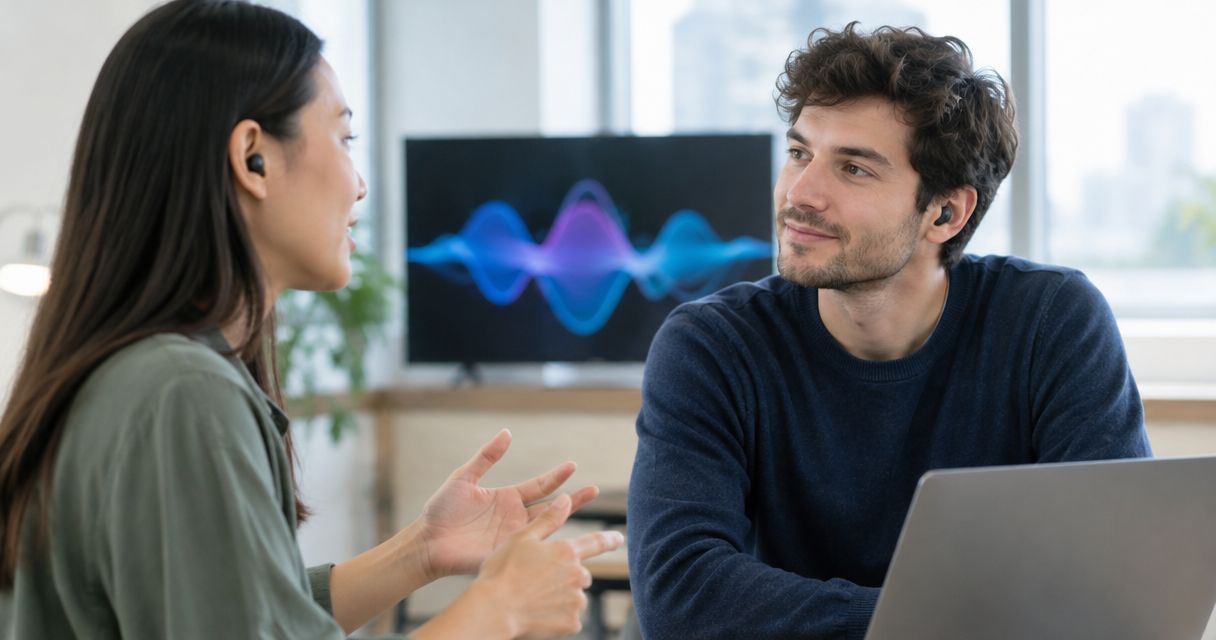
Yes—an AI wearable can distinguish speakers if its software supports speaker separation, but separating voices is not the same as identifying someone by name. Named identification requires a way to connect a voice to a known person, and errors remain possible. In 2026, check the device’s stated capability before treating a speaker label as proof of who said something.
- Can an AI wearable detect who is speaking? Speaker separation distinguishes voices; speaker identification connects them to people.
- A transcript label such as Speaker A does not establish a person’s identity.
- Overlapping speech and background noise complicate speaker recognition; review important attributions against the recording.
- Moonshot is for people who want to talk it through; its description does not establish speaker identification.
Why this matters
A conversation note can preserve the right words and still attach them to the wrong person. That changes the meaning of a promise, a suggestion, or a decision. Before you use a wearable’s transcript to decide the next step, check both the wording and the speaker attribution.
Moonshot describes a wearable that hears you out and asks a good question back. That description does not establish whether it separates speakers or recognizes named people. Those are distinct claims, and they deserve distinct answers.
Can an AI wearable detect who is speaking?
Yes, with an important distinction: detecting a change of speaker, verifying a known voice, and identifying a person are different tasks. A wearable can support one without supporting the others.
| Task | What it answers | Best for | Useful result | Limitation |
|---|---|---|---|---|
| Speaker separation | Which parts belong to different voices? | Following turns in a conversation | Labels such as Speaker A and Speaker B | Labels do not establish names |
| Speaker verification | Does this voice match an enrolled person? | Checking a claimed identity | A match decision against a reference voice | A match is not infallible proof |
| Speaker identification | Which known person does this voice match? | Naming speakers from a known set | A proposed identity | Unknown speakers and incorrect matches need handling |
The technical term for assigning stretches of speech to different speakers is speaker diarization. A transcript with separate speaker labels demonstrates that kind of attribution, not necessarily named identification.
For a 2026 purchase decision, ask which task the product actually supports. A broad claim about understanding conversations does not answer that question.
Speaker separation: different voices, not necessarily names
Speaker separation helps you follow a discussion without treating every sentence as coming from the same person. It groups stretches of speech according to the system’s assessment of who spoke.
The benefit is readable conversation structure. The limitation is that a label remains a label: Speaker A is not automatically you, and Speaker B is not automatically your friend. Read the words alongside the label rather than treating the label as an identity check.
Speaker verification: checking a claimed identity
Speaker verification compares a voice sample with a reference associated with a particular person. It answers a narrower question than identifying everyone in a room: does this sample match the claimed speaker?
The benefit is a focused comparison. The limitation is that the result depends on the reference, the new recording, and the system’s decision rules. A wearable’s ability to transcribe your speech does not establish that it verifies your identity.
Speaker identification: connecting a voice to a person
Speaker identification attempts to associate speech with a known person. The connection needs a basis, such as an enrolled voice reference or a speaker label a person has supplied.
The benefit is a named conversation record. The limitation is that a name can look authoritative even when the match is wrong. A named label is an attribution to check, not proof to accept without question.
Why speaker recognition varies
Speaker recognition depends on the recording and the task. A quiet conversation with clear turns poses a different problem from several people speaking across a noisy table.
- Overlapping speech. When people speak at the same time, their voices mix in the recording. Separating words and assigning speakers become harder.
- Background sound. Music, traffic, and nearby conversations interfere with the speech the device needs to analyze.
- Distance and placement. A voice close to the microphone reaches it differently from a voice across the room. Clothing and microphone position also affect the recording.
- Available speech. A brief interjection gives the system less speech to assess than a longer, uninterrupted turn.
- Reference quality. Named matching depends on the voice information associated with the person. An unsuitable reference weakens the basis for comparison.
- Decision rules. A system that permits an unknown label behaves differently from one that always assigns a known name. Ask how uncertainty is handled.
These factors explain why a demonstration does not establish performance in your conversations. When evaluating a wearable in 2026, look for evidence that matches the setting where you expect to use it.
A practical check before you rely on a name
Start with the claim, then inspect the evidence behind it. This sequence helps you separate a useful conversation feature from an identity claim the product has not established.
- Check the task. Find an explicit statement about speaker separation, verification, or identification. Do not substitute a general transcription claim.
- Check the setup. Establish whether recognition requires enrollment, manual naming, or access to another source. Grant each source separately and only for a purpose you choose.
- Check the evidence. Compare a labeled passage with the original recording when that recording is available. Include a change of speaker rather than checking only one uninterrupted voice.
- Check the correction. Find out whether you can correct an attribution and what the correction changes. Do not assume editing a transcript also changes a summary or future recognition.
The practical payoff is modest and useful: you know what a label means before acting on it. You do not need to turn an ordinary conversation into an identity test.
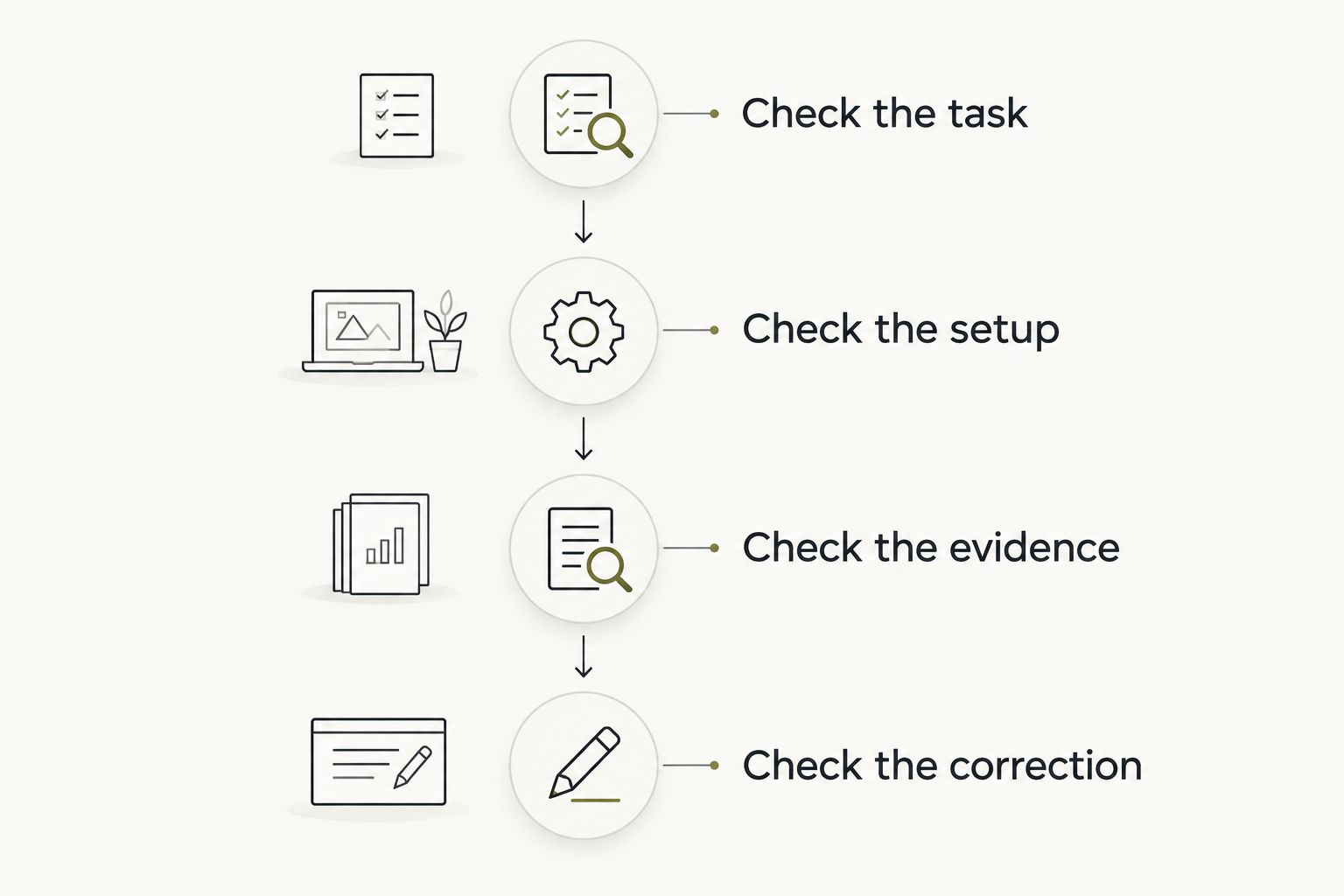
A useful product explanation makes these checks possible without asking you to infer features from a polished transcript. If the explanation shows only named text, ask how those names entered the record.
Does recognizing my voice mean recognizing everyone else?
No. Recognizing an enrolled wearer does not establish that a wearable identifies other people in the conversation. Each additional identity needs its own supported basis for recognition.
The distinction matters when you review something you captured earlier. A device might distinguish your contribution from another voice without knowing whose voice that was. Keep the other speaker unnamed until you have a sound basis for naming them.
Can a wearable identify someone from context alone?
Context can suggest an identity, but an inference is not voice verification. A name mentioned during a conversation does not prove that the named person is speaking.
Suppose someone says that Alex will bring the book. That statement identifies Alex as the expected book-bringer, not as the current speaker. A useful record keeps what was said separate from what the system or reader infers.
The same distinction applies to outside information. A public source about a person is not evidence that the person spoke in your captured conversation. Joining those sources does not turn a guess into a verified attribution.
What should happen when the speaker is uncertain?
An uncertain attribution should stay uncertain. An unknown label is more honest than a confident name without sufficient support.
Before relying on a product in 2026, check whether it exposes uncertainty, allows review, and distinguishes manual labels from automatic matches. These are evaluation criteria, not features to assume every wearable has.
If an attribution affects another person, confirm it before you act. A short question can resolve what a transcript cannot: did you offer to make the introduction, or were you describing someone else’s offer?
Permission and follow-through
Speaker recognition does not grant permission to capture a conversation. Explain the recording to the people involved, obtain the permission required for your situation, and check applicable recording rules. Wearing a device is not a substitute for that conversation.
Keep capture permission separate from source access and action approval. Permission to record a discussion is not permission to read a calendar, consult a contact list, or send a message. You choose the priorities and separately grant each source.
For follow-through, use the record to prepare rather than to presume. If you captured a discussion about calling a friend, verify the relevant passage before treating it as a commitment. Nothing should go out in your name without your yes.
The useful result is the call you choose to make, not a transcript that silently decides who promised what. A speaker label can help you review the moment; it cannot supply another person’s agreement.
Moonshot’s stated role
Moonshot is best for people who want a wearable that hears you out and asks a good question back. Its stated purpose is to help you learn from your own life, then choose what to do with what you notice.
That purpose fits a small, concrete moment: you talk it through, recognize the friend you keep meaning to call, and choose the next step. Say it once, then decide whether it matters enough to show up for it. This example explains the intended benefit; it does not establish named speaker recognition.
For a 2026 evaluation, the useful distinction is between the stated purpose and a technical capability that needs explicit confirmation. Speaker identification is not established by the supplied description. Moonshot makes no calls and moves no money; your yes remains separate from noticing something worth doing.
FAQ
Can an AI wearable tell who is talking?
An AI wearable can distinguish speakers if it supports speaker separation, but naming them requires a separate basis for identification. Check the product’s explicit claim rather than assuming a labeled transcript recognizes people.
What’s the difference between speaker diarization and speaker identification?
Speaker diarization assigns stretches of speech to different speakers; speaker identification connects speech to known people. A Speaker A label does not establish a name.
Does a wearable need a voice sample to recognize me?
Voice-based verification needs a reference associated with you. Check how the product obtains that reference; a name you manually attach to a transcript is not the same as an automatic voice match.
Can a wearable recognize two people talking at the same time?
Overlapping speech makes speaker separation and attribution harder because voices mix in the recording. Do not assume a clear-looking transcript means every word has the correct speaker.
Does Moonshot identify people by their voices?
Moonshot’s supplied description does not establish voice-based speaker identification. It describes a wearable that hears you out, asks a good question back, and helps you notice what your days keep saying.
Can I trust a person’s name in a wearable transcript?
Treat a person’s name as an attribution to check, not proof of identity. Establish whether the name came from a voice match, a manual label, or an inference before relying on it.
What should I check before buying a wearable for speaker recognition in 2026?
Check whether the wearable separates speakers, verifies a known voice, or identifies named people. Then check setup requirements, uncertainty handling, and how you review or correct an attribution.
Final check
The most revealing question is not whether a wearable can display a name. It is whether the product can explain why that name belongs there.
Before relying on an attribution, ask what supports it: a manual label, a voice reference, or an inference from the conversation. If the answer is unclear, leave the speaker unnamed and confirm the part that matters. An honest unknown is more useful than the wrong person’s name.


