 moonshot

An AI wearable can listen continuously only if its hardware, software, power supply, and settings support continuous audio capture; wearing it all day does not establish that it records all day. Microphone access, saved recordings, and permission to act are different things. In 2026, check each separately before treating a wearable as an all-day recorder.
- Can an AI wearable listen all the time? Only if its design and settings support continuous audio capture.
- A microphone receiving sound does not establish that audio is saved, uploaded, or retained.
- Moonshot is best for people seeking reflection and a chosen next step, not a promise of total recall.
- Check recording controls, source permissions, and approval requirements separately before using a wearable around other people.
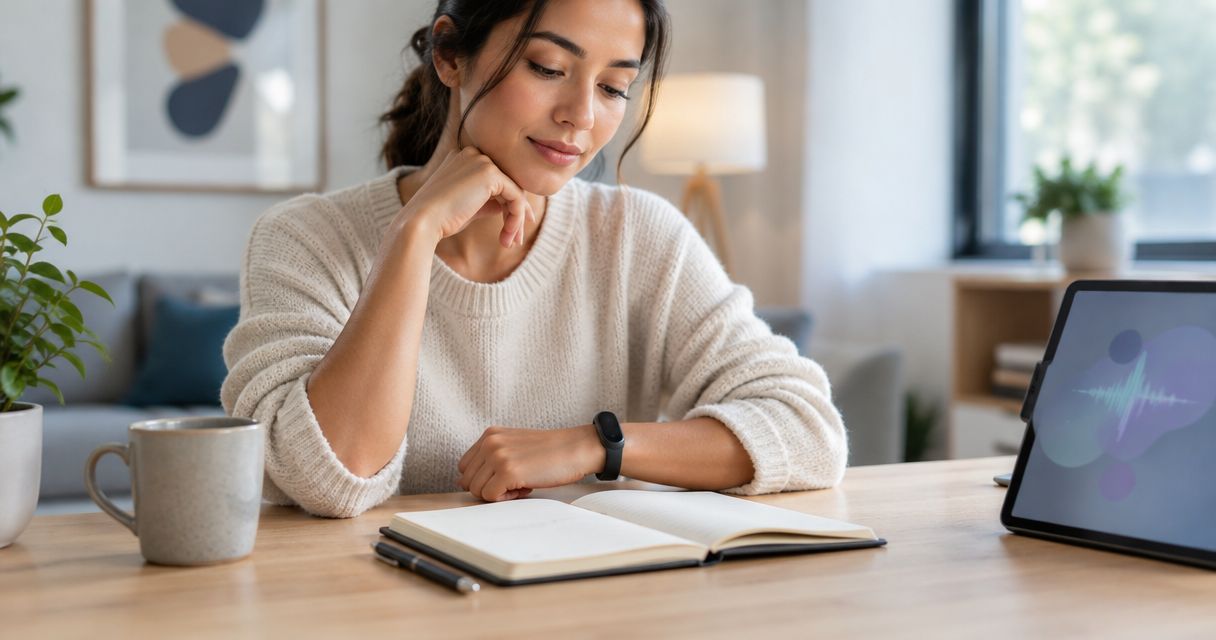
Moonshot describes a different purpose: a wearable that hears you out, asks a good question back, and helps you learn from your own life. That description is not a claim of uninterrupted recording.
Can an AI wearable listen all the time?
Continuous listening is a device-specific capability, not something the category name guarantees. A wearable needs a working microphone, an active capture process, sufficient power, and somewhere to process or store the audio. Its actual behavior also depends on the mode you enable.
The word listening leaves several questions unanswered. Use these distinctions when reading a product page in 2026:
| Audio behavior | What it means | Useful for | Limit to check |
|---|---|---|---|
| Microphone access | Software has permission to receive microphone input | Enabling an audio feature | Permission alone does not prove active capture |
| Active capture | The device is receiving audio during an active session | Capturing speech in that session | Capture does not establish that a recording is saved |
| Saved recording | Audio is retained for later access or processing | Returning to the original speech | Retention and deletion need separate explanations |
| Derived note | Captured material becomes a summary or another text output | Reviewing the substance without replaying audio | A summary is not the original recording |
| Approved action | You authorize a proposed next step | Turning a useful observation into follow-through | Audio capture does not itself grant permission to act |
These are distinctions, not a feature list for a particular device. A product can support one without supporting all the others.
If a page says a wearable remembers something, ask what is actually retained. An audio file, a transcript, and a short note are different records. None should be treated as proof of the others.
Why this matters
Imagine you mention a friend you mean to call. Later, you want to return to that thought and decide whether to show up for the conversation. The useful outcome is the call you choose to make, not necessarily a recording of everything around the original remark.
That distinction changes what you need from a wearable. If you want to talk it through and choose the next step, you need clarity about what was captured and what happens next. You do not automatically need an uninterrupted archive.
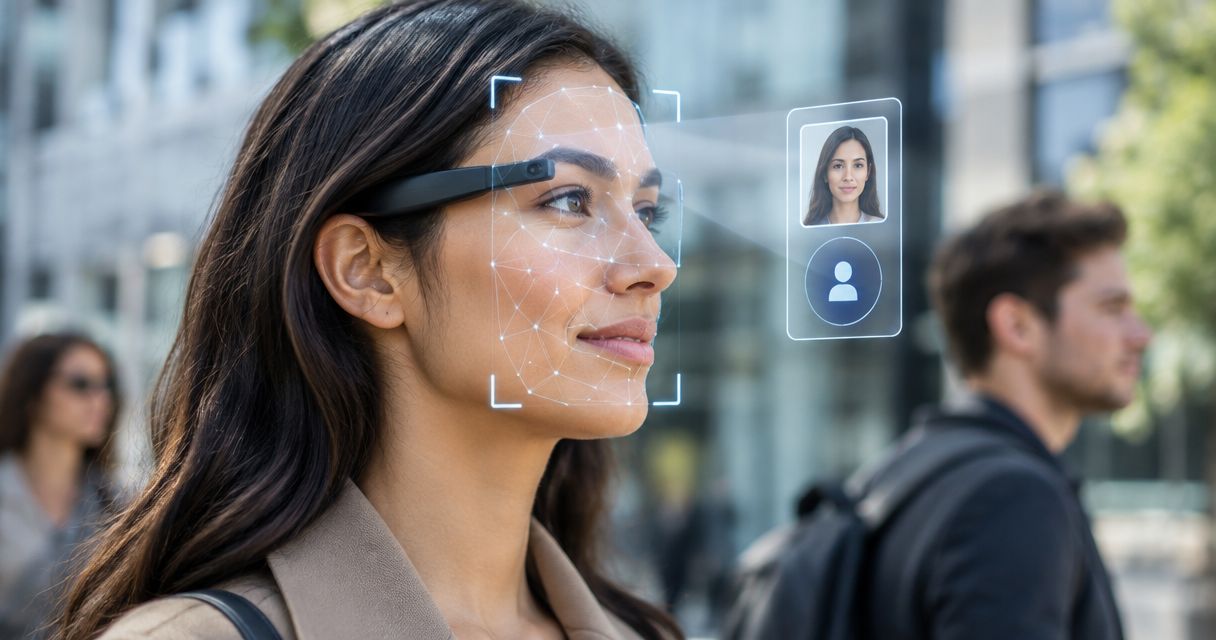
Continuous capture also involves people besides the wearer. A conversation at your kitchen table can include someone who has not agreed to recording. Your decision to wear a device does not settle that person's permission or the rules that apply to the conversation.
Evaluate the moment you want help with before evaluating how much audio a device can collect. More capture and a more useful result are different goals.
Microphone access and saved audio
Microphone permission answers whether software is allowed to receive microphone input. It does not answer whether the microphone is active at this moment, whether audio is stored, or whether that audio leaves the device.
For a 2026 purchase decision, look for an explanation of actual behavior rather than a broad permission statement. You need to understand what starts capture and what ends it. You also need to know what remains afterward.
A clear explanation should let you distinguish these states:
- The device has microphone permission but is not capturing audio.
- The device is actively receiving audio.
- A recording has been saved.
- A recording has been processed into another form.
- Capture has stopped, but previously saved material still exists.
Do not infer these states from a product photograph or a phrase about memory. A visible microphone establishes neither continuous recording nor a particular retention policy.
The reverse distinction matters too. Stopping capture concerns new audio; deleting a recording concerns material already stored. Treat those as separate controls unless the product documentation explicitly connects them.
A recording and a useful note
An audio recording preserves captured sound. A transcript represents speech as text. A summary selects and condenses information. Each serves a different purpose, and each needs to be judged on its own terms.
A recording gives you material to replay, but replaying takes attention. A transcript makes speech readable, but transcription can contain errors. A summary is shorter, but it leaves things out by design.
A useful note is not evidence of complete recall. If a detail matters, return to the original source when one is available. Do not treat polished wording as proof that every name, date, or commitment is correct.
Also separate what someone said from what a system inferred. Saying that you mentioned a friend is a statement about captured content. Suggesting that you want to reconnect is an interpretation. You decide whether that interpretation fits.
This distinction is especially important when a suggestion becomes a commitment. Mentioning a call is not the same as agreeing to make it, and agreeing to make it is not permission for a device to place it.
Why continuous listening varies
The answer depends on the device and the conditions in which you use it. For any wearable you consider in 2026, check these factors without assuming that one product's behavior applies to another:
- Power: Continuous audio capture requires power. A device cannot continue an active capture process after its available power is exhausted.
- Capture mode: A manually started session and continuous capture are different operating modes. Confirm which behavior the product actually supports.
- Processing location: On-device processing and remote processing involve different data paths. Ask where each part of the audio workflow happens.
- Storage behavior: Temporary processing and retained recordings are not interchangeable. Establish what is kept after a session ends.
- Connection requirements: A feature that depends on a connection needs that connection to complete its remote work. Check what happens when it is unavailable.
- Permissions: Access to a microphone does not grant access to every other source. Review each source separately rather than treating setup as blanket permission.
These factors explain why a general claim about all wearables is not enough. They do not establish a particular product's battery duration, storage capacity, or offline behavior.
A useful product explanation connects each condition to a visible outcome. You should be able to tell whether capture stopped, whether processing remains unfinished, and whether anything was saved.
A practical check before recording
Use a short decision sequence before bringing an audio wearable into a conversation. The point is to establish a clear boundary, not to collect everything and sort out permission afterward.
- Choose the moment. Decide what you want to return to later. A thought you speak yourself and a conversation involving other people require different consideration.
- Check permission. Confirm the rules for the setting and the people involved. Make the recording request clear enough for someone to decline.
- Confirm capture. Check how the device indicates that capture has started. Do not assume that wearing it means it is recording.
- Review the record. Establish whether you have audio, text, or a summary. Check consequential details against the available source.
- Approve the step. Decide whether the proposed follow-through is yours to take. Capture is not approval.
You can use this sequence even when a product offers extensive automation. The important boundary stays the same: a suggestion is not your decision, and a captured remark is not an instruction to act.
Permission around other people
Consent is not a setting you complete once for everyone around you. The people, place, and conversation change. Recording laws and workplace rules also differ, so check the requirements that apply before capturing a conversation.
A shared office, a private home, and an appointment are not interchangeable settings. Permission to enter a room does not automatically include permission to record what happens there. An employer's permission also does not answer every question about another person's participation.
Make declining practical. If someone does not want a conversation captured, you need a clear way to stop capture or leave the device out of that conversation.
Do not rely on a discreet appearance as a substitute for disclosure. A device can look unobtrusive while its recording behavior remains unclear to everyone else. The relevant question is whether people understand what is happening.
Moonshot and the next step
Moonshot is best for people who want to talk it through and choose a next step, rather than seek a promise of total recall. Its stated purpose is to hear you out, ask a good question back, and help you notice what your days keep saying.
The benefit is specific: returning to something that matters enough to act on. The boundary is equally important. Moonshot makes no calls and moves no money. It turns one thing into a next step, with your yes on each one.
For a preorder decision in 2026, distinguish that stated purpose from technical claims about continuous capture. It does not establish a recording duration, a retention policy, or a guarantee that every conversation becomes a retrievable record. Evaluate the current product description on those separate questions.
A simple first-week goal is enough: say it once, return to the thought, and decide what deserves follow-through. Judge the usefulness of that moment without assuming a larger archive exists behind it.
Does listening mean everything is stored?
Listening does not establish that everything is stored. Receiving audio, retaining audio, and creating text from audio are separate operations. You need an explicit explanation of which operations occur.
Ask what remains after capture ends. Then ask how deletion applies to each retained form, rather than assuming that removing an audio file also removes every derived note.
Can a wearable act on something I said?
Something you said is not automatically an instruction to act. A passing idea, an unfinished plan, and an explicit approval have different meanings. Keep that distinction visible whenever a product proposes follow-through.
You choose the priority. Permission to use a source should also remain separate from permission to send something in your name.
Is all-day recording necessary for reflection?
All-day recording is not a requirement for reflecting on a captured thought. You can return to a deliberately recorded moment without maintaining an uninterrupted record of your day.
The trade-off is scope. Selective capture gives you the moments you chose to record, not a guarantee that an unrecorded conversation can be recovered later.
FAQ
Can an AI wearable listen all the time?
An AI wearable can listen continuously only when its hardware, software, power supply, and settings support continuous audio capture. The category name alone does not establish that capability.
Does microphone permission mean a wearable is recording me?
Microphone permission does not prove that a wearable is actively recording. Check the product's explanation of capture controls and recording indicators.
Does listening mean my conversations are saved?
Listening does not establish that conversations are saved. Receiving audio, retaining a recording, and producing a summary are different operations.
Can I record other people just because I am wearing the device?
Wearing a device does not establish permission to record other people. Check the applicable law, the setting's rules, and the permission of the people involved.
Can a wearable remember a conversation it never captured?
A wearable cannot recover a conversation from a recording that was never captured. Information from another source is not a recording of that conversation.
Does stopping recording delete earlier audio?
Stopping recording and deleting earlier audio are separate actions. Check the product's deletion controls for recordings and any retained text derived from them.
Is a summary the same as an exact transcript?
A summary is not an exact transcript. It selects and condenses information, so check important details against the original source when available.
Does Moonshot make calls for me?
Moonshot makes no calls and moves no money. It helps turn one thing into a next step, with your yes on each one.
One last thing
Before enabling capture, finish this sentence: I want to return to this because… Your answer gives the recording a purpose and gives you a way to judge whether the result helped.
Then keep the next decision separate. Remembering that you wanted to call someone is useful; choosing to make the call is still yours.