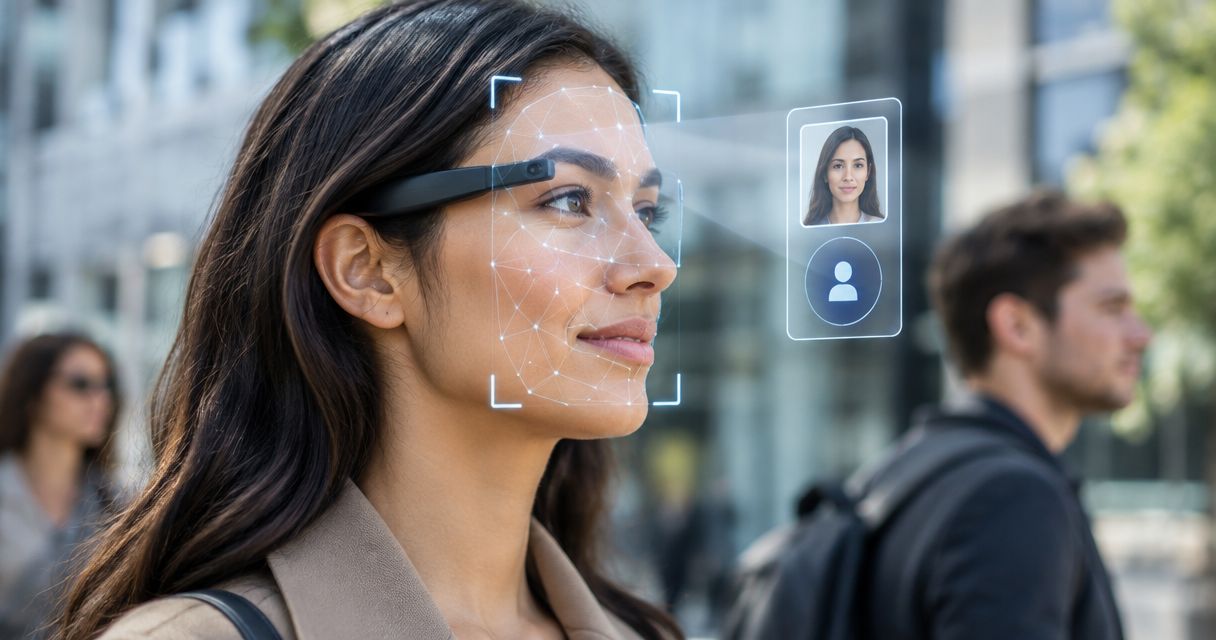
 moonshot
No—do not treat an AI wearable as a complete phone replacement in 2026; choose it for a specific task, not for everything your phone handles. A wearable that helps you talk something through does not, by that fact alone, replace your phone’s calls, account access, maps, or screen.
- Can an AI wearable replace my phone? Not entirely; check each essential task before leaving your phone behind.
- Moonshot is best for people who want to talk something through and choose a next step.
- Keep reflection separate from execution: a useful question is not a completed call.
- Choose each source separately, and require your yes before anything goes out in your name.
Can an AI wearable replace my phone?
An AI wearable is a phone replacement only if the specific device supports the phone tasks you need without the phone. Otherwise, it fills a narrower role. Start with the action you need to finish, rather than the category printed on the box.
Moonshot describes a wearable that hears you out, asks a good question back, and helps you notice what your days keep saying. That is a reason to consider it for reflection—not evidence that it replaces phone functions.
| Option | Best for | Useful role | Limitation to check |
|---|---|---|---|
| Phone | Tasks that need a screen or established phone functions | Viewing maps, accessing accounts, making calls, and reviewing information | A phone does not automatically turn something you said into a decision |
| Wearable | A specific supported task away from a handheld screen | Handling the interaction the device explicitly supports | The category name does not establish calling, connectivity, or account access |
| Phone plus wearable | Keeping essential phone functions while adding a focused interaction | Separating talking something through from carrying out the result | You still have another device to manage |
This comparison is a decision guide, not a claim that every wearable works the same way. Verify the actual device before you depend on it.
Why this matters
A phone-replacement decision is really a dependency decision. If you leave your phone behind, what stops working—and does that matter during the outing you have planned?
Imagine you mentioned wanting to call a friend. Later, returning to that thought helps you decide what to say. That is useful, but the useful moment and the eventual call are separate things.
The distinction matters in 2026 because a product description can explain an appealing interaction without establishing an entire replacement workflow. Judge the finished task, not just the moment that starts it.
A useful question might help you choose to call. You still need a way to make the call, reach the right person, and handle anything that requires a screen. Keep those requirements visible when you compare devices.
Phone replacement versus a narrower role
Full replacement
Full replacement means the phone can stay behind without removing a function you need. That includes the ordinary details: getting into an account, checking an address, reviewing a message, or contacting someone.
Do not settle for a broad statement that a device handles communication. Ask which communication, through which connection, and whether the phone must remain nearby. A feature that depends on the phone is not independent of it.
Best for: Someone whose essential tasks are explicitly supported without carrying a phone. The benefit is a genuine reduction in what you carry; the constraint is that every essential task needs verification.
A focused wearable role
A narrower role starts with a different question: what would make a particular moment more useful? You might want to say something while it is fresh, return to it later, and decide whether it deserves follow-through.
That does not require the wearable to become your entire digital life. It does require clarity about what gets captured, what comes back, and what remains your decision.
Best for: Someone with a specific use for the wearable who still needs phone functions. The benefit is a focused interaction; the trade-off is keeping both devices rather than replacing one.
Less phone use
Less phone use is not the same as no phone. You can keep a phone available for a task that needs it without reaching for it during every other moment.
Make the goal concrete. Instead of deciding to use your phone less in general, decide which interaction you want to move elsewhere. Then check whether the wearable actually supports that interaction.
Best for: Someone who wants to change a particular habit without giving up essential phone access. The benefit is a smaller change; the limitation is that the phone remains part of the arrangement.
Why the answer varies
Your answer depends on the device and the situation, not just whether you like wearing it. Check these factors before making a phone-free plan in 2026:
- Connection requirements. Confirm which functions work without a nearby phone and which require a separate connection. Do not infer independence from the wearable format.
- Screen-dependent tasks. Identify the information you need to inspect, edit, or confirm visually. An interaction that works without a screen does not establish that every task will.
- Source permissions. Separate what you deliberately capture from information in another source. Grant each source separately rather than treating access as one blanket decision.
- Action approval. Distinguish a suggested next step from something sent or done in your name. Require your yes before anything goes out.
- Current capability. Separate what is offered now from what is described as planned. A future capability cannot support a decision to leave your phone behind today.
These checks are also a way to avoid buying for the wrong reason. If your priority is calls, investigate calls. If your priority is talking something through, judge that interaction on its own terms.
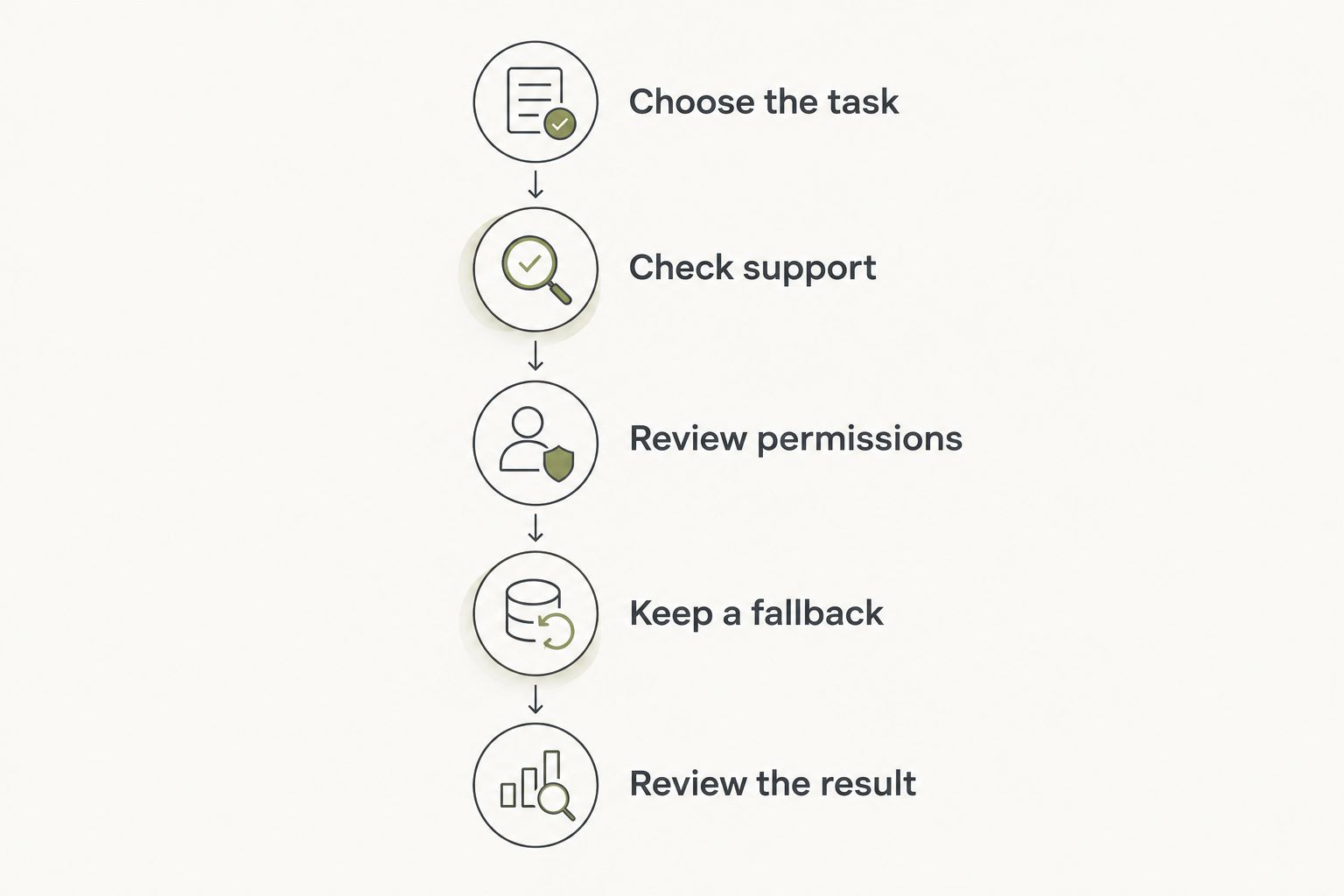
A phone-replacement check
Use a small, reversible check before changing what you carry. The purpose is not to prove that a wearable is good or bad; it is to establish where your phone still has a job.
1. Choose the task
Start with 1 task, not an entire day. Write the outcome in plain language: decide whether to make a call, find the destination, or finish a message.
Be precise about completion. Thinking of the right words is not the same as sending them. Finding a destination is not the same as having directions available throughout the trip.
2. Check support
Find an explicit statement that the device supports the task. Check whether it needs the phone, a connection, an account, or another permitted source to do so.
Treat a demonstration as evidence of what it actually shows. A conversation in a demonstration does not establish unrelated functions, and a planned feature is not a current one.
3. Review permissions
Ask 2 questions: what information does this task need, and what action have you approved? Keep those questions separate.
Choosing a topic does not mean granting access to every source. Likewise, sharing information for reflection does not mean authorizing a message to another person.
4. Keep a fallback
Keep your phone accessible while you establish the boundary. Do not make an unverified wearable your only route to an essential task or urgent communication.
A fallback is not a failed test. It lets you discover a limitation without turning that limitation into a problem you cannot resolve.
5. Review the result
For a suggested 7-day check, note each time you still need your phone for the chosen task. Record the reason rather than assigning the wearable a general score.
At the end, make a narrow decision: keep the task on the phone, use the wearable for part of it, or move it only after verifying that the whole task works. One successful interaction does not establish every other capability.
Moonshot’s role
Moonshot is best for people who want to talk something through and choose a next step. It hears you out. It asks a good question back. It turns one thing into a next step, with your yes on each one.
The payoff can be ordinary: you return to the friend you meant to call, decide that the call matters, and choose to follow through. Say it once, then consider what you want to do with it. You remain the person choosing the priority.
Moonshot makes no calls and moves no money. That boundary matters: helping you choose an action is different from carrying it out. Keep the phone for a call rather than expecting the wearable to place it.
The reason to consider this wearable is not total phone replacement. It is whether being heard, getting a useful question, and choosing the next step helps you learn from your own life. Judge that promise directly during week one.
Can I leave my phone at home with a wearable?
Leave your phone at home only after verifying that the particular wearable supports everything you need for that outing. A short walk and a trip requiring directions, account access, or urgent contact have different requirements.
For a 2026 purchase decision, confirm current functions rather than relying on a future feature description. If an essential function is unclear, keep the phone available.
Does capturing a conversation mean the device knows the facts?
No. A captured conversation records what was said; it does not independently establish that every statement was correct.
Keep a captured conversation distinct from a public source, and a fact distinct from an inference. Before acting on a detail, check where it came from and whether you need to verify it elsewhere.
Can a wearable take the next step for me?
Only rely on an action that the specific product explicitly supports and that you have approved. A suggestion, a question, and a completed action are different outcomes.
You choose what matters. Nothing should go out in your name without your yes, even when the suggested next step sounds right.
FAQ
Can an AI wearable replace my phone completely?
Do not assume an AI wearable can replace your phone completely. Verify every essential function, including whether it works without a nearby phone, before changing what you carry.
Can I use a wearable without bringing my phone?
Use a wearable without your phone only when its current capabilities cover the tasks you need. Check connection requirements and keep another way to handle essential communication.
Is a wearable better than a phone for talking something through?
A wearable is worth considering for talking something through when that is an explicitly supported interaction. A phone remains the better fit for a task that requires its screen or established phone functions.
Can Moonshot make calls for me?
Moonshot makes no calls and moves no money. It hears you out, asks a good question back, and helps turn one thing into a next step with your yes.
Does a captured conversation count as a verified source?
A captured conversation establishes what was said, not whether every statement was correct. Check important claims against an appropriate source before acting on them.
Should I buy a wearable for a planned feature?
Do not depend on a planned feature for a task you need now. Make your decision using current, explicitly stated capabilities.
What should I check before replacing my phone in 2026?
Check the complete task, connection requirements, source permissions, and action approval. Keep your phone accessible until you have verified the functions you intend to replace.
One last thing
The useful result is not always another action. After you talk it through, you might decide that a thought does not need follow-through—or that the call matters enough to make yourself.
For 2026, set a smaller test than replacing your phone: choose the moment you want to handle differently. Then ask whether the wearable helps you show up for it. Keep the phone where it has a job; judge the wearable by the job you actually want it to do.