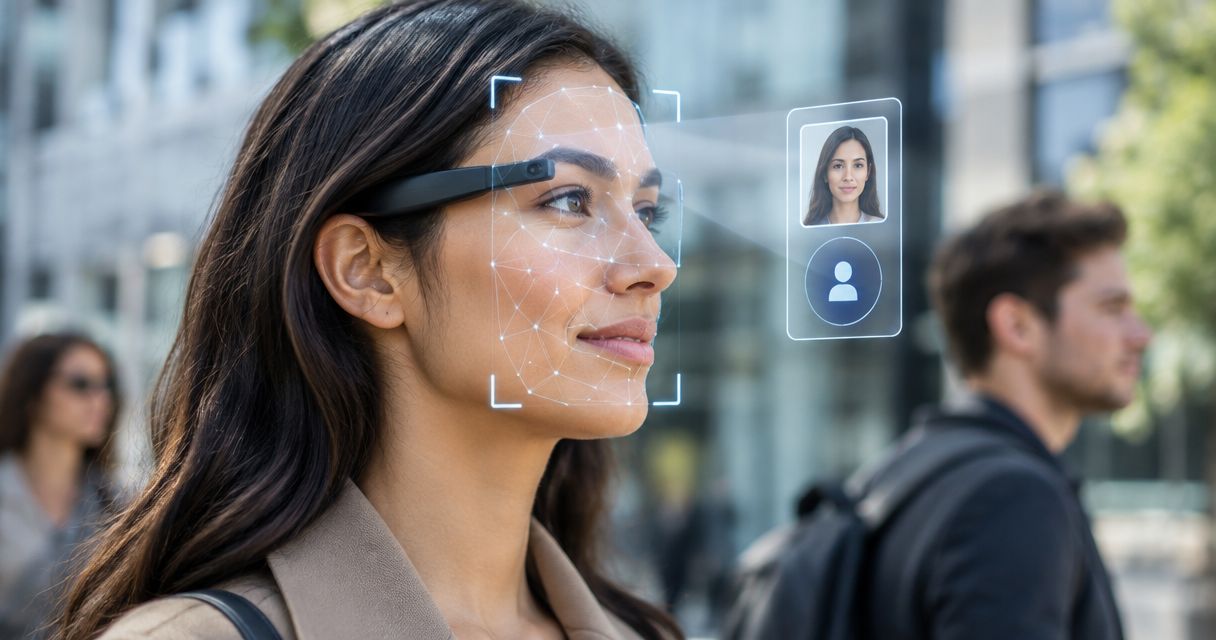
 moonshot
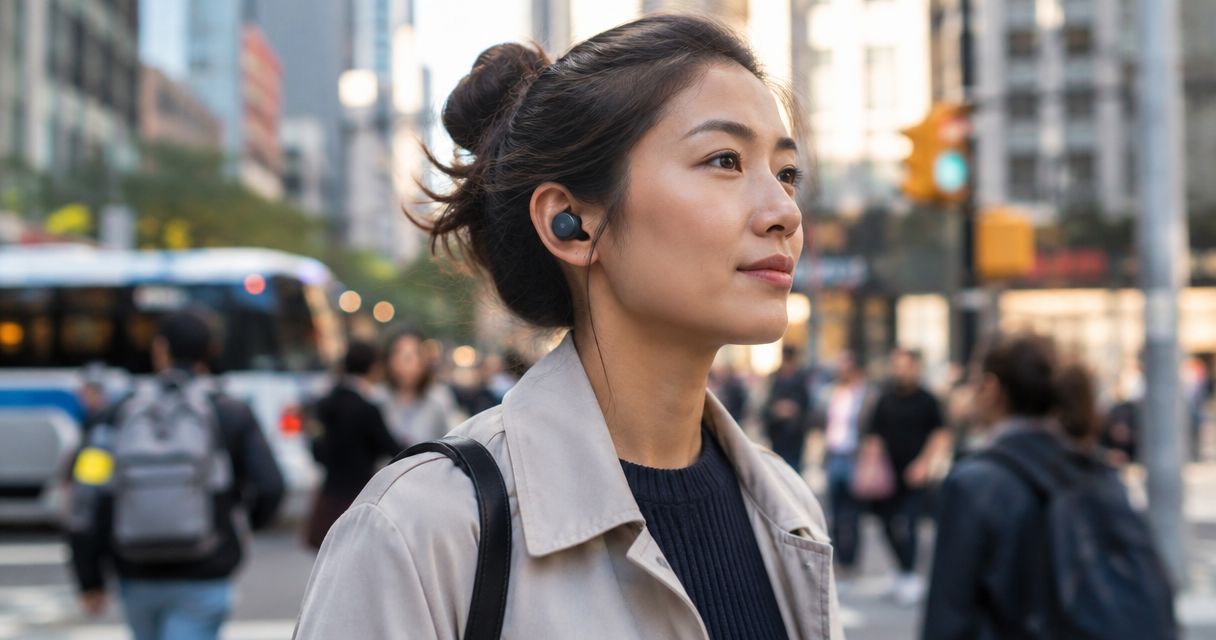
Yes, an AI wearable can capture useful speech in a noisy environment, but performance depends on how clearly your voice reaches its microphones compared with the surrounding sound. A readable recap is not proof of an accurate recording: check names, commitments, and the next step before relying on it.
- Can an AI wearable work in noisy environments? Yes, but overlapping voices and distant speech make accurate capture harder.
- Moonshot is for people who want to talk it through and learn from their own life.
- Test speech capture where you actually spend time; check meaning, not just readable sentences.
- Confirm a proposed next step yourself, especially when the recording contains uncertainty.
Can an AI wearable work in noisy environments?
Yes, but useful capture and dependable understanding are different tests. A device must first capture your words clearly enough to distinguish them from competing sound. Any later summary depends on that captured speech.
A steady background hum and a nearby conversation present different problems. Hum can mask parts of speech; another speaker adds words that a system must distinguish from yours. No general claim about noise reduction establishes how a particular wearable handles both.
For Moonshot, start with the reservation details and separate the stated experience from any performance claim you want demonstrated. A description of a wearable that hears you out does not establish an acoustic limit.
| Setting | Best for | Main advantage | Main limitation | What to check |
|---|---|---|---|---|
| Quiet room | Establishing a baseline | Less competing sound | Does not represent a busy venue | Whether your meaning survives accurately |
| Background music | Checking everyday interference | Reveals how music affects capture | Vocals can compete with spoken words | Missing words and incorrect names |
| Busy conversation | Checking speaker confusion | Tests overlapping speech | Nearby voices can be mistaken for yours | Who said what and who agreed |
| Outdoor breeze | Checking exposed use | Reveals the effect of moving air | Wind at a microphone can obscure speech | Whether complete phrases remain understandable |
Use this table as a test plan, not a ranking of products. For a 2026 purchase, a demonstration in your intended setting is more useful than an unqualified claim that a wearable works in noise.
Why this matters
Imagine you mention wanting to call a friend while walking past a busy café. Later, you return to that thought and decide whether to make the call. The useful outcome is remembering your intention, not preserving every sound from the street.
Now change the sentence: you said you were not ready to call. Losing that small word changes the next step entirely. A polished recap can conceal that difference because readable language is not the same as faithful capture.
Check the meaning before trusting the follow-through. Look for whether the record preserves your intention, your uncertainty, and any condition you attached. Those details matter more than punctuation.
Noise sources
Noise affects speech capture in different ways. These factors explain why a wearable can work well in one place and struggle in another:
- Voice-to-noise balance. Speech is harder to distinguish when surrounding sound competes strongly with your voice. Loudness alone does not describe the whole problem.
- Overlapping speakers. Another person talking at the same time creates competing speech, not just background noise. Check speaker attribution separately from word accuracy.
- Microphone distance and position. The path between your mouth and the microphone affects the captured signal. Follow the device's stated wearing instructions rather than assuming every position performs equally.
- Wind and clothing contact. Moving air and fabric touching a microphone can introduce interference close to the sound source. A quieter street does not automatically mean a cleaner recording.
- Room reflections. Speech reflecting from hard surfaces can blur together. An echoing room presents a different challenge from a room with steady equipment noise.
- Speech detail. Names, unfamiliar terms, and short qualifying words deserve particular attention. A sentence can sound plausible while carrying the wrong detail.
Noise reduction can help separate speech from interference, but its presence is not proof that every word survives. Evaluate the output rather than treating a feature name as a result.
A practical speech test
For your 2026 evaluation, use a short, repeatable test instead of an impressive demonstration you cannot inspect. The following durations and counts are suggested test instructions, not product specifications or accuracy benchmarks.
Choose setting
Start with 2 test locations: a quiet place and a noisy place that resembles your actual routine. Keep the intended wearing position consistent so you are not changing the setting and the setup at the same time.
Choose an ordinary environment, not an extreme one selected to make the device fail. If your main use is talking through a thought after work, test that situation rather than a crowded event you rarely attend.
Capture speech
Use a 20-second sample containing an ordinary intention and a qualification. For example, describe a call you want to make, then explain that you want to think about it before choosing when.
Say it once at your normal speaking volume. Do not shout to rescue a weak result unless speaking loudly is genuinely how you expect to use the wearable. Make a written reference immediately afterward so you have something concrete to compare.
Check meaning
Apply 3 accuracy checks: the intended action, the condition attached to it, and whether you actually committed. These are editorial checks you perform, not a claimed scoring system.
If the device provides a transcript, compare it with your reference. If it provides only a recap, assess that recap without assuming an unseen transcript is correct. Mark an omitted uncertainty as a meaningful error even when the remaining sentence reads well.
Confirm action
Decide whether the captured thought supports the next step. An uncertain mention should remain uncertain; a possibility should not become a commitment.
Your yes belongs after this review. A useful record helps you choose what to do, rather than treating a plausible interpretation as permission to act.
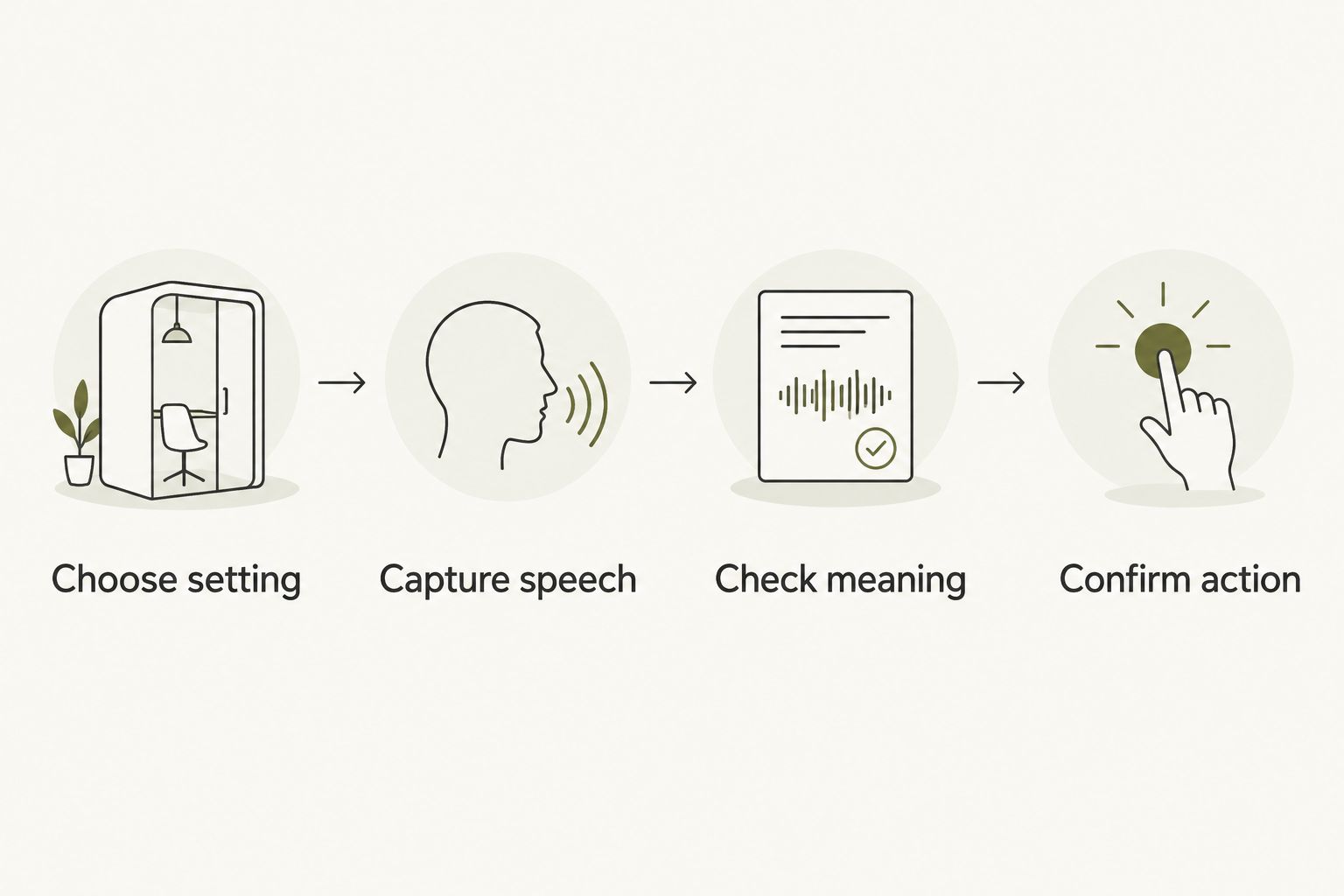
Repeat the same content in the quiet and noisy locations. If the quiet version is already wrong, the noisy version does not isolate a noise problem. If the noisy version changes your intention, choose a quieter moment for anything you need to rely on.
Evidence before a purchase
A useful 2026 demonstration lets you inspect the result, not just watch someone speak. Ask what the device actually captured and what happened afterward.
Look for these distinctions:
- Original capture versus recap. A recap is an interpretation of captured material. Where playback or a transcript is offered, use it to check disputed details.
- Captured conversation versus public source. Something you said is different from information retrieved elsewhere. The result should not blur those origins.
- Fact versus inference. Saying you mentioned a friend is different from deciding you want to call that friend. The latter needs your confirmation.
- Current function versus planned function. A demonstration of a proposed feature does not establish that the feature is included in the device you are evaluating.
Ask about correction as well. A readable result is less useful if you cannot resolve a mistaken name, reject an interpretation, or understand what information supported it. Verify the actual correction process rather than assuming one exists.
Keep permissions separate from acoustic performance. Before capturing a conversation, consider the people involved and the rules that apply. The wearable privacy guide is a related place to examine that decision; clear audio does not answer it for you.
Useful capture and its limits
Moonshot is for people who want to talk it through and learn from their own life. Its stated purpose is to hear you out, ask a good question back, and help you notice something worth acting on. That purpose gives you a concrete outcome to evaluate.
The benefit is a chance to return to a thought that otherwise passes quickly. The limitation is that any useful response still depends on what was captured and understood. Do not treat the intended experience as proof of noisy-environment performance.
For week one, choose a modest question: does returning to a captured thought help you choose the next step? Perhaps it helps you show up for a call you already wanted to make. Keep the priority yours, grant each source separately, and require your yes before anything goes out in your name.
A wearable does not need to remember everything to help with that moment. It does need to avoid turning unclear speech into false certainty. That is the distinction to carry into your 2026 decision.
Does louder speech solve noisy capture?
Louder speech can improve the balance between your voice and surrounding sound, but it does not solve every capture problem. Overlapping speakers, wind at the microphone, and clothing contact still require separate checks.
Start with normal speech. If a wearable only produces a usable result when you change how you talk, include that inconvenience in your decision. A technically successful test is not automatically a comfortable everyday habit.
Is a quiet recap better than recording in a crowd?
A quiet recap is a practical alternative when your goal is to retain your own thought rather than preserve a conversation. Move somewhere suitable, then describe what you want to remember and what remains undecided.
The trade-off is clear: your later account is a recollection, not a recording of the original exchange. Label it that way. Do not present reconstructed wording as an exact account of what another person said.
Can a wearable identify the right speaker in a busy room?
Speaker identification needs its own test; correct words do not prove correct attribution. Check whether the result assigns a statement, promise, or request to the person who actually made it.
Use a conversation only with the participants' agreement. If attribution is unclear, confirm the point directly instead of relying on the recap to settle who committed to what.
FAQ
Can an AI wearable work in a noisy restaurant?
An AI wearable can capture useful speech in a noisy restaurant, but nearby voices and music make accurate capture harder. Test your normal speaking volume and check whether the result preserves your meaning and identifies the right speaker.
Does noise reduction guarantee an accurate recap?
No, noise reduction does not guarantee an accurate recap. Capturing speech, recognizing words, and interpreting their meaning are separate parts of the process, so inspect important details in the result.
How can I test a wearable before relying on it?
Use a 20-second sample in a quiet location and a representative noisy location, then compare the results against a written reference. This is a suggested test, not a product performance standard.
What should I check in a captured conversation?
Check the intended action, any condition attached to it, and whether the speaker actually committed. Also verify names and speaker attribution before using the record for follow-through.
Can I move somewhere quieter and say the thought again?
Yes, you can move somewhere quieter and restate your own thought. Treat the result as your later recollection, not an exact recording of the original conversation.
Does Moonshot have a stated noisy-room accuracy score?
A general description of Moonshot does not establish a noisy-room accuracy score. Ask for evidence from a relevant setting rather than inferring performance from the intended experience.
Should a wearable act on something it heard unclearly?
No, unclear speech should not be treated as approval. Confirm the meaning and give your yes separately before anything goes out in your name.
One last thing
The most revealing test sentence includes a word that reverses the meaning: not. A missing pause is usually less consequential than a missing refusal.
For your final 2026 check, include an intention you have not approved. The result should preserve that boundary. A wearable earns trust by keeping uncertainty visible, not by making every sentence sound finished.