 moonshot

An AI wearable can work while charging only when the device supports the particular function you want to use during charging. A charging light does not establish that capture, playback, or other functions remain available. For a 2026 purchase, check the device’s charging instructions before treating time on the charger as usable time.
- Can an AI wearable work while charging? Only when its documented charging behavior supports the function you need.
- Charging, operating, and wearing a device while connected are separate questions.
- Moonshot is best for people who want to talk it through and choose the next step themselves.
- Check the charging setup, supported functions, placement instructions, and permissions before relying on connected use.
The useful question is not whether a device stays lit. It is whether it can do the specific thing you need, safely and with your approval. For a wearable such as Moonshot, evaluate charging behavior separately from the reasons you want to use it.
Can an AI wearable work while charging?
Only rely on operation while charging when the manufacturer explicitly supports it. Separate the charging method from the function you want. A statement about charging does not automatically answer a question about capturing something, reviewing it, or wearing the device while connected.
| Charging setup | Best for | What to establish | Limitation to check |
|---|---|---|---|
| Cable connection | A fixed place where the cable can remain undisturbed | Whether the intended function works while connected | Whether the cable or required placement prevents normal use |
| Charging dock | A designated charging spot | Whether operation is supported while docked | Whether the device must remain off your body |
| Portable power source | A location without a convenient outlet | Whether the device supports that source and connected use | Whether carrying the connection is permitted and practical |
These are setups to evaluate, not a compatibility list. A device’s instructions determine which rows apply. Do not choose a charging arrangement simply because the connector fits or an indicator appears.
Why this matters
Imagine you said something earlier that you want to return to before making a call. The useful moment comes later, when you have time to think. If the device is charging then, you need to know whether you can review what you captured—not merely whether the battery is receiving power.
That distinction matters more than a broad claim that a wearable works while connected. You might need access to an earlier capture without wanting to capture anything new. Those are different requirements, and each deserves a direct answer.
For a 2026 buying decision, write down the moment you need the device to support. Then ask about that moment in plain language. A narrow question is easier to verify than a general promise of uninterrupted use.
Charging is not the same as operating
Treat charging and operation as 2 separate checks. First establish that the approved charging arrangement supplies power as intended. Then establish that the particular function you need is supported during that arrangement.
Do not use a battery symbol as evidence of functional availability. It answers a power question. It does not tell you whether a capture is being saved, a review is available, or an approval step remains accessible.
The reverse also matters. A device appearing to function does not prove that the charging arrangement follows its instructions. Check both conditions rather than allowing one successful observation to stand in for the other.
This gives you a useful rule: verify the function and the charging setup independently. It prevents an apparently successful demonstration from becoming a broader claim than the evidence supports.
Wearing is a separate question
A device can be connected to power without being suitable to wear in that state. Look for explicit instructions about placement, attachment, and connected use. Do not infer permission to wear it from permission to operate it.
Consider the ordinary movement involved in your intended use. Sitting at a table is a different arrangement from walking with a cable attached. The relevant question is whether the manufacturer permits the arrangement you actually plan to use.
If the instructions require the device to sit in a dock, assess that as docked use. Do not describe it as uninterrupted wearable use. The distinction keeps your expectations tied to the physical setup rather than the product category.
A charging check you can repeat
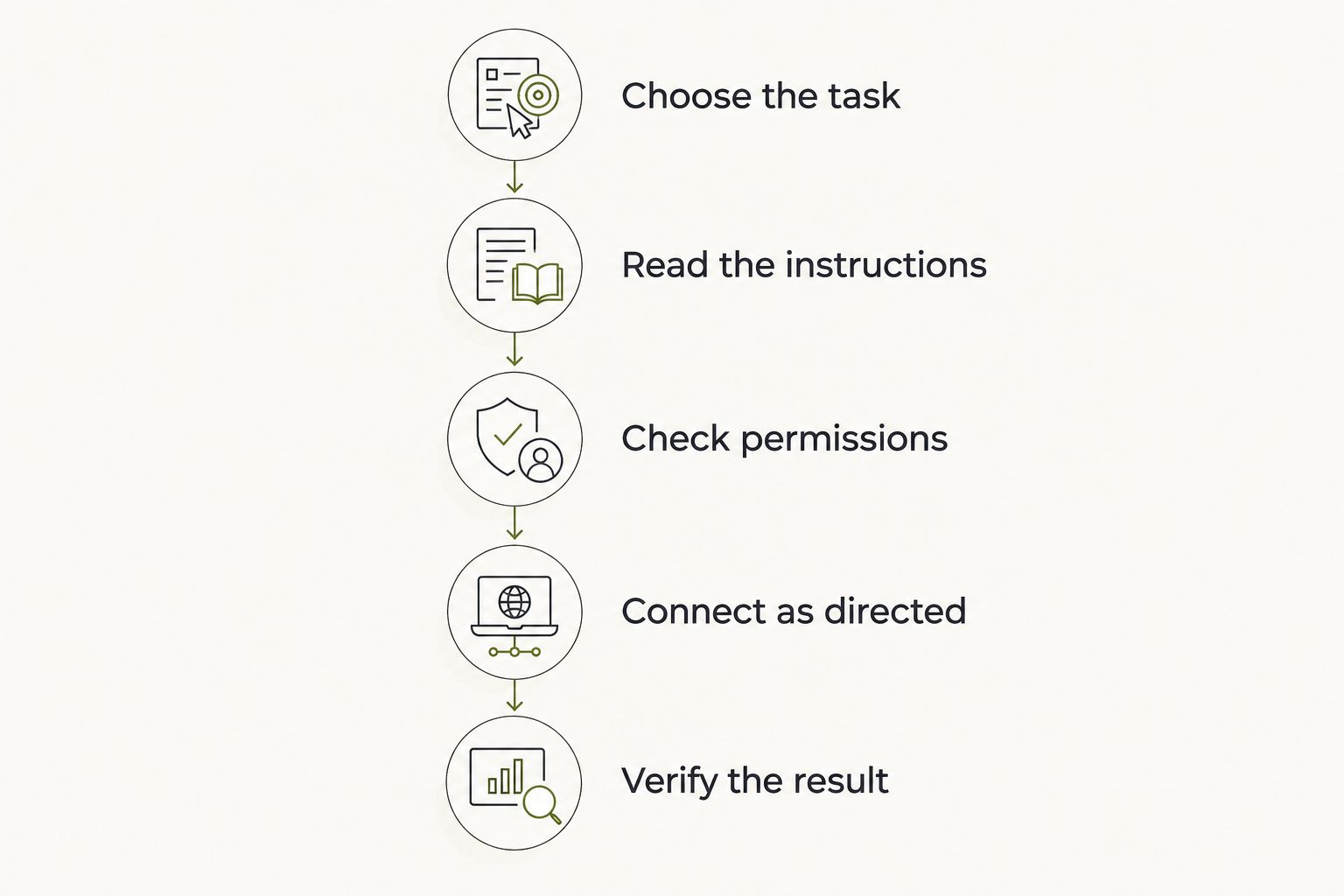
Use 1 approved task during 1 charging session as your starting point. This is a suggested check, not a battery benchmark. Keep the task narrow enough that you can tell whether it completed correctly.
- Choose the task. Decide whether you need to review an earlier capture, create something new, or access a particular control. Do not combine several functions into one pass-or-fail judgment.
- Read the instructions. Find the manufacturer’s guidance for the charging equipment, placement, and intended function. Follow any restrictions before connecting the device.
- Check permissions. Confirm which sources you have chosen to grant. Connecting power is not a reason to expand access or assume approval for an action.
- Connect as directed. Use the charging arrangement specified for the device. Keep the placement consistent with the instructions throughout the check.
- Verify the result. Check that the intended task completed, not merely that the screen, light, or connection remained active. Stop if a warning or instruction requires it.
Keep a short note of the setup and result. Record what you actually checked, including whether the device was worn or placed elsewhere. That makes your conclusion useful the next time you need the same function.
Avoid turning a single observation into a general guarantee. Successfully reviewing an earlier capture does not establish that new capture works in the same state. Repeat the check for a different task only when the instructions support doing so.
Why operation while charging varies
The answer depends on the device and the job. These are the factors to resolve before relying on connected use:
- The intended function. Reviewing an existing item and creating a new one are different tests. Ask about the function by name rather than asking whether everything works.
- The charging arrangement. A cable, dock, and portable source are distinct setups. Confirm the arrangement the manufacturer supports instead of transferring an answer from another setup.
- The required placement. A device resting on a charging surface is not in the same position as one worn on your body. Follow the placement instructions that apply.
- The permitted conditions. Read any handling, environmental, and temperature guidance. A successful connection does not cancel those restrictions.
- The stated product status. Separate a currently supported function from a planned one. A future intention is not a reason to rely on a function today.
For a 2026 comparison, apply these questions consistently. One product description might discuss docked operation while another describes wearing the device. Those statements are not interchangeable, even if both use the word “works.”
Evidence before a purchase
Look for a statement that names both the function and the charging state. Clear evidence answers a practical question: can you review an earlier capture while the device sits in its approved charger? Broad language about everyday usefulness does not settle that question.
A demonstration is useful when you can see the relevant setup and the completed result. It still needs to match the manufacturer’s instructions. An unexplained cable in a photograph is not evidence of supported connected operation.
Ask a narrow follow-up if the wording leaves room for interpretation. Specify whether the device is worn, connected by cable, or placed in a dock. Also specify whether you mean reviewing existing material or capturing something new.
Keep current claims separate from planned capabilities. In 2026, a purchase decision should rest on what the seller explicitly supports now, not on an assumption about what an update will add.
A useful moment, with your approval
Moonshot is best for people who want to talk it through and choose the next step themselves. It is a wearable that hears you out, asks a good question back, and helps you learn from your own life. That describes its purpose; charging compatibility needs its own explicit confirmation.
Consider an illustrative moment: earlier, you said you wanted to call a friend. Later, you return to that thought and decide whether to follow through. The useful outcome is the call you choose to make, not activity for its own sake.
The person chooses priorities and separately grants each source. A captured conversation is not a public source, and an inference is not a fact. Keep those distinctions visible when judging whether a suggestion is useful.
Your yes belongs on each next step. Nothing should go out in your name without approval. Moonshot makes no calls and moves no money; follow-through remains something you choose, including when and how you show up.
Can I use a wearable while it is plugged in?
Plugged-in use requires explicit support for the intended function and placement. A physical connection alone does not answer whether you can operate or wear the device. Check both questions before relying on it.
Does a charging light mean the wearable is recording?
A charging light is not proof that a wearable is recording. Check the device’s documented capture controls and status indicators, and do not infer capture from a power indicator.
Can I leave a wearable connected during use?
Leave a wearable connected during use only when its instructions permit that arrangement. Follow the specified equipment, placement, and handling guidance rather than extending a brief check into permission for ongoing connected use.
A decision that matches your day
Decide whether charging-time operation is essential or simply convenient. If your intended routine depends on reviewing something while connected, make that a purchase requirement. Ask for a direct answer before committing.
If charging and use can happen separately in your routine, keep the decision simpler. You do not need to prove every possible connected function. You need to establish that the device supports the moments you expect to use it.
Avoid buying around an unconfirmed workaround. A cable routed through clothing or a different power source is not a substitute for permission in the instructions. The right setup is the supported setup that fits the way you intend to use the device.
FAQ
Can an AI wearable work while charging in 2026?
An AI wearable can work while charging only when the device supports the intended function in that charging state. Confirm the charging arrangement, placement, and function in the manufacturer’s current instructions.
Can I wear a wearable while it charges?
Wear a wearable while charging only when the manufacturer explicitly permits it. Permission to operate while connected does not automatically mean permission to wear it.
Does charging mean a wearable is listening?
Charging does not establish that a wearable is listening or capturing. Check the documented capture controls and indicators rather than treating a power light as evidence.
Will a portable power source let me keep using a wearable?
A portable power source does not by itself establish supported operation while charging. Confirm both source compatibility and permission for the intended connected use.
What should I check about Moonshot before relying on charging-time use?
Check the current product information for explicit support for the function and charging arrangement you need. Evaluate that separately from its stated purpose of helping you talk it through and choose the next step.
Can I assume a planned feature will work while charging?
No. A planned feature does not establish a currently supported function or charging behavior. Base your decision on what is explicitly supported now.
What is the simplest charging test?
The simplest charging test checks one approved task in the manufacturer’s specified setup. Verify the completed result, not just an active light or connection.
One last thing
Ask what you need to retrieve, not just what can stay switched on. The moment that matters might be a thought you captured earlier, ready to revisit before you make a call. You do not necessarily need new capture to make that moment useful.
For your 2026 decision, say it once in a concrete purchase question: can I review an earlier capture while this device is in its approved charging setup? That question gives you an answer you can act on, without asking a charging light to tell you more than it does.