 moonshot

Two people should share one AI wearable account only when the provider explicitly permits it and offers controls that match what each person agrees to share. A shared password is not proof of shared-account support; before handing over the device, check whose recordings, connected sources, and permissions the other person can access.
- Can two people share one AI wearable account? Only use a sharing arrangement the provider explicitly supports.
- Separate profiles need separate access controls; different names alone do not establish privacy.
- Moonshot hears you out and asks a good question back; confirm account-sharing support before planning shared use.
- Keep recording consent, connected-source access, and approval for each next step separate.
Can two people share one AI wearable account?
Use a shared account only after you confirm both permission to share and the boundaries between users. Two successful sign-ins establish access, not whether the provider supports two people using the account.
For a 2026 purchase decision, distinguish a shared login from separate profiles and separate accounts. These are arrangements to ask about, not features every wearable provides.
| Arrangement to verify | Best for | Potential benefit | Limitation to check |
|---|---|---|---|
| One shared login | Two people deliberately choosing a common record | Both people can use the same account where permitted | Whether either person can see, change, export, or delete the other's material |
| Separate profiles within one account | Two people seeking distinct records under shared administration | Profiles can separate records if the service supports that boundary | Whether the account owner can still access every profile |
| Separate accounts | People who want independent access and permissions | Avoids relying on one shared login | Whether the same physical device can switch accounts without carrying material between them |
If you are considering Moonshot, start with its reservation page and ask specifically about the arrangement you need. Do not treat a product description as confirmation of multi-user support.
Account boundaries
Account sharing matters because an ordinary conversation can become useful later. Suppose you deliberately capture a thought about calling your sister. When you return to that thought, the useful next step belongs to you—not automatically to the other person who wore the device afterward.
A shared record is appropriate only if you both want that record shared. Being comfortable lending a wearable does not necessarily mean agreeing to share everything already connected to its account.
Keep three decisions distinct:
- Device use: Who is wearing the hardware?
- Record access: Who can read or change what was captured?
- Action approval: Who agrees to the next step?
Agreement on one does not settle the others. You can lend an object without intending to hand over your private notes or authority to act in your name.
Shared login: one account for two people
Best for: people who intentionally want a common record, if the provider permits shared use. A shared login offers a straightforward arrangement, but it needs clear agreement about what belongs in that account.
Before using this setup, ask what either person can access after signing in. Include existing material, not just new captures. Also ask whether a password change or account recovery request affects both people.
A shared login is a poor fit when either person expects a private area that the other cannot enter. Do not substitute a promise not to look for an access control you actually need.
For your 2026 account check, write down the boundary in plain language: both people can see everything, or each person needs a protected record. Then verify whether the service supports that exact arrangement.
Separate profiles: two records within one account
Best for: people who want distinct records without assuming that every profile is private. If profiles are supported, find out what they separate before relying on them.
A profile name answers who a record is labeled for. It does not, by itself, answer who can open that record, search it, export it, or remove it.
Ask whether switching profiles changes access to connected sources. A calendar connected for one person should not be treated as permission to use another person's calendar.
Also ask how captured material is assigned. Do not assume the wearable identifies its wearer, recognizes a speaker correctly, or moves a conversation to the right profile without a choice from you.
Separate accounts: independent access
Best for: people who want independent account access and source permissions. Separate accounts avoid a shared login, but they do not establish that one physical wearable supports switching between them.
Verify the handoff process before choosing this arrangement. Ask whether you must sign out, unpair the device, remove stored material, or complete another documented step.
The limitation is practical: account separation and hardware sharing are different questions. You need an answer to both if you intend to pass one wearable between two people.
Do not improvise a reset process based on another device. Follow the instructions for the exact product and confirm what happens to material already captured.
Account-sharing rules vary
The answer depends on the service's rules and the boundaries its controls actually enforce. Check these factors rather than assuming that access means permission:
- Account terms: Does the provider allow two people to use the account?
- Profile boundaries: What can each person see, search, change, or remove?
- Source permissions: Can each person separately grant and withdraw access?
- Capture assignment: How does a recording become associated with the intended person?
- Action approval: Who must agree before anything goes out in their name?
- Account ownership: Who controls recovery, exports, deletion, and ending the arrangement?
Use the same questions when comparing privacy claims in 2026. The guide to wearable privacy features provides a related reading path; your final decision still needs product-specific answers about shared access.
A shared-device check
Before two people use one wearable, work through the proposed arrangement together. Use a harmless example rather than a personal conversation to make the boundaries concrete.
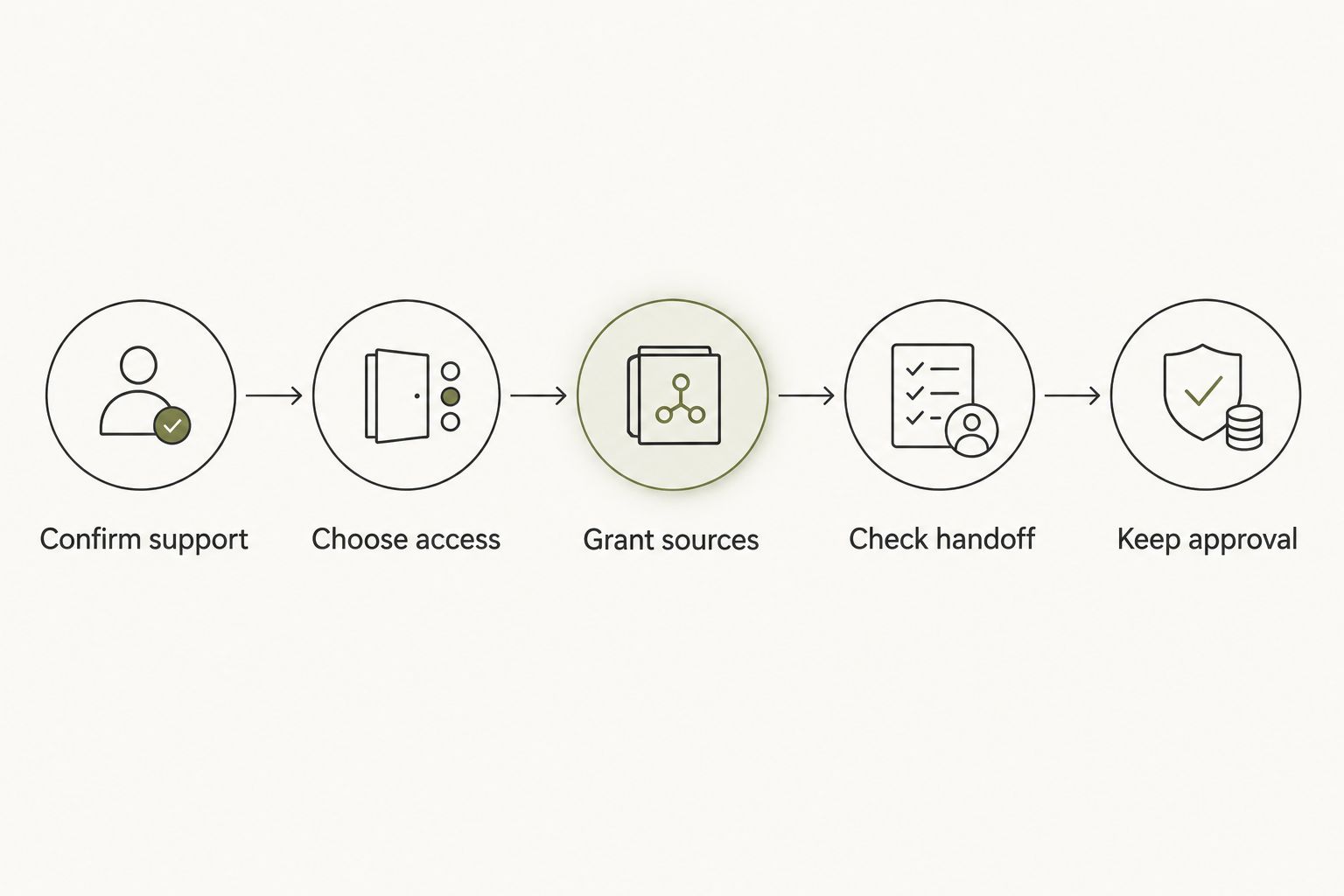
- Confirm support. Ask whether two people can use one account, separate profiles, or the same device with separate accounts. Get the answer for your intended setup.
- Choose access. Decide whether both people should see all captured material. Identify anything that needs a separate record.
- Grant sources. Each person separately chooses which sources to connect. Sharing the device is not blanket permission to connect everything.
- Check handoff. Follow the documented process for changing wearers. Verify the active account or profile before capturing anything personal.
- Keep approval. Agree who owns each proposed next step. Nothing should go out in your name without your yes.
The sequence puts the decision before the capture. It also gives you a useful stopping point: if you cannot establish the intended account boundary, do not add personal material to test it.
Captured conversations and public information
A captured conversation is a record of what someone said in a particular setting. A public source is information available outside that conversation. Keep those origins visible when deciding what to share.
Suppose you capture yourself saying that a friend mentioned a new job. That is not the same as a public announcement by the friend. Sharing your account should not quietly turn the private remark into something both account users treat as public knowledge.
Facts and inferences need another boundary. A recorded sentence such as wanting to call someone is evidence of what you said; a suggested reason for delaying that call is an interpretation, not an established fact.
You choose your priorities. A useful question gives you room to say what matters without treating an inference as an instruction.
Product fit
Moonshot is best for people who want to talk it through and choose the next step themselves. It hears you out, asks a good question back, and helps you notice what your days keep saying.
That purpose is personal. If you want to learn from your own life, decide whether another person's contributions belong in the same record before planning a shared setup.
The fit is weaker when your main requirement is a shared household account and you have not confirmed support for that arrangement. A useful conversation experience does not establish multi-user access, separate profiles, or hardware handoff support.
Keep a 2026 purchase decision grounded in what is offered now. Treat a planned capability as planned, not as something you can use today. Moonshot makes no calls and moves no money; you still choose how to show up and follow through.
Can we take turns wearing the same device?
Two people taking turns with one device still need a supported handoff process. Passing the hardware does not necessarily change the active account or the destination for the next capture.
Check that process before switching wearers. If the instructions do not establish the boundary you need, keep personal captures out of the shared setup.
Does permission to record mean permission to share the account?
Permission to record a conversation does not establish that everyone involved agrees to another account user accessing it. Make the intended audience clear before capture rather than asking people to infer it from the device.
Your agreement with the other wearer also does not speak for everyone in the conversation. Give other participants a clear choice about recording.
What happens when one person stops using the account?
One person leaving requires a clear decision about access, existing records, and connected sources. Agree on that process before shared use begins, while both people can make the choice together.
Check the provider's documented options for withdrawing access and handling retained material. Do not assume changing the password resolves every part of the separation.
FAQ
Can two people share one AI wearable account in 2026?
Two people should share one account only when the provider permits it and its access controls fit their agreement. Confirm shared-login rules, profile boundaries, and permissions for the exact product.
Is sharing a wearable the same as sharing its account?
Sharing a wearable is not the same as sharing its account. Verify how the device changes users and where the next capture will be stored.
Are separate profiles private from each other?
Separate profile names do not establish privacy from other users or the account owner. Check who can read, search, export, change, and delete each profile's material.
Can we connect both people's calendars to one account?
Connect both people's calendars only if the service supports the arrangement and each person separately grants permission. Confirm who can access each source and how either person withdraws that access.
Can my partner approve something in my name?
Do not treat a shared login as your approval for another person to act in your name. Keep approval for each proposed action separate from permission to view a record.
Does Moonshot support two people on one account?
Confirm support for your intended two-person setup before choosing it. Ask specifically about shared logins, separate profiles, source permissions, and device handoff rather than inferring support from the product description.
What should we check before sharing a wearable?
Check provider permission, record access, connected sources, wearer handoff, and individual approval. Use a harmless example to confirm the arrangement before adding personal material.
One last thing
Ask a question more specific than whether you can share: What should the other person be unable to see or do? The answer turns a vague preference into something you can check against the product's controls.
For a shared-wearable decision in 2026, start with one ordinary moment. You say it once: you want to make that call. Decide who should see it, who chooses the next step, and whose yes is needed before any follow-through.