 moonshot

An AI wearable’s total cost is the device charge plus any required ongoing payments and the optional services you choose. For a 2026 purchase, check the current checkout terms rather than treating the advertised device amount as the full commitment. The key caveat is what remains usable if you stop paying for a service connected to the device.
- How much does an AI wearable cost? Compare the full payment commitment, not just the device charge.
- Check required payments separately from optional extras, and confirm what works without a subscription.
- Moonshot is a wearable for people who want to talk it through and choose the next step.
- Judge a purchase by a useful first-week outcome, not an unconfirmed future capability.
Why the total matters
A wearable can sound useful when you picture a particular moment: you mentioned a friend earlier, then later decided to make the call. That is a clearer reason to buy than a long feature list. But the purchase decision still needs a complete account of what you pay for and what you receive.
The Moonshot preorder page is the place to check its current purchase terms. Keep the purchase terms separate from the outcome you hope to get; neither one answers the other.
How much does an AI wearable cost in 2026?
An AI wearable costs the device payment plus any required service payments over the period you intend to use it. Optional purchases belong in a separate column until you decide you need them. Shipping and applicable taxes belong in your checkout total, not in an assumption based on a headline.
There is no useful single total that covers every device, service arrangement, and buyer. Compare the same ownership period and the same intended use. Otherwise, an upfront purchase and an ongoing commitment are different questions disguised as comparable amounts.
Use this breakdown before choosing a wearable:
| Cost component | What to establish | What to watch for |
|---|---|---|
| Device payment | What the purchase includes | Do not assume every pictured accessory is included |
| Required service | Whether your intended use needs an ongoing payment | Separate essential access from optional additions |
| Optional extras | What you would actually choose | Leave unwanted extras out of the comparison |
| Checkout charges | The final amount for your destination | Use the checkout total rather than the headline alone |
| Continued use | What remains usable after cancellation | Owning the hardware does not answer the service question |
This is a comparison method, not a claim that every wearable has every charge. Cross out any category that does not apply to the product you are considering. The result should describe your purchase, not a hypothetical fully equipped version you would never use.
Purchase terms
Start by asking what the payment actually secures. A preorder, a reservation, and a purchase ready for dispatch are not interchangeable terms. Read the seller’s description of the transaction rather than inferring it from a purchase button.
For a preorder in 2026, distinguish a stated delivery commitment from an estimate. Read the cancellation and refund terms before paying. Do not treat a date in an illustration, an announcement, or an older discussion as the current transaction terms.
Then separate the hardware from access to a service. You need to know whether the device purchase stands on its own, whether a service is required, and whether an introductory arrangement changes later. Those are questions to settle before comparing the purchase with another way of meeting the same need.
The useful purchase total is the amount attached to the experience you intend to use. A smaller upfront commitment does not settle that question. Neither does a larger one.
A purchase check
You do not need an elaborate spreadsheet. You need a short record that keeps the terms and your intended outcome together.
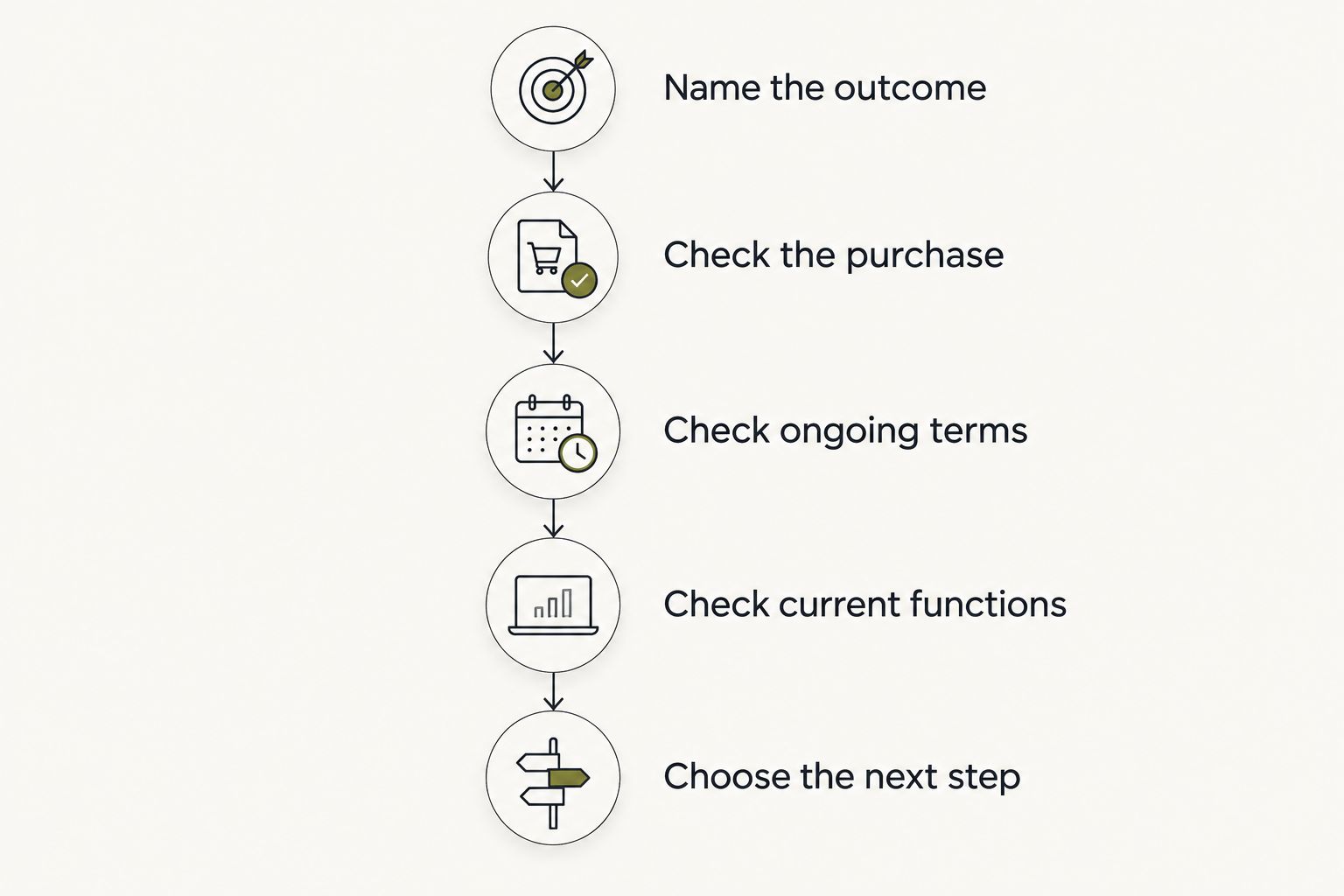
- Name the outcome. Write the moment you want help with. For example, you want to return to an idea you said aloud and decide whether to act on it.
- Check the purchase. Record what the device payment includes and what kind of transaction you are entering.
- Check ongoing terms. Establish whether your intended use requires a continuing payment. Read what changes if you cancel.
- Check current functions. Separate what the seller says is available now from what is described as planned.
- Choose the next step. Buy only when the current terms and current experience fit the outcome you named.
Keep that record in ordinary language. If you cannot explain what you are paying for without repeating promotional wording, return to the terms and ask a narrower question. A clear purchase decision should survive being written as a plain sentence.
Cost differences
Different purchase arrangements need different questions. These are the factors to examine, not reasons to assume a particular device is expensive or inexpensive.
- What the purchase includes. Check the contents of the order. Treat an accessory as optional unless the purchase terms say otherwise.
- What requires continued payment. Find out whether the task you care about depends on an ongoing service. A feature you will not use should not decide the purchase.
- What you choose to add. Separate your own additions from requirements. An optional purchase belongs in your total only when you want it.
- Where the order goes. Check the final charges for your destination. Do not substitute someone else’s checkout experience for your own.
- How long you intend to use it. Compare commitments over a consistent period. Keep cancellation conditions beside the payment terms.
- What happens when you stop. Understand the difference between cancelling a service, returning a device, and retaining hardware you already own.
For your 2026 comparison, keep these factors visible together. A purchase that looks simple in isolation can become harder to judge when the ongoing terms sit elsewhere. Bring them into the same note before deciding.
Subscription questions
The most useful subscription question is not simply whether a plan exists. It is whether the experience you want depends on it. Ask about the specific task rather than accepting a general description of access.
If a seller offers an introductory period, check what happens when it ends. Confirm whether continuation requires a decision from you or follows the stated billing arrangement. Do not assume that an included period means continued access on the same terms.
Cancellation needs its own reading. Establish when cancellation takes effect, what access changes, and whether any separate payment commitment remains. Save the terms that apply when you purchase so you can refer to the actual agreement later.
A subscription is neither a benefit nor a drawback by itself. Its value depends on whether the continuing experience matters to you and whether you accept the continuing commitment. Compare that agreement with your intended use, not with the broad promise of what wearables might eventually do.
Current functions
A product demonstration, a proposed feature, and a currently available function are different kinds of information. Keep them separate when deciding what a wearable is worth to you. Your purchase should make sense without requiring an unconfirmed addition.
Read verbs carefully. A description of what a product does is different from a description of what its makers intend to add. If the distinction is unclear, ask whether the particular function is available under the purchase terms you are considering.
The same care applies to information sources. Something captured from a conversation is not a public reference, and an interpretation is not a verified fact. When you evaluate a product, ask how the experience distinguishes those things; do not assume a confident sentence establishes its source.
For a 2026 purchase, judge the present offer on its own. You can be interested in a future direction without paying as though every proposed part already exists.
Permissions and your yes
Cost is not the only condition of a useful purchase. You also need to understand what you are choosing to share and what happens next. Granting access to a source and approving an outward action are separate decisions.
Look for clear explanations of each permission. Access to one source should not be treated as your permission for every source you use. Likewise, a suggestion should not be mistaken for an action already taken in your name.
When a conversation is involved, consider the other people taking part. Do not treat wearing a device as permission to capture every exchange. Check the setting, the applicable rules, and what the people present have agreed to.
These questions belong beside the payment terms because they affect whether the product fits your day. A device is not a suitable purchase merely because you accept its financial commitment. You must also accept how you will use it.
A useful first week
Choose a modest test for week one. Perhaps you want to talk it through after mentioning the same unfinished idea again. The useful result is not a longer record; it is deciding whether that idea deserves the next step.
Moonshot is a wearable for people who want to talk it through and choose the next step. It hears you out and asks a good question back. Its stated approach is to turn one thing into a next step, with your yes on each one.
That gives you a concrete way to judge fit: say it once, consider the question, then decide what you want to do. The follow-through remains yours. Moonshot makes no calls and moves no money, so do not evaluate it as a substitute for doing those things.
The benefit to look for is a useful decision you choose to act on. The limitation is equally clear: a question does not complete the action for you. Choose a wearable because that exchange suits you, not because you expect it to take over your day.
Is a wearable worth an ongoing payment?
An ongoing payment is worth considering only when the continuing experience is something you want to keep using. Name that experience before accepting the commitment. If you cannot identify it, the purchase decision is not ready.
Keep the test small enough to observe. Did the experience help you choose something specific? Did you want to return to it? Those questions are more useful than asking whether a device has changed your whole life.
Should you preorder or wait?
Preorder only when you understand the transaction terms and accept the stated delivery conditions. Waiting is the better choice when you need to verify the current experience before committing.
Neither choice needs a grand justification. Your decision should match how much uncertainty you accept, when you need the product, and what the seller has actually committed to provide.
What should you compare before buying in 2026?
Compare the full payment commitment, the current experience, and the permissions you would grant. Use the same intended task for each option. Otherwise, you are comparing different promises rather than different ways to meet your need.
Give each option an honest drawback as well as a reason to choose it. For a wearable built around talking things through, the drawback is straightforward: you still have to choose and act. That is a good fit only if it is the kind of involvement you want.
FAQ
How much does an AI wearable cost in 2026?
The total is the device charge plus any required ongoing payments and the optional additions you choose. Check the current checkout terms and compare the same period of use.
Do I need a subscription to use a wearable?
Check the specific product’s terms to establish whether your intended use requires a subscription. Also confirm what remains usable if you cancel.
Does buying the device include every feature?
Do not assume the device purchase includes every feature shown or discussed. Check what is included now and distinguish it from optional services or planned functions.
Is a preorder the same as an order ready to ship?
A preorder should be evaluated under its stated preorder terms, not assumed to be ready for dispatch. Read the delivery, cancellation, and refund conditions before paying.
What should I look for in the first week?
Look for a specific useful outcome that you chose, such as deciding to return to an unfinished idea. Avoid judging the purchase against an undefined promise to change your life.
Who is Moonshot for?
Moonshot is a wearable for people who want to talk it through and choose the next step. It hears you out, asks a good question back, and leaves the choice with you.
Can I judge a wearable by its planned features?
Judge the purchase by the current offer rather than treating planned features as available. A future direction can interest you without being part of today’s buying decision.
One last thing
Before buying, write down the ordinary moment when you would want to use the wearable. Not a perfect day. The unfinished idea after lunch, or the friend you keep meaning to call.
Then ask whether the current offer helps you meet that moment on terms you accept. Learn from your own life. Choose where you want to show up, and keep the purchase no bigger than that reason.