 moonshot
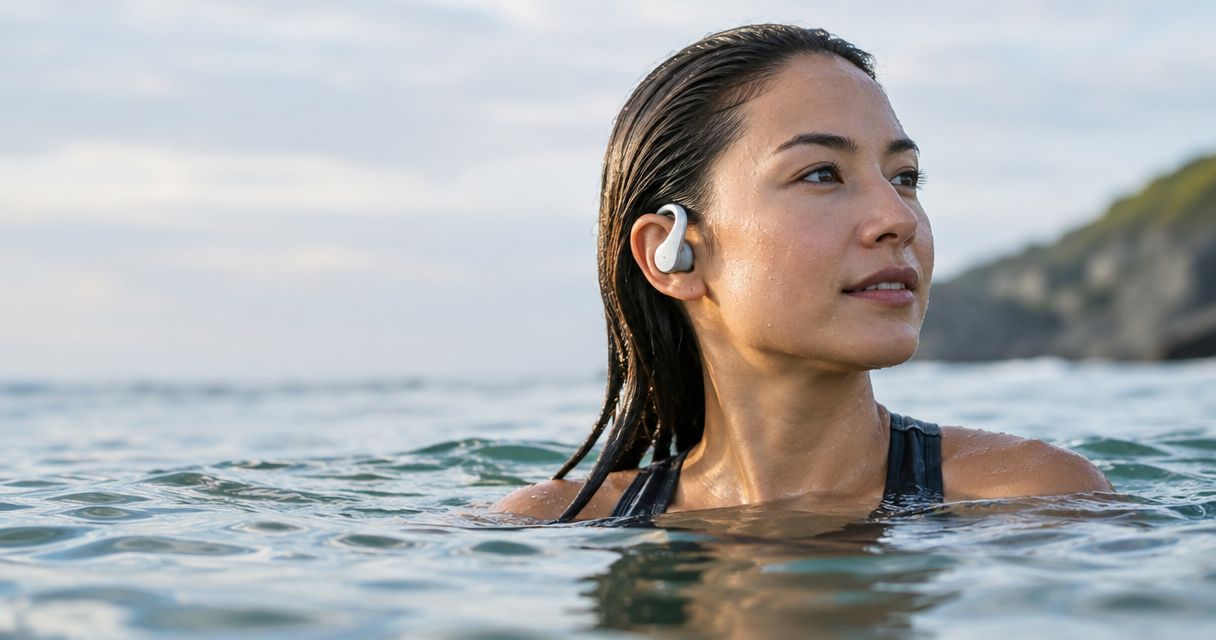
An AI wearable is not waterproof simply because you can wear it: water protection depends on the specific device’s published rating and use instructions. Splash resistance does not establish suitability for swimming, showering, or charging while wet; check the exact exposure the manufacturer permits before you get it wet.
- Is an AI wearable waterproof? Check the specific model’s water rating, not its category name.
- IEC 60529 distinguishes splash, water-jet, and immersion protection; these are not interchangeable permissions.
- An IPX7 rating covers temporary immersion under defined conditions, not unrestricted swimming or showering.
- For Moonshot, check published product information before treating the wearable as water-resistant.
Water protection matters before the first splash
A wearable sits where ordinary life happens. You wash your hands, walk through rain, lean over a sink, or leave it beside a wet towel. Those situations deserve separate answers, not a single waterproof label.
For Moonshot, start with the reservation page and confirm any water-protection claim against the instructions for the device you will receive. A description of what a wearable helps you do is not evidence of how its enclosure handles water.
For a 2026 purchase, make water protection a separate check from the reason you want the device. Choose the experience you want, then verify that its care requirements fit your day.
Is an AI wearable waterproof?
An AI wearable is waterproof only to the extent established by its documented protection and permitted use. Treat an unsupported waterproof claim as insufficient evidence for exposure, especially immersion.
IEC 60529 is the reference standard for the IP classifications below. This 2026 guide summarizes their water-test scope; it does not assign a rating to any particular wearable.
| Published protection | What it establishes | Best for evaluating | What it does not establish |
|---|---|---|---|
| No documented rating | No verified IP water-test scope to rely on | Dry-use suitability | Permission for splashes, showers, or immersion |
| IPX4 | Protection against splashing water from any direction under the specified test | Incidental splash exposure | Water jets or immersion |
| IPX5 | Protection against water jets under the specified test | Exposure to water jets within the documented conditions | Swimming or unrestricted pressure exposure |
| IPX7 | Protection against temporary immersion under specified conditions | Accidental immersion within the documented limits | Showering, swimming, or indefinite submersion |
| IPX8 | Protection against continuous immersion under conditions specified by the manufacturer | A stated immersion use case | Unlimited depth, duration, or every water activity |
The advantage of a published rating is specificity. Its limitation is equally important: a laboratory test does not grant permission for every wet environment.
Read the letters carefully, too. In IPX7, the X means the code does not specify a solid-particle protection rating. It does not mean the device failed a dust test, and it does not change the water-test classification.
IPX4: splash protection, not immersion
IPX4 addresses splashing water from any direction under the standard’s test conditions. It is a useful distinction when you are comparing an accidental splash with a device falling into a sink.
Best for evaluating incidental splashes: IPX4 gives you a defined splash-protection claim to check against the manufacturer’s instructions. The benefit is a clearer basis for handling ordinary water exposure than an unexplained water-resistant label.
The limitation is immersion. An IPX4 rating does not establish that a wearable can sit underwater, withstand a shower, or tolerate every cleaning method. Do not turn a splash claim into permission to rinse the device under a tap.
IPX5: water-jet protection under test conditions
IPX5 covers water jets under the specified test. IEC 60529 specifies a nominal flow of 12.5 liters per minute through a 6.3-millimeter nozzle for this test; that is a test condition, not an instruction for cleaning your wearable.
Best for evaluating a documented water-jet claim: IPX5 describes a different exposure from splashing. Its useful feature is the defined test, rather than a vague promise about handling water.
Its limitation remains the activity you want to do. A water-jet rating does not establish immersion protection, and it does not override instructions about hot water, cleaning chemicals, or charging contacts. Check the permitted activity separately.
IPX7: temporary immersion with limits
IPX7 addresses temporary immersion. For a small enclosure such as a wearable, the familiar test conditions are 1 meter of water for 30 minutes under IEC 60529.
Best for evaluating accidental temporary immersion: IPX7 supplies a concrete depth-and-duration reference. It gives you something more useful than a waterproof adjective when assessing a dropped device.
The limit is the test itself. The rating does not establish suitability for swimming, showering, or exposure to pressurized water jets. Nor does 30 minutes become a recommended daily routine: a test limit is not an invitation to repeat the exposure.
IPX8: manufacturer-defined immersion conditions
IPX8 covers continuous immersion under conditions specified by the manufacturer and more severe than the IPX7 test. The depth and other applicable conditions must come from the device documentation.
Best for evaluating an explicitly documented immersion use: IPX8 lets you assess the manufacturer’s stated conditions against the activity you have in mind. Its value depends on those conditions being clear.
The limitation is that the code alone does not tell you the permitted depth or every allowed activity. Two devices carrying IPX8 need not carry identical immersion instructions. Read the conditions rather than treating the final digit as an all-purpose permission.
Water-protection limits
Different wet situations place different demands on a device. These factors explain why a wearable’s rating and its care instructions both matter:
- Exposure type. Splashes, jets, and immersion are separate test categories. Evidence for one is not automatic evidence for another.
- Depth and duration. Immersion claims have conditions. More time or greater depth falls outside a stated limit unless the manufacturer explicitly permits it.
- Water composition. Freshwater testing does not establish compatibility with saltwater, pool chemicals, soap, or cleaning fluids.
- Heat and steam. A water rating alone does not establish suitability for hot showers, steam rooms, or saunas. Check temperature and activity restrictions separately.
- Device condition. Damage and wear can affect water protection. Follow inspection and service guidance rather than assuming the original rating answers every later situation.
For your 2026 shortlist, write down the exposure you actually need covered. A rainy walk and a swimming session are different requirements, even if both begin with the same question about waterproofing.
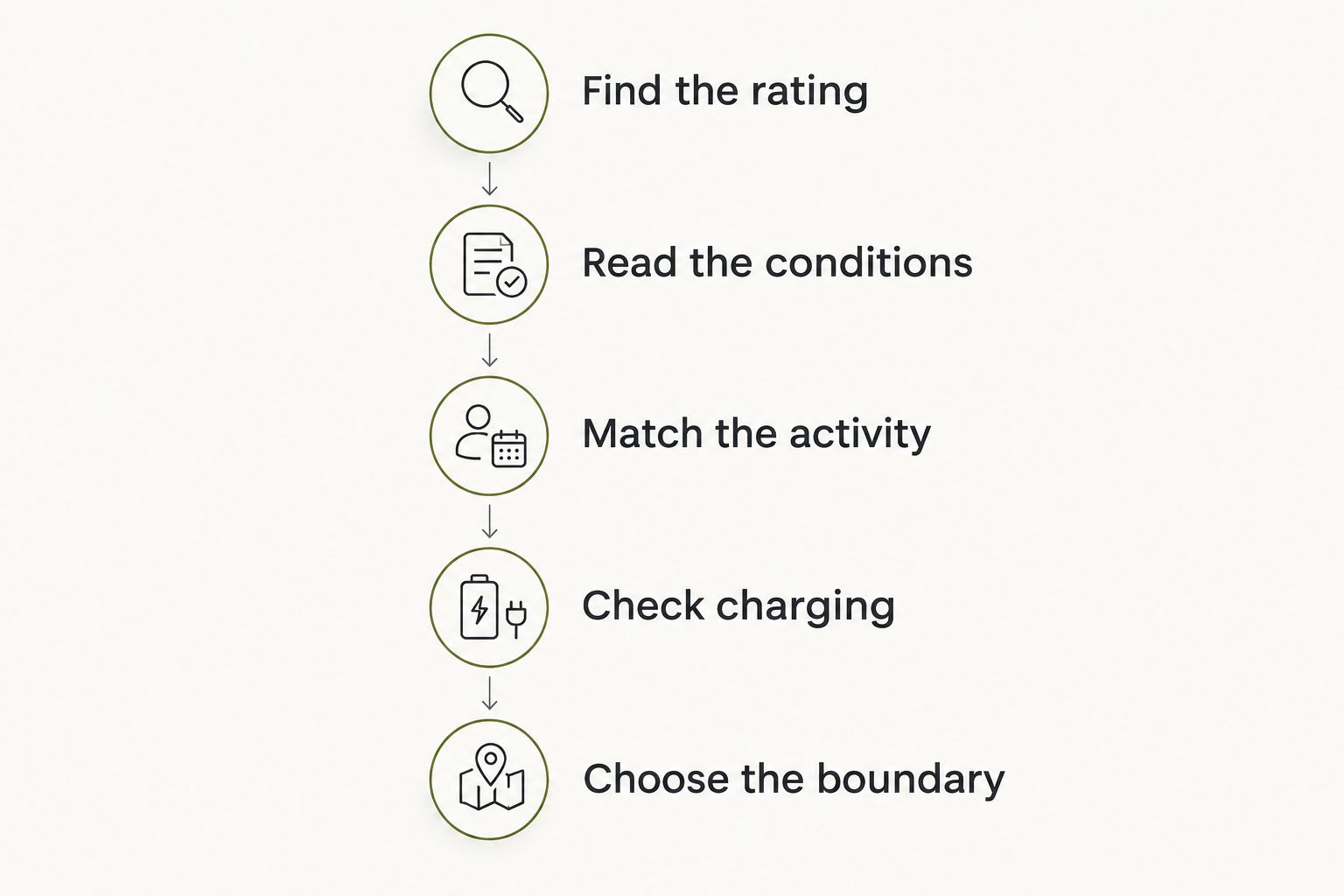
A water-use check before you buy
Use this sequence before allowing a wearable near water. It turns a general label into a decision about your actual day.
- Find the rating. Look for a specific IP code or another clearly documented water-protection claim for the exact model. A category description is not enough.
- Read the conditions. Find the permitted depth, duration, water type, and activity restrictions where applicable. Keep the instructions with the model information.
- Match the activity. Name the situation: rain, washing up, a shower, or swimming. Check whether the instructions cover that situation rather than a loosely similar one.
- Check charging. Read the drying and charging instructions separately. Water protection during use does not establish that wet charging is permitted.
- Choose the boundary. If the documentation does not permit the exposure, remove the device before it happens. Ask for clarification instead of testing the claim yourself.
The useful result is a simple rule you can follow without thinking about specifications each morning. For example, removing the device before a shower is clearer than trying to remember whether its water-resistant description sounded reassuring.
Can I shower with a water-resistant wearable?
An IPX7 rating specifies 1 meter for 30 minutes for a small enclosure; it does not by itself permit showering. A shower adds conditions that a temporary immersion test does not establish, including directed water, heat, and soap.
Check for explicit shower-use permission in the device instructions. Without that permission, take the wearable off before showering and place it somewhere dry, not on the edge of the sink.
Can I swim with an IPX7 wearable?
An IPX7 rating specifies 1 meter for 30 minutes under the temporary immersion test, not permission to swim. Choose a device whose manufacturer explicitly permits your intended swimming activity and gives the relevant limits.
Do not substitute an immersion rating for an activity claim. Pool use, open-water use, and diving need answers specific to those activities.
Can I charge a wearable after it gets wet?
Charge a wearable after water exposure only when its charging instructions permit it and the required drying conditions are met. A water-resistance claim does not establish that wet contacts or a wet charging connection are safe to use.
Follow the manufacturer’s drying procedure rather than inventing a waiting period. If water exposure exceeded the permitted conditions, stop and seek the manufacturer’s guidance before charging.
A wearable’s purpose and its care are separate decisions
You mentioned earlier that you wanted to call a friend. Later, you choose to make the call. That is a concrete reason to want help noticing what your days keep saying; it is not a reason to assume the device belongs in the shower.
Moonshot is for people who want to talk it through and choose the next step. The wearable hears you out and asks a good question back. You choose priorities, grant each source separately, and give your yes before anything goes out in your name.
Let that purpose guide the experience you want. Let published care instructions guide water exposure. The benefit is a way to learn from your own life; the boundary is that this purpose establishes no waterproofing claim.
In 2026, keep the expectation concrete: say it once, decide whether the next step matters, and choose your own follow-through. A useful question can help you show up for the call you meant to make without requiring the device to go everywhere you go.
FAQ
Is an AI wearable waterproof in 2026?
An AI wearable is not waterproof by category; check the exact model’s published water rating and permitted uses. A splash claim does not establish swimming or shower suitability.
What does IPX7 mean for a wearable?
IPX7 covers temporary immersion under specified conditions, commonly expressed for small enclosures as 1 meter for 30 minutes. It does not by itself permit swimming, showering, or water-jet exposure.
Is IPX8 better than IPX7 for swimming?
IPX8 specifies continuous immersion under manufacturer-defined conditions, but the code alone does not establish swimming suitability. Check explicit swimming permission and the accompanying limits.
Can I wear a splash-resistant device in the shower?
A splash-resistant claim does not establish shower suitability. Wear it in the shower only if the manufacturer explicitly permits that use.
Does water resistance cover sweat and saltwater?
A water-resistance rating alone does not establish resistance to sweat or saltwater. Check the manufacturer’s separate exposure and cleaning instructions.
Can I charge my wearable while it is wet?
Do not treat water resistance as permission to charge a wet wearable. Follow the device’s drying and charging instructions before connecting power.
Does waterproof mean water damage is covered?
A waterproof or water-resistant claim does not by itself establish warranty coverage for water damage. Read the warranty’s exclusions and the device’s permitted-use conditions separately.
How should I check Moonshot’s water protection?
Check Moonshot’s published product information and device instructions for an explicit water-protection claim. Use only the exposures those instructions permit rather than inferring protection from the wearable format.
One last thing
The higher final digit is not a blanket upgrade for every kind of water exposure. An immersion rating does not automatically establish protection against water jets. The question is not simply which number looks strongest, but which documented test matches your use.
Before a 2026 purchase, finish this sentence: I need the device to tolerate this specific activity. Then find the matching permission in writing. If you cannot, keep it out of that situation.