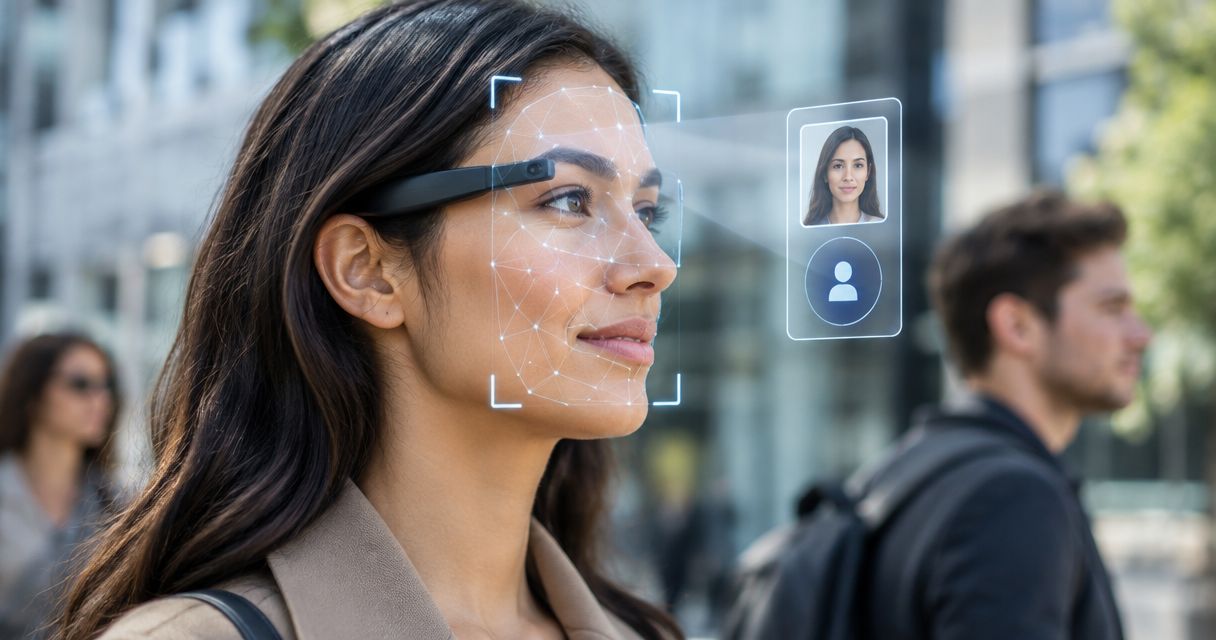
 moonshot

An AI wearable is worth it in 2026 if something you choose to capture helps you take a useful next step later; it is not worth it just because it records more. If you mentioned a friend you mean to call, the useful payoff is deciding to make that call—not collecting another account of your day.
- Is an AI wearable worth it in 2026? Judge the next step it helps you choose, not how much it captures.
- Moonshot is best for people who want to talk it through before choosing the next step.
- Check what is available now, what requires permission, and what remains a planned capability.
- Keep your current routine if it already helps you follow through without another device.
Is an AI wearable worth it in 2026?
Yes, when you can name a recurring use and explain why wearing a device helps. Otherwise, wait. A good question about something you chose to capture has a purpose. A longer record without a reason to revisit it does not.
The Moonshot wearable hears you out and asks a good question back. That makes the relevant buying question concrete: would talking something through help you choose what to do next?
Compare the device with what you already do, not just with other new devices. Keeping your current routine is a real option.
| Option | Best for | Benefit | Trade-off | Verdict |
|---|---|---|---|---|
| Keep your current routine | People whose notes already lead to action | No new device to fit into your day | Leaves any existing follow-through gap unchanged | Keep it if it works |
| Try a wearable | People with a clear use for captured moments | Can connect a chosen capture with a later decision, when that function is available | Adds a device and permission decisions | Consider it for a specific use |
| Wait | People whose decision depends on a planned capability | Lets you evaluate the capability when it is available | Does not address the need today | Wait for the thing you need |
Why this matters
A wearable comes with a place in your routine, not just a place to wear it. Before choosing one in 2026, decide what earns that place: a useful question, a clearer decision, or a next step you actually want to take.
The distinction is small but consequential. Remembering that you mentioned a friend is different from deciding to call. Your choice is the part that matters.
The everyday-use test
Start with an ordinary moment. You talk about a friend you have been meaning to call. Later, you want to decide whether to make time for that conversation.
A useful question would help you make that decision without pretending to know the answer. Perhaps you want to call; perhaps you want to leave it for another day. Neither answer needs to become an instruction sent on your behalf.
Use this sequence to judge whether a wearable fits that situation:
- Choose the moment. Name something you would deliberately capture. Do not build the use around recording everything around you.
- Name the question. Write the question you would want to consider later. Keep it connected to what you actually said.
- Check the source. Separate the captured conversation from outside information and any interpretation of your words.
- Give your yes. Decide whether the proposed next step is one you want. Permission to capture something is not permission to act on it.
- Check follow-through. Look at whether you took the step or made a useful decision not to. More saved material is not the result.
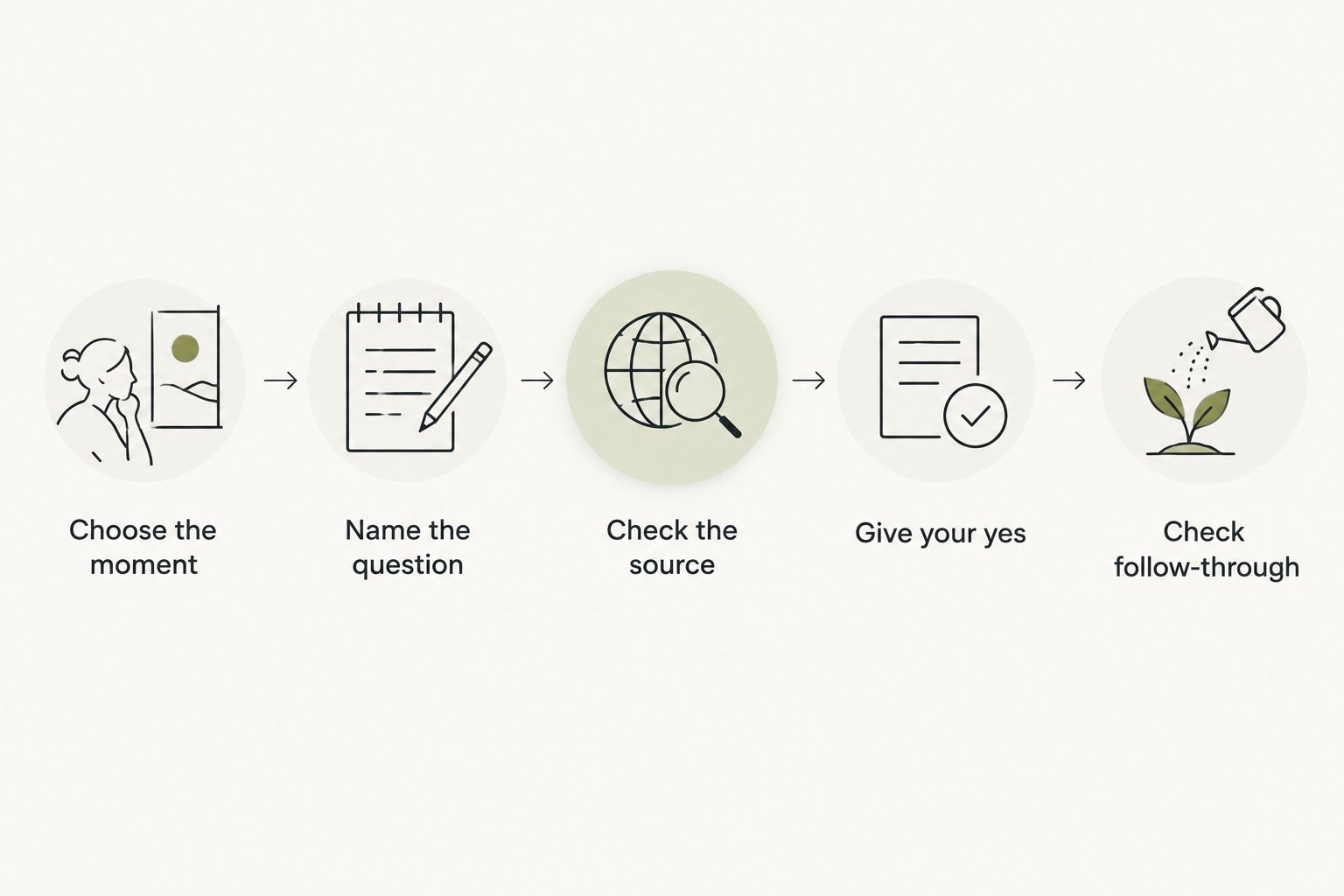
This is an evaluation exercise, not a claim that every wearable performs each step. Apply it to the functions described on the current product page, and leave planned functions out of your buying case.
The test is whether the captured moment makes a later choice useful. If you cannot name that later choice, you do not yet have a clear reason to buy.
Reasons to consider a wearable
A wearable deserves consideration when you have something specific to talk through and a reason to return to it. You should be able to describe that reason without referring to the novelty of the device.
For example, an idea keeps coming up in your own conversations. Rather than asking a device to declare what the idea means, you want a question that helps you decide whether to pursue it. That is a narrower, more useful expectation.
Moonshot is best for people who want to talk it through before choosing the next step. It hears you out, asks a good question back, and leaves you to choose what to do with it.
The limit belongs beside the benefit. Moonshot makes no calls and moves no money. If the next step is calling a friend, you still make the call; the device is not a substitute for showing up.
Consider the wearable for a useful conversation with a clear purpose, not for a promise that it will run your life. You choose what deserves attention.
Reasons to keep your current routine
Keep your current routine when it already does the job. If writing down a thought gives you enough clarity to act, adding a wearable needs a separate reason.
The same applies when your difficulty comes after the decision. You already know whom you want to call, and you have already decided to call. Another account of that intention does not make the call for you.
There is also a practical distinction between wanting to say it once and wanting everything preserved. Those are not the same request. Choose the smallest capture that serves the purpose rather than treating a larger record as automatically better.
Keep what works. A new device should address a named gap, not replace a useful habit merely because the device is new.
Reasons to wait
Wait when the capability that matters to you is still described as planned. A demonstration of an idea and an available function are different evidence for a purchase.
For a 2026 buying decision, read the current product description closely. Distinguish what you can use from what the company intends to offer, and check the terms attached to a preorder before committing.
Wait, too, when you cannot explain what information a function uses. A captured conversation is a source. A public source is something else. An interpretation of either is not automatically a fact.
Waiting does not require dismissing the category. It means your decision depends on something specific being clear or available first. Do not buy for a future function you need today.
What changes the value
The value of an AI wearable in 2026 depends on the job you give it. Use these factors to make the decision specific rather than treating every device or every day as interchangeable.
- Your recurring use. A thought you want to revisit is a clearer use than a general wish to capture your life. Name the situation before choosing the device.
- Your existing habit. Compare the proposed use with the notes or conversations that already help you. The new device needs to add something you actually need.
- Your source choices. Choose priorities yourself and grant each source separately. Access to one source should not stand in for your approval of another.
- Your approval boundary. Capturing words, proposing a step, and sending something in your name are separate decisions. Keep your yes attached to the relevant action.
- The available capability. Base the decision on the function you can use, not a planned addition. Check the current description when you decide.
- Your follow-through. Judge the outcome by what you chose and did. A growing archive alone does not answer whether the device was useful.
These factors also explain why a recommendation from someone else is not enough. Their useful moment might not occur in your day. Start with your own example.
What should you check before choosing a wearable?
Check capture, sources, permissions, and current capabilities before committing. These checks tell you what you are agreeing to and whether the device supports your intended use.
Ask how capture starts and stops. Ask what is retained, how you can review it, and how deletion works. If other people are part of a conversation, consider their permission as well as your own.
Then inspect the boundary between a suggestion and an action. A useful question should not quietly become a message sent in your name. Your yes belongs to that action, not to a broad assumption made during setup.
Finally, identify what the product description actually promises. A general description of helping with your day is not proof of a particular integration, delivery method, or external action.
Does more capture make a wearable more useful?
More capture is not the same as more useful follow-through. Begin with the decision you want help considering, then ask what information that decision needs.
Suppose you said you wanted to call a friend. That statement is a fact about what you said. A claim about why you have not called is an interpretation unless you supplied the reason.
Keep that distinction visible. A good question can invite you to explain; it does not need to present a guess as knowledge about you.
Can a wearable take the next step for you?
A proposed next step is not permission to carry it out. Evaluate each action separately, and do not assume that a device can perform an action merely because it can discuss it.
For the friend you want to call, the useful outcome might be a decision to call after dinner. You still choose the timing and make the call. Nothing needs to go out in your name without your yes.
That boundary does not make the question less useful. It keeps the decision where it belongs: with you.
FAQ
Is an AI wearable worth it in 2026 if I already keep notes?
An AI wearable is worth considering only if it addresses a gap your notes leave open. If your notes already help you decide and follow through, keep that routine unless you can name a separate use.
What is a good everyday use for a wearable?
A good everyday use starts with something you deliberately capture and a later choice it helps you consider. Talking through whether to call a friend is a concrete example; recording everything is not a complete use case.
Who is Moonshot best for?
Moonshot is best for people who want to talk it through before choosing the next step. It hears you out and asks a good question back, while you choose what to do with it.
Should I preorder a wearable for a planned feature?
Do not base a preorder decision on a planned feature you need today. Distinguish available functions from future plans and read the current preorder terms before committing.
Does a wearable need access to every source?
Grant sources separately according to the use you choose. A single useful task is not a reason to approve every possible source.
Can a wearable tell me what my captured conversations mean?
Treat an interpretation as an interpretation, not as a fact about you. A captured statement can support a question without proving a motive or explaining a relationship.
How do I decide whether a wearable is helping?
Check whether a chosen capture helped you make a useful decision or take a step you wanted. The amount of material saved does not establish that result.
One last thing
Before choosing a device in 2026, finish this sentence: After I talk it through, I want to decide whether to _____. Make the ending something you recognize from your actual day.
That gives the purchase a purpose and a limit. You can learn from your own life without turning every moment into something to collect. The useful ending is not a fuller archive; it is the call you chose to make.