 moonshot

Yes, recording conversations with an AI wearable can be legal in the United States, but permission depends on the applicable law, whether you participate, and whether the conversation is private. Federal law generally permits a participant to record with one party’s consent, while some states require everyone’s consent for protected conversations. In 2026, the practical starting point is to explain the recording, get a clear yes from everyone involved, and check the rules for the place and conversation before capture begins.
- Is it legal to record conversations with an AI wearable? Sometimes; consent, location, and privacy determine the answer.
- Federal one-party consent is not permission to record every conversation; stricter state rules still matter.
- Ask before capture begins, and explain recording separately from transcription, processing, and sharing.
- Moonshot is best for people who want to talk it through and choose the next step themselves.
Is it legal to record conversations with an AI wearable?
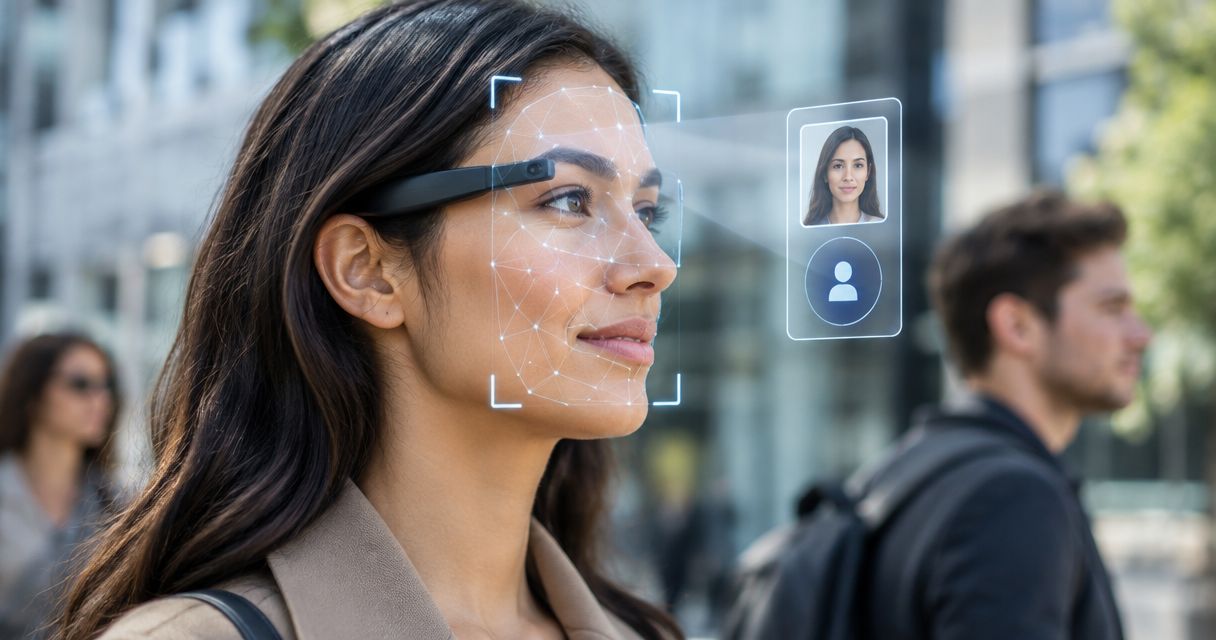
A wearable does not create a recording-law exception. The same consent questions apply whether audio comes from a phone, a recorder, or something you wear.
For readers considering Moonshot, the useful question is not just whether a device can capture something. It is whether you have permission to capture this conversation, in this setting, for this purpose.
The table below compares consent frameworks, not devices. Neither framework gives unrestricted permission to collect, process, or publish someone’s words.
| Consent framework | What it generally requires | Best for | Advantage | Limit |
|---|---|---|---|---|
| One-party consent | Consent from a participant; a participating recorder can generally supply that consent | Understanding the federal baseline | Does not always require a separate permission request to every participant | Stricter state laws and other restrictions still apply |
| All-party consent | Consent from every participant in the conversation covered by the law | Understanding stricter state requirements | Makes everyone’s agreement central to the decision | Coverage depends on statutory definitions and circumstances |
As a 2026 federal reference, 18 U.S.C. § 2511(2)(d) generally permits interception when the recorder is a party or one party has given prior consent. It includes an exception where interception is for the purpose of committing a criminal or tortious act. It is not blanket permission to record other people.
Why this matters
You are halfway through lunch when a friend starts talking about something private. A device that was acceptable during your own spoken note is now part of a different situation. Your friend has not necessarily agreed to be recorded.
Permission belongs to the conversation, not just the device. Owning a wearable, wearing it visibly, or having received permission earlier does not settle every later interaction.
Recording law is also only part of the decision. Workplace rules, confidentiality duties, venue restrictions, and rules about subsequent use can matter even when a recording satisfies a consent statute.
This article provides general U.S. information for 2026, not advice about a particular recording. For a disputed recording or a recurring workplace practice, get advice from a lawyer familiar with the relevant jurisdictions before proceeding.
One-party consent: participation matters
Under the federal baseline, your participation can supply the necessary consent. That does not mean you can leave a wearable in a room and record a conversation after you leave.
The distinction is straightforward: participating in a discussion and collecting other people’s discussion are different legal situations. If you are not a participant, you cannot treat your own approval as a participant’s consent.
Nor does federal law settle every state-law question. Before relying on one-party consent, identify the states connected to the conversation and check their rules.
Best for: understanding why a participant’s recording can be lawful under federal law. Limit: the federal baseline does not resolve stricter state requirements, cross-state disputes, or separate confidentiality obligations.
All-party consent: agreement must cover the recording
Some state laws require consent from everyone involved in a protected conversation. The details differ, so a simple list of states is not enough to decide whether a particular recording is lawful.
California Penal Code § 632, for example, addresses recording confidential communications without all parties’ consent. Whether a communication is confidential depends on the circumstances; the law does not treat every utterance identically.
Florida Statutes § 934.03 generally requires all parties’ prior consent for the consent-based interception exception. Its treatment of oral communications also depends on statutory privacy definitions.
These are state-law references for a 2026 recording decision, not a substitute for reading the applicable provisions. Avoid turning either statute into a claim that every public conversation is recordable or every conversation everywhere needs identical permission.
Best for: planning an explicit permission request in stricter jurisdictions. Limit: consent must still fit the situation, and it does not erase unrelated restrictions.
A recording decision before capture begins
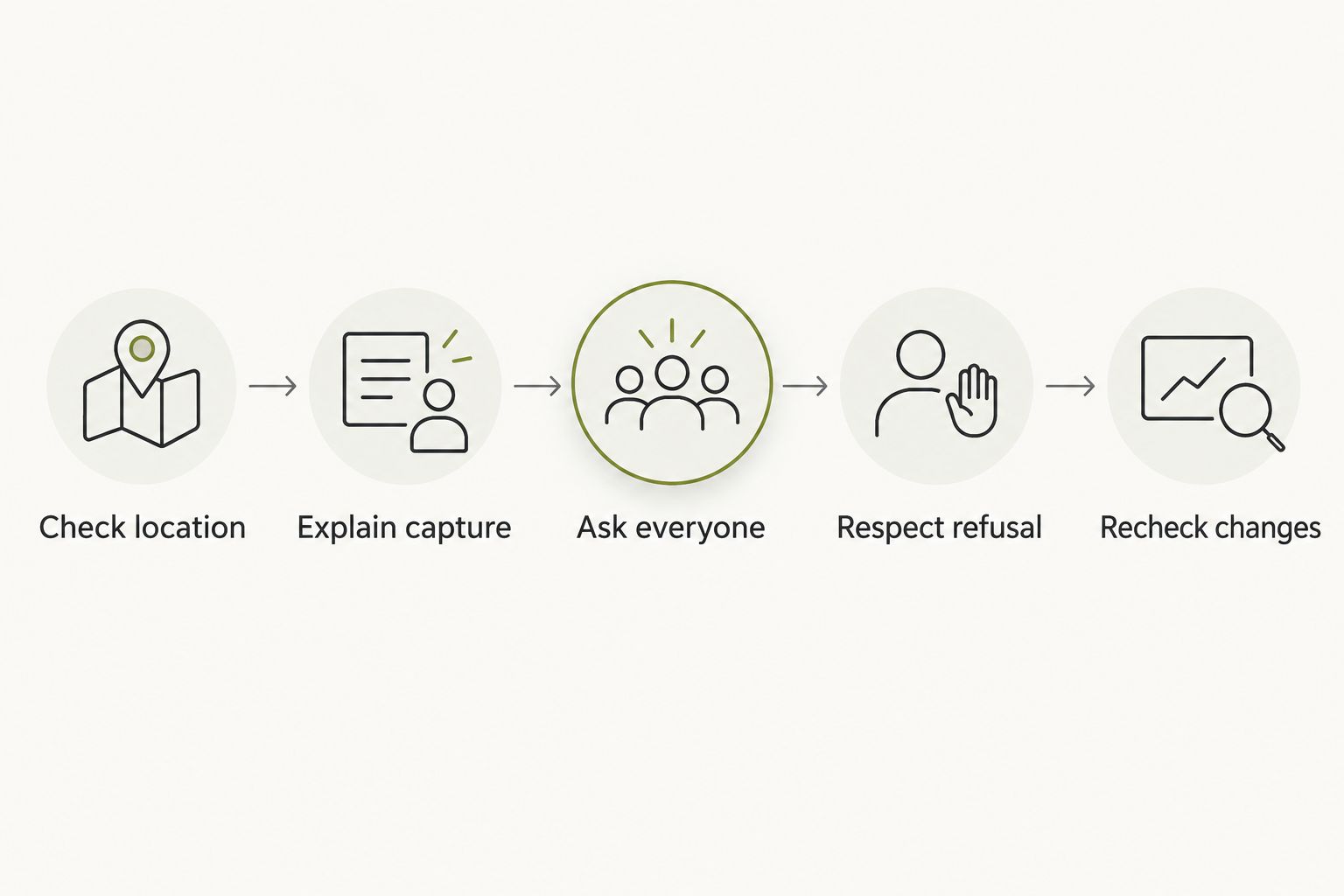
Use this sequence before you start. It is a permission check, not a guarantee that every possible legal requirement has been met.
- Check location. Identify where you and the other participants are. For a remote conversation, do not assume your own state’s law is the only relevant law.
- Explain capture. Say what will happen: audio recording, transcription, or another actual form of processing. Use the device’s documented behavior, not a guess.
- Ask everyone. Get a clear answer before capture begins. If you cannot establish the permission required for the situation, leave recording off.
- Respect refusal. Do not record someone who declines. Use another way to remember your own next step without capturing their conversation.
- Recheck changes. Pause when a new person joins or the discussion moves into a setting or subject outside the original agreement.
Explain relevant processing before asking for agreement. Someone agreeing to an audio recording has not necessarily agreed to publication, external sharing, or every subsequent use.
A useful permission request makes refusal easy. Explain what you intend to capture and why, then wait for the answer without starting the recording to document the request itself.
Do not make agreement the price of continuing the conversation. If someone says no, you can still listen and decide later what action you personally want to take.
Why recording requirements vary
There is no single U.S. wearable-recording rule that answers every situation. These factors change what you need to check:
- Jurisdiction. Federal law and state law can impose different requirements. A conversation connecting different states needs particular care.
- Participation. Recording a conversation you join is different from leaving a device to capture other people.
- Privacy. Some statutes distinguish protected private or confidential communications from statements made without the relevant expectation of privacy.
- Permission. Who agreed, when they agreed, and what they understood about capture affect whether consent covers the recording.
- Setting and duties. An employer’s policy, a venue’s restrictions, or a confidentiality obligation can constrain recording separately from wiretap law.
- Later use. Transcribing, disclosing, or publishing captured speech raises questions beyond whether the initial recording was permitted.
For a 2026 decision, start with those facts rather than a label such as one-party state. A correct label can still produce the wrong conclusion when applied to the wrong kind of conversation.
Can I record a conversation if I am taking part?
Participation can satisfy the federal one-party consent baseline, but it does not automatically satisfy the applicable state law. Check whether the conversation is protected by an all-party consent requirement and whether another restriction applies.
Do not confuse permission to record with permission to distribute. A recording intended as a private reference is not automatically cleared for a public post or a workplace presentation.
Can I record someone in a public place?
A public location does not create universal permission to record conversations. The nature of the exchange and the applicable law still matter, particularly where a statute protects confidential speech or speech carrying a legally recognized expectation of privacy.
A loud statement addressed to a crowd and a quiet conversation at a neighboring table are not interchangeable situations. Being within earshot is not a reliable permission test.
What if the other person is in a different state?
A cross-state conversation requires checking more than your own location. Which law governs can depend on the circumstances and the legal forum; do not assume that being in a one-party consent state resolves the issue.
Ask everyone before recording, explain the actual capture, and seek legal advice when the recording carries meaningful stakes. That is a practical precaution, not a claim that asking alone resolves every conflict between laws.
Transcription and sharing
Deleting an audio file does not automatically answer whether its initial capture was lawful. Nor does calling the result a transcript avoid the question of how the words were obtained.
Before using a wearable, check its current documentation for when capture starts, what processing occurs, and how you stop it. Do not infer those details from the fact that a device is small or wearable.
Keep the sources distinct. A captured conversation records what someone said; a public source provides separately published information. Neither should be presented as the other.
Likewise, separate a fact from an inference. Someone mentioning a possible trip is not confirmation that travel is booked, and a suggested next step is not permission to act. Your approval of a recording should not be treated as approval of an outgoing message.
A useful moment, with permission
Earlier, you said you wanted to call a friend. Later, you talk it through and choose the next step yourself. That is a concrete use for reflection without turning every nearby conversation into material to capture.
Moonshot is a wearable that hears you out and asks a good question back. Its stated purpose is to help you learn from your own life. It makes no calls and moves no money.
The benefit is a question that helps you choose what deserves follow-through. The boundary is equally important: the product description is not proof of a particular recording control, consent workflow, or legal clearance. Check the current documentation rather than assuming those details.
Say it once when you choose to. Keep your yes attached to each next step, and show up for the action you selected. Permission to hear you out is not permission to capture everyone around you.
FAQ
Is it legal to record conversations with an AI wearable in the United States?
It can be legal, but the answer depends on applicable federal and state law, participation, privacy, and consent. A wearable has no general exemption from conversation-recording rules.
Do I need to tell everyone that my wearable is recording?
You need the consent required by the applicable law; some protected conversations require every participant’s consent. Asking everyone before capture begins is a practical precaution, but other restrictions can still apply.
Can I record a conversation because I am one of the speakers?
Being a participant generally satisfies the federal one-party consent baseline, subject to its exceptions. Stricter state laws and separate confidentiality or workplace restrictions can change the result.
Does wearing the device visibly count as consent?
Do not treat a visible device as proof of consent. Whether consent exists depends on the applicable law and circumstances, not simply whether someone could see the wearable.
Is transcription legal if the device does not keep the audio?
Not keeping an audio file does not automatically make transcription lawful. The initial capture or interception and the subsequent processing still need to satisfy applicable requirements.
Can my employer stop me from recording at work?
Workplace recording policies can restrict device use even where a consent statute permits recording, though other legal protections can affect whether a policy is enforceable. Check the policy and obtain advice before recording a sensitive workplace discussion.
Does Moonshot give me permission to record other people?
Moonshot’s product description does not give you legal permission to record other people. Permission depends on the conversation, the applicable law, and any separate restrictions.
One last thing
The most useful capture can be your own next step, not someone else’s entire conversation. After an unrecorded discussion, make a note of what you intend to do without reproducing confidential details.
For your 2026 recording habit, make the permission decision before the device starts—not after someone asks whether it was listening. Leave capture off when agreement is unclear.