 moonshot
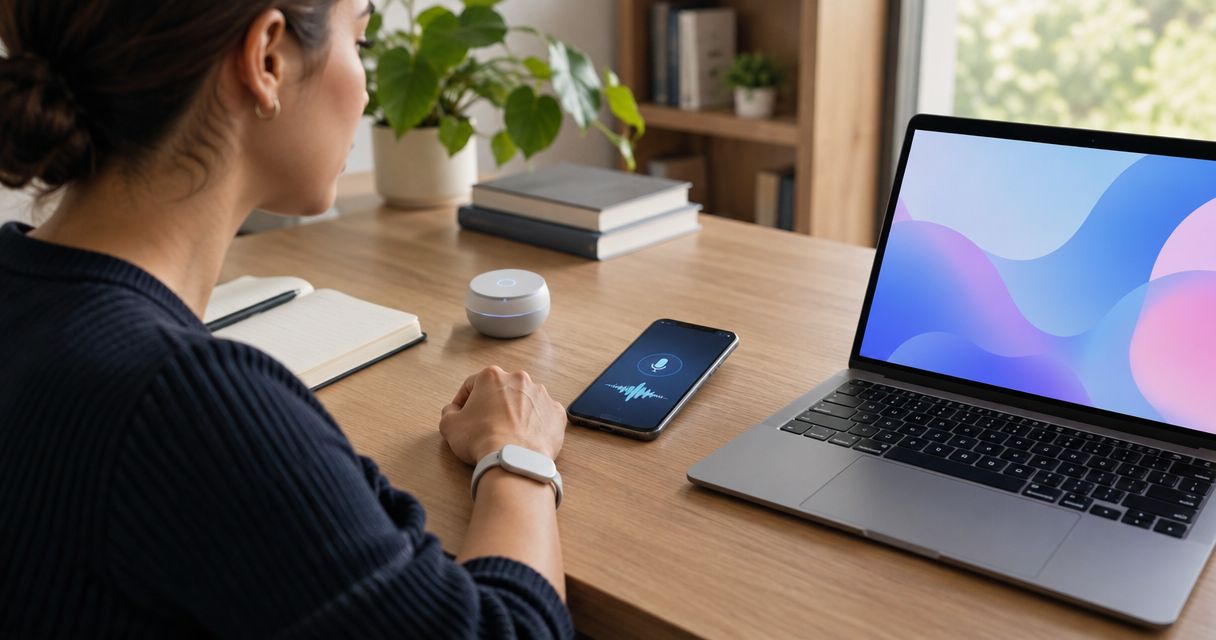
Choose Luna if you want an AI wearable built around spoken context and planned follow-through, and you accept waiting for hardware; choose phone notes or voice memos if you need a deliberate record you can make today. Phone notes win for precise written decisions; voice memos win for intentional spoken capture.
- AI wearable vs phone notes or voice memos: choose by capture, recall and follow-through, not device shape.
- Luna is planned hardware; Samantha already runs as a phone app without the necklace.
- Phone notes suit exact decisions. Voice memos suit thoughts you want to speak rather than type.
- Luna's planned advantage is proactive context and follow-through, not a guarantee of perfect recall.
Moonshot publishes this comparison and makes Luna. The Luna reservation page is the next step for readers comfortable with a product that has not shipped. Product details below reflect the supplied November 4, 2026 product brief and privacy disclosure, not hands-on testing.
Why the capture method matters
A note, a recording and an assistant solve different problems. A note preserves what you choose to write. A voice memo preserves what you choose to record. An AI wearable adds another question: what should software make of the conversation it captures?
The useful choice starts with the moment you keep missing. If you forget the wording of an idea, capture helps. If you already save everything but never act, another recording is not the whole answer.
Moonshot's AI wearable is best suited to readers interested in planned contextual assistance, not readers who only need a finished note-taking tool. That distinction matters more than wearing something around your neck.
At a glance
| Dimension | Luna | Phone notes or voice memos |
|---|---|---|
| Best for | Readers interested in spoken context and planned proactive help | Readers who want to choose exactly what to save |
| Capture | Planned necklace capture; Samantha also works through a phone app | Written notes or recordings you deliberately start |
| Recall | Transcripts and memories form part of Samantha's system | Revisit the text or recording you saved |
| Follow-through | Planned contextual prompts and help with the next step | You review the record and decide what to do |
| Setup | Planned necklace paired with an iPhone or Android phone | Use a notes or recording app on your phone |
| Permissions | Broader microphone and cloud-processing considerations | Recording and syncing permissions depend on your app |
| Product readiness | Luna has not shipped; Samantha's phone app is separate | Suitable when your existing app already handles the task |
| Pricing model | Hardware reservation; Samantha currently has no subscription | Depends on the app, storage and services you choose |
| Standout feature | Planned proactive assistance grounded in spoken context | Deliberate capture without adding a necklace |
Phone notes win for exact decisions
Best for: decisions you want to state clearly and edit. A written note makes you choose the point. You can write the decision, remove the surrounding discussion and add the next step in your own words.
Consider a conversation about visiting a friend. A recording preserves the discussion. A note can state the useful outcome: ask which evening works, then arrange the visit. Those are different records, even when they describe the same conversation.
Phone notes also let you separate fact from interpretation. You can write that someone requested a call without adding an assumption about why. That distinction gets harder to inspect when an assistant turns conversation into an inferred priority.
The drawback is effort. You have to notice the moment, open the app and write something useful. If that interruption is why you save nothing, notes solve the storage problem but not your capture habit.
Voice memos win for deliberate spoken capture
Best for: an idea you can explain more easily than type. A voice memo lets you talk it through while choosing the beginning and end of the recording. It fits a personal reflection, a rehearsal or an idea that loses its shape when reduced to a short note.
That deliberate boundary is a strength. You know which thought you intended to save. You do not need to treat a broader conversation as raw material simply because one useful idea appeared in it.
The weakness arrives later. Recording a thought does not make it easy to revisit, and playback still asks for your attention. Transcription and search depend on the app you choose; they are not a property of every voice memo.
Choose voice memos when speaking is the missing step. Choose something else when your real problem is a growing collection of recordings you never review.
Both can preserve context, but neither guarantees understanding
Best for: readers who distinguish a record from a conclusion. A recording captures speech. A written note captures your selected account. Samantha's transcripts and memories provide another representation of what happened.
None of those forms turns an inference into a fact. Someone mentioning a trip is not the same as committing to book it. Repeatedly discussing an idea is not proof that it should become your priority.
Use the same standard for every option:
- Capture: What words or observations were actually saved?
- Recall: Can you find the relevant record later?
- Follow-through: Is there an action you genuinely want to take?
- Approved next step: Have you agreed to that action?
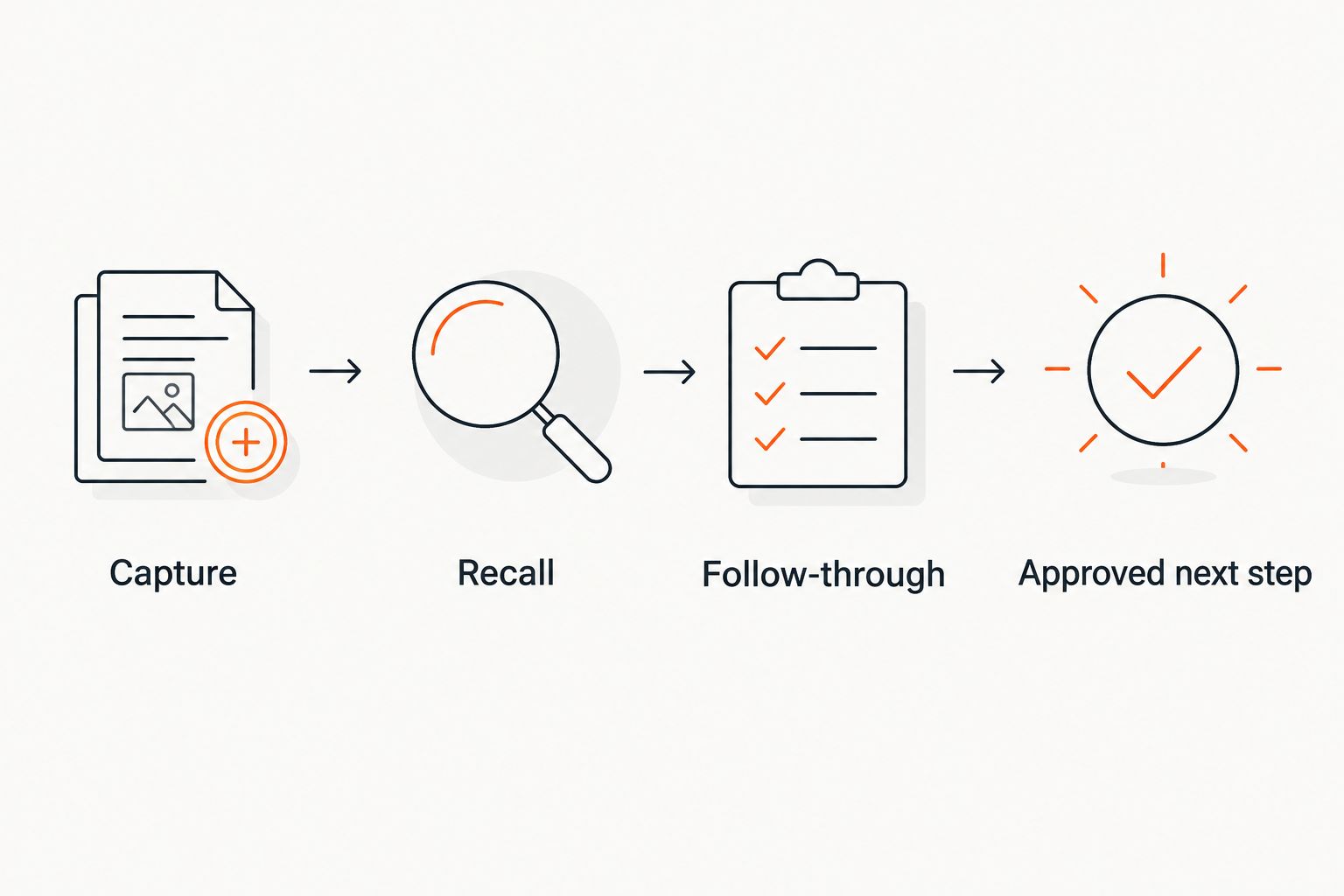
Keep the original record available when checking an important conclusion. A summary is useful for orientation, but it is not a substitute for checking what someone actually said.
Luna's planned distinction is proactive follow-through
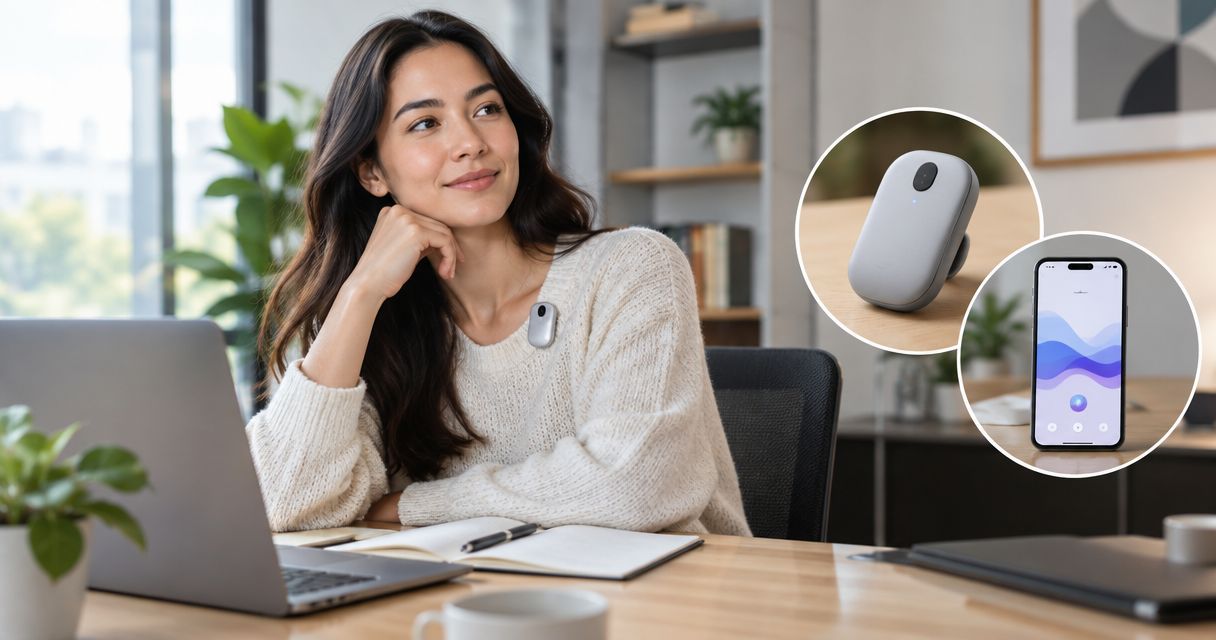
Best for: readers interested in help connecting conversation to action. Luna's intended role goes beyond saving a recording. The product direction is a companion that understands context over time, speaks up first and helps with follow-through.
The November 4, 2026 brief describes a planned interaction in which Luna glows and gives the wearer a buzz when something matters. Samantha then speaks through earbuds or the phone. Treat that as a product description, not a demonstrated customer result.
This creates a meaningful contrast with a plain note. A note waits for you to revisit it. Proactive assistance aims to bring something back to your attention without requiring you to remember that you saved it.
The tradeoff is interpretation. A prompt can be relevant without being what you want right now. Your yes still matters before a proposed action becomes the next step.
Choose Luna for that planned workflow, not because a necklace automatically produces better notes. No shipped Luna evidence is presented here, and no outcome is guaranteed.
Phone apps win when you need a working routine now
Best for: readers who need to change their capture habit immediately. Luna has not shipped. The supplied product brief expects shipping in spring 2027, so a reservation is not the same as having a device ready for tomorrow's conversation.
Samantha already runs as a phone app on iPhone and Android without Luna. That separates the assistant from the necklace: using software on your phone and reserving future hardware are different decisions.
The planned necklace is 27 mm across, weighs about 7 g and has two microphones, according to the November 4, 2026 brief. Those details describe its physical form. They do not establish recording quality, comfort during your day or the reliability of a planned workflow.
If your present phone setup meets your need, keep it. A new device earns its place by solving a repeated problem, not by giving an existing habit a different shape.
Phone notes win for selecting what enters the record
Best for: readers who want a narrow, intentional record. A typed note can preserve a decision without capturing the surrounding speech. A deliberately started voice memo can limit the recording to the thought you mean to save.
That is not a blanket privacy claim about phone apps. Storage, syncing and processing still depend on the app and its settings. Deliberate capture and private storage are separate questions.
The supplied privacy disclosure says Samantha streams microphone audio through the company's server to a processing service. Neither the server nor the phone saves that audio. The server retains a word-for-word transcript, including nearby speech, and memories until deleted.
Those records use cloud storage and are not encrypted under a key held only by the user. The disclosure also leaves the exact information Luna itself sends to be specified before shipping.
The practical comparison is therefore not simply recording versus no recording. Ask what becomes text, where that text stays and how deletion works. Get agreement before recording other people, and check the rules that apply to the conversation.
Both need review before an important next step
Best for: readers who want assistance without surrendering judgment. A short note can omit a condition. A voice memo can contain unclear speech. An assistant can mistake context for intent.
Before acting, inspect the point that matters. Was the date confirmed? Was the request yours to handle? Did the speaker describe a possibility or make a commitment?
For a consequential decision, write the agreed action separately from the conversation record. This works whether the source is a note, a memo or an assistant's summary.
The tie is straightforward: none of these options removes your responsibility to confirm an important detail. Choose the capture method that makes that check easier for you.
Pricing models: separate the app from the hardware
For a 2026 decision, compare the commitment before comparing features. A hardware reservation, a phone app and an ongoing subscription are different purchases.
Samantha has no subscription under the November 4, 2026 terms supplied for this comparison. That is a current term, not a promise that the model will never change. Luna's hardware decision remains separate.
Phone notes and voice memos do not have one universal pricing model. Check the app you use, including any storage or transcription service attached to it. Do not assume that every feature belongs to the basic recording function.
For Luna, Reserve for $1, refundable is the authorized next step. Reply to the receipt to request the reservation payment back. Do not treat the reservation amount as the hardware's full purchase price.
Final verdict: choose the workflow you need
Choose Luna if you want planned contextual help
Winner for the interested early adopter: Luna. Choose it if proactive prompts and follow-through are the reason you want an AI wearable, and you accept that the necklace has not shipped. Read the product status and data handling terms before reserving.
Choose phone notes or voice memos for deliberate capture
Winner for the practical recorder: phone notes or voice memos. Choose notes for exact decisions you want to edit. Choose voice memos for thoughts you want to speak. Neither requires you to make a hardware reservation to begin that habit.
| Dimension | Winner |
|---|---|
| Exact written decisions | Phone notes |
| Deliberate spoken capture | Voice memos |
| Preserving context without guaranteeing understanding | Tie |
| Planned proactive follow-through | Luna, as product direction |
| A working capture routine today | Your existing phone app |
| Selecting what enters the record | Phone notes |
| Reviewing consequential details | Tie |
| Pricing fit | Depends on the app and hardware commitment |
FAQ
What's better, an AI wearable or phone notes?
Phone notes are better for precise written decisions; an AI wearable suits a different goal when you want contextual assistance. Luna's proactive hardware workflow is planned, so compare that direction with what your phone already does today.
Are voice memos enough to remember my ideas?
Voice memos are enough when deliberate spoken capture solves your problem. If you rarely revisit recordings, saving more audio does not address the review habit.
Can I use Samantha without wearing Luna?
Yes. The November 4, 2026 product brief says Samantha runs as a phone app on iPhone and Android without Luna. The app and the planned necklace are separate ways to use the assistant.
Has Luna shipped yet?
Luna has not shipped under the supplied November 4, 2026 product status. A reservation is a commitment toward future hardware, not access to a delivered necklace.
Does Samantha save audio or transcripts?
The supplied privacy disclosure says neither the server nor the phone saves the streamed audio, but the server retains transcripts and memories until deleted. Those transcripts can include nearby speech, so audio retention and transcript retention are different questions.
Does Samantha require a monthly subscription?
Samantha has no subscription under the supplied November 4, 2026 terms. That current arrangement does not establish permanent terms for the app or the planned hardware.
Should I replace all my notes with an AI wearable?
No. Keep written notes for decisions that need exact wording, and use spoken capture when speaking fits the task. Choose an assistant only when its workflow addresses a problem those records leave unresolved.
One last thing
Before choosing hardware, inspect a record you already saved. Can you name the action it was meant to support? If not, add that sentence before changing tools.
The useful test is not how much you can capture. It is whether the record helps you show up for something you chose.